4 min readNew DelhiUpdated: Sep 22, 2026 02:34 PM IST
A 30-year-old bribery case involving an amount of Rs 300 has ended with the Madhya Pradesh High Court upholding the acquittal of a land revenue officer who was accused of demanding the money to issue a duplicate land record.
The court said the recovery of tainted cash alone was not enough to prove bribery, noting that Rs 325 in government dues was already pending against the complainant and that the witnesses differed on key details of the alleged demand.

Justice Sanjeev S Kalgaonkar on September 19 dismissed the state’s appeal and upheld the trial court’s December 1997 acquittal, noting that the circumstances of the case raised the possibility of “resentment and a grudge” between the complainant and the official.
“Rather, their evidence, examined in light of overall circumstances, suggests a reasonable possibility that the amount referred to by the accused (land revenue officer) was meant for payment of outstanding government dues. Thus, the prosecution had failed to establish beyond reasonable doubt that the accused demanded or accepted Rs 300 as ‘illegal gratification’ for issuance of the duplicate Bhu-Adhikar Evam Rin Pustika (land record),” the court observed.
Demanded Rs 300 bribe in 1996
The state said the man was working as a Patwari (land revenue officer) in Sagar district when a complainant approached him for a duplicate Bhu-Adhikar Evam Rin Pustika (land record), after his original document had been misplaced. The prosecution alleged that the officer demanded Rs 450 for issuing the duplicate document. The complainant allegedly paid Rs 150 initially and agreed to pay the remaining Rs 300 later.
Justice Sanjeev S Kalgaonkar said the land revenue official had earlier submitted a report alleging encroachment on government land by the complainant.
The complainant then approached the Lokayukta concerned, which arranged a trap on October 17, 1996. He handed over three marked Rs 100 notes to the officer, and the money was recovered from the Patwari’s shirt pocket. Chemical traces were also found on his hands and shirt pocket.
However, the trial court acquitted him on December 19, 1997, after which the state challenged the decision before the Madhya Pradesh High Court.
Story continues below this ad
‘Paid towards dues’
The state, through advocates Abhinav Shrivastava and Aishwarya Kesarwani, argued that if the evidence of the prosecution is considered in total, then the demand and recovery of bribe money were fully established by the prosecution.
The land revenue official’s lawyer, advocate Aditya S Rajput, argued that Rs 325 was already due from the complainant as government revenue, and his client was instructed to recover the amount before the duplicate document could be issued. The defence, hence, claimed that the money was paid towards the government dues, not a bribe.
Court notes possibility of grudge
The court also noted that the land revenue official had submitted a report on October 3, 1996 alleging encroachment on government land by the complainant. The report was received by the tehsildar’s office on October 5, just days before the bribery complaint was lodged, it noted.
“This circumstance furnishes a plausible cause for the complainant’s resentment and grudge against the accused and assumes significance while assessing his credibility,” the court observed.
Story continues below this ad
The court further found material inconsistencies in the complainant’s account about the amount allegedly demanded, when the demands were made and who was present when they were made. It ultimately held that the prosecution had not proved the bribery allegation beyond reasonable doubt and dismissed the state’s appeal.


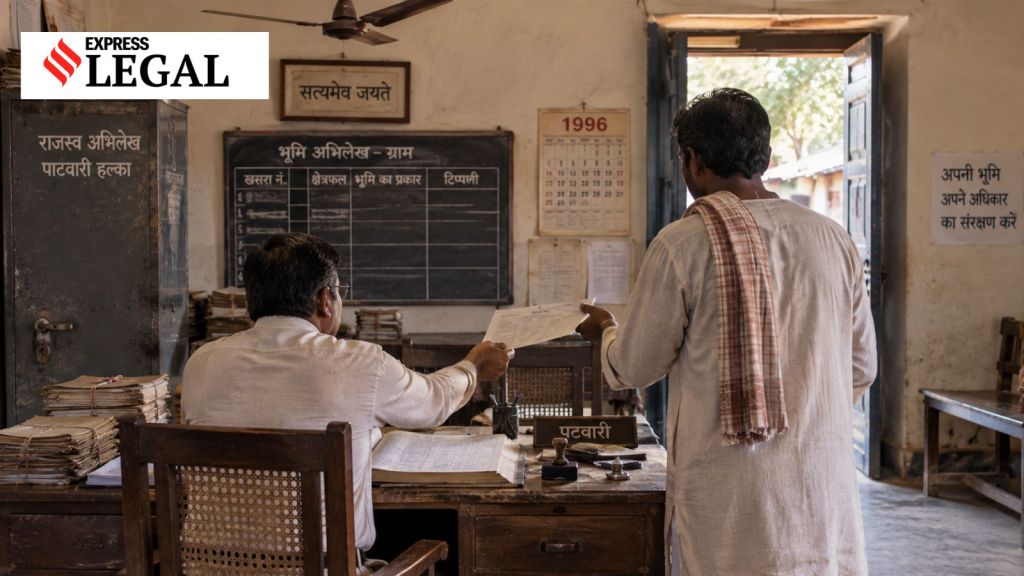


 Justice Sanjeev S Kalgaonkar said the land revenue official had earlier submitted a report alleging encroachment on government land by the complainant.
