Two months after the World Health Organization (WHO) raised an alert on four India-manufactured syrups, the country’s apex drug regulator has written to the intergovernmental body and stated that it made a “premature deduction…regarding the cause of death” of the children, and that all its further communications were a “reaffirmation of this deduction, without waiting for independent verification”.

In the letter (dated December 13) to Dr Rogerio Gaspar, Director (Regulation and Prequalification), WHO, Drug Controller General of India (DCGI), Dr V G Somani, pointed out that the WHO backtracked from its initial commitment of providing granular details by stating that the responsibility of establishing the causal link between the deaths and syrups lies with the country in question — the Gambia. The letter noted that the statement issued by WHO adversely impacted the image of India’s pharmaceutical products and caused irreparable damage to the supply chain “over an assumption that has not been substantiated by the WHO or its partners on ground”.
Citing media reports, the letter also stated that the Gambia has said that no direct causal relationship has been established between the deaths and the cough syrups, with some of the children not even having consumed the syrups in question.
With no information shared by WHO or the Gambia, the drug controller wrote, “we believe WHO would now allow the technical committee…to arrive at the conclusion based on the facts and evidence available”. After the alert was raised, the Union Health Ministry had set up a four-member expert panel to review the data sent by WHO, which has since sought details of initial signs and symptoms, treatment offered, investigations done, and clinical presentation after consumption of syrups.
This technical committee, the letter mentioned, has met several times, sought information from the WHO at least thrice, but never received any data.
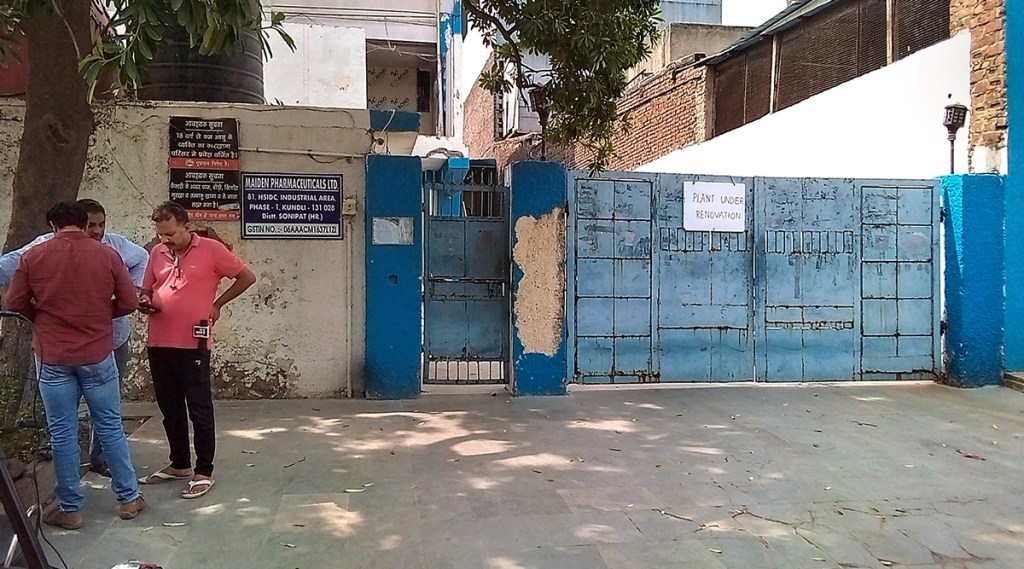
In what appears to be a clean chit for the manufacturer, Somani in the letter stated that an independent investigation by DCGI found that the control samples — samples from the same batch exported to the Gambia maintained by the company for quality control purposes — did not contain di-ethylene glycol or ethylene glycol.
The drug regulator also tested the propylene glycol and glycerine — both used as solvents in manufacturing of syrups — available at the manufacturing facility at the time of inspection and found that they did not contain di-ethylene glycol or ethylene glycol over the permissible limit, the letter stated. The propylene glycol had been sourced from a South Korean company and the glycerine from Adani Wilmar via a Delhi-based firm. The solvents were thought to be the most likely source of di-ethylene glycol or ethylene glycol contamination, which is known to cause acute kidney injury.




 Share


