


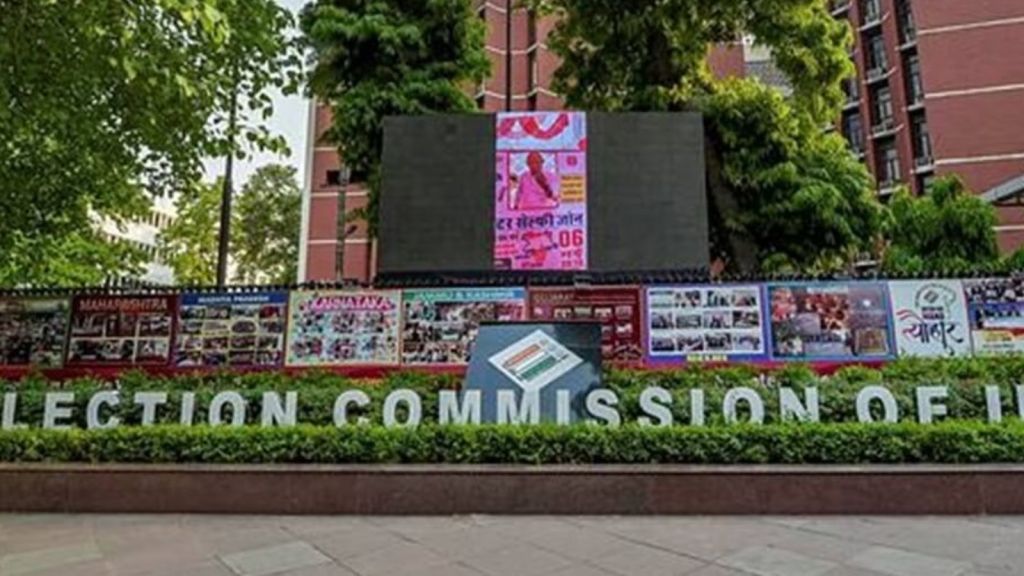
 The EC told the court on Friday that of the total 38.31 lakh appeals pending before the appellate tribunals, 22.21 lakh were filed by deleted voters seeking inclusion (File Photo)
For the first time, the Election Commission (EC) has informed the Supreme Court that of the over 38 lakh appeals filed against inclusions and exclusions from the West Bengal electoral rolls during the adjudication process of the Special Intensive Revision (SIR), over 22 lakh appeals were filed by voters who had been deleted. This means that about 82% of the 27.16 lakh voters who were deleted through an unprecedented adjudication process in the state have appealed against their exclusion.
In a reply to an application filed by Trinamool Congress MP Derek O’ Brien, the EC told the court on Friday that of the total 38.31 lakh appeals filed before the appellate tribunals, 22.21 lakh were filed by deleted voters seeking inclusion, while 16.10 lakh were filed against voters included, which means these appeals are seeking further deletions. The EC did not specify who had filed these appeals.
The EC reply also suggested increasing the number of tribunals for SIR appeals. “That with a view to further streamline and expedite the disposal of the pending appeals, it is proposed that the number of appellate tribunals in the state of West Bengal may be considered for increase to correspond with the number of parliamentary constituencies in the state, so as to facilitate expeditious disposal of the pending appeals,” it said.
It said the software developed by the EC was “location-agnostic”, which would facilitate hearings from locations other than the present location of the tribunals, which is on the outskirts of Kolkata.
In his petition, O’Brien had sought the cancellation of the election results in 31 Assembly constituencies due to the deletion of voters in the SIR being higher than the margin of victory/ loss. Responding to this, the EC reiterated that elections can only be challenged by filing an election petition as per the Representation of the People Act, 1950.
“It is further most humbly submitted that this Hon’ble Court has consistently held that electoral roll entries may be challenged as per procedures provided under the Representation of the People Act, 1950, however, elections conducted on the basis of the existing electoral roll cannot be called in question on the basis of any fault in the said electoral roll,” the poll panel said.
Rejecting the “aspersions” cast on the judicial officers, the EC said they had worked with “diligence and fairness”. The EC said the applicant had conflated all deletions under the SIR, not just the deletions ordered by the judicial officers.
“The figures relied upon by the applicant include removal of names on account of ‘absentee, shifted, dead and duplicate (ASDD)’ entries from the draft roll, which were deleted only after due process and verification as contemplated under the SIR order,” it said. It said the TMC, too, had won 21 seats where the victory margin was less than the number of voters deleted in adjudication.
“The selective and inconsistent application of an inherently flawed and speculative yardstick, therefore, exposes the self-serving and mala fide nature of the present application,” it said.
In an unprecedented step, the Supreme Court, on February 20, had ordered the adjudication of the eligibility of some electors of West Bengal by judicial officers, noting that there was a trust deficit between the then-TMC government and the EC. Around 700 judicial officers from West Bengal, Jharkhand and Odisha were tasked with determining the eligibility of 60.06 lakh electors flagged by the EC’s “logical discrepancies” algorithm. Of these, the judicial officers ordered the deletion of 27.16 lakh names, while retaining the rest.
On March 10, the Supreme Court ordered the setting up of appellate tribunals to hear appeals against the decisions of the judicial officers. Nineteen such tribunals were set up and began functioning on April 13, just days before polling in the West Bengal Assembly elections on April 23 and April 29. Of the appeals filed, the tribunals added back just 1,607 electors in time for polling, with the remaining unable to cast their votes in the 2026 polls.