


Journalism of Courage
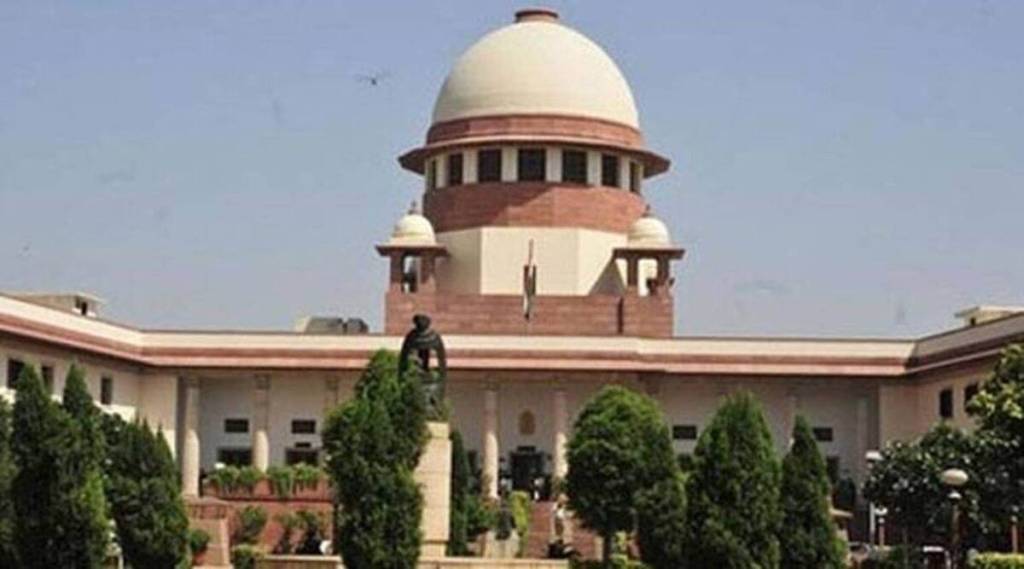 Supreme Court modified its earlier order regarding the eligibility criteria for Civil Judges in Delhi. (Representative Image)
The Supreme Court Tuesday agreed to take up for hearing a pending plea challenging the Centre’s Electoral Bond Scheme, 2018. Chief Justice of India N V Ramana told Advocate Prashant Bhushan, who mentioned the matter, that the court would have heard it earlier but for Covid-19. “We will hear it,” the CJI said.
Seeking an urgent hearing, Bhushan said that there is a news that a company in Kolkata paid Rs 40 crore to avoid a raid. “It’s distorting democracy,” he contended.
The top court is seized of petitions filed by two NGO’s – Common Cause and Association for Democratic Reforms (ADR) – challenging the scheme.
In March 2021, the SC had dismissed ADR’s prayer to stay any fresh sale of electoral bonds while an earlier petition filed by it against the scheme is pending. Disputing the NGO’s contentions regarding “complete anonymity” of the bond purchasers, the court said “it is not as though the operations under the scheme are behind iron curtains incapable of being pierced”.
The court pointed out that the bonds had already been issued in the past – in 2018, 2019 and 2020 — “without any impediment” and that it had already ordered “certain safeguards” by way of an interim order on April 12, 2019.
In its April 2019 interim order, which also came on an application by the ADR, the Supreme Court had directed political parties that have received donations through electoral bonds to “forthwith” submit the details of these bonds to the Election Commission of India (ECI). That order too had come on the petition filed by the ADR in September 2017.
However, the NGO again approached the court contending that the identity of the donors could never be known to the public. It also referred to reservations raised by the Reserve Bank of India (RBI) and ECI to the scheme.
On the NGO’s arguments of anonymity, the court said, “Despite the fact that the Scheme provides anonymity, the Scheme is intended to ensure that everything happens only through banking channels. While the identity of the purchaser of the bond is withheld, it is ensured that unidentified/ unidentifiable persons cannot purchase the bonds and give it to the political parties. Under clause 7 of the Scheme, buyers have to apply in the prescribed form, either physically or online disclosing the particulars specified therein. Though the information furnished by the buyer shall be treated confidential by the authorised bank and shall not be disclosed to any authority for any purposes, it is subject to one exception namely when demanded by a competent court or upon registration of criminal case by any law enforcement agency. A non-KYC compliant application or an application not meeting the requirements of the scheme shall be rejected.”
The Supreme Court bench also referred to the Election Commission receiving details of contributions received through bonds, in pursuance of its April 2019 order, and said, “We do not know at this stage as to how far the allegation that under the Scheme, there would be complete anonymity in the financing of political parties by corporate houses, both in India and abroad, is sustainable”.
“If the purchase of the bonds as well as their encashment could happen only through banking channels and if purchase of bonds are allowed only to customers who fulfill KYC norms, the information about the purchaser will certainly be available with the SBI which alone is authorised to issue and encash the bonds as per the Scheme. Moreover, any expenditure incurred by anyone in purchasing the bonds through banking channels, will have to be accounted as an expenditure in his books of accounts. The trial balance, cash flow statement, profit and loss account and balance sheet of companies which purchase Electoral Bonds will have to necessarily reflect the amount spent by way of expenditure in the purchase of Electoral Bonds”, the bench pointed out.
“Also, under the Companies Act, 2013, every company is mandated to prepare and keep books of accounts and financial statement for every financial year and these statements are to be placed at every Annual General Meeting and then filed with the Registrar of Companies which in turn is accessible online on the website of the Ministry of Corporate Affairs for anyone or obtained in physical form from the Registrar of Companies upon payment of prescribed fee,” said the Supreme Court.
The bench added, “Since the Scheme mandates political parties to file audited statement of accounts and also since the Companies Act requires financial statements of registered companies to be filed with the Registrar of Companies, the purchase as well as encashment of the bonds, happening only through banking channels, is always reflected in documents that eventually come to the public domain.”
“All that is required is a little more effort to cull out such information from both sides (purchaser of bond and political party) and do some ‘match the following’. Therefore, it is not as though the operations under the Scheme are behind iron curtains incapable of being pierced,” the court said.
On the objections of the RBI and EC, the court said, “It is true, as seen from the correspondence, that RBI has had some reservations. But it is not correct to say that the RBI and the Election Commission of India opposed the Electoral Bond Scheme itself.”