
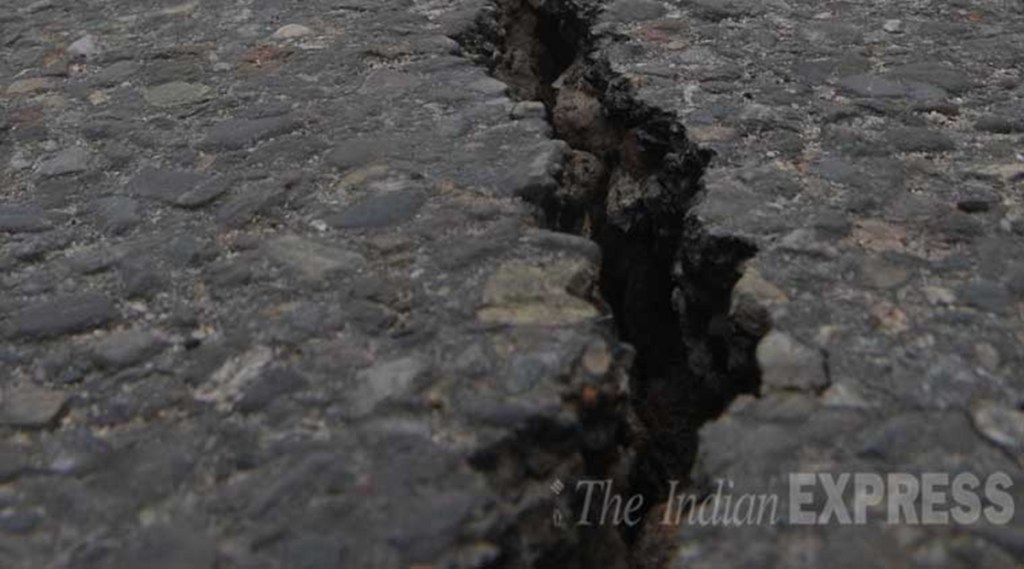
About 45 km from the new Kailash Mansarovar road, connecting Dharchula in Uttarakhand to Lipu Lekh on the China border, scientists at Wadia Institute of Himalayan Geology have unearthed large concentrations of micro and moderate magnitude earthquakes in the Dharchula region and adjoining areas of Kumaon Himalaya due to stress in the region and explored the geological structure behind it.
Scientists say these large concentrations of earthquakes are “release of stress’’ building up in the region and that in the near future, there is likelihood of an earthquake of high magnitude in the region.

“Apart from the Kangra earthquake in 1905 and Bihar-Nepal earthquake in 1934, this region has not experienced an earthquake of magnitude greater than 8.0 in the last 500 years, and hence the region is known as the Central Seismic Gap (CSG) region. A gap is a term used to denote an area with little tectonic activity. This, despite the Himalayas being one of the most tectonically active regions in the country. However, the Kumaon Central Himalayan, which belongs to this CSG region, is one of the most seismically active regions of the Himalayan belt that experienced a considerable number of moderate and strong earthquakes in the recent past,’’ said Dr Devajit Hazarika, lead scientist on a paper that has now been published by the institute.

 Share


