12 deaths, a trail to UP: How Madhya Pradesh’s ‘fake liquor’ network operated across the border

Investigators suspect the supply originated from a Lalitpur-based network in Uttar Pradesh that allegedly made spurious liquor and packaged it in bottles resembling genuine MP brands.

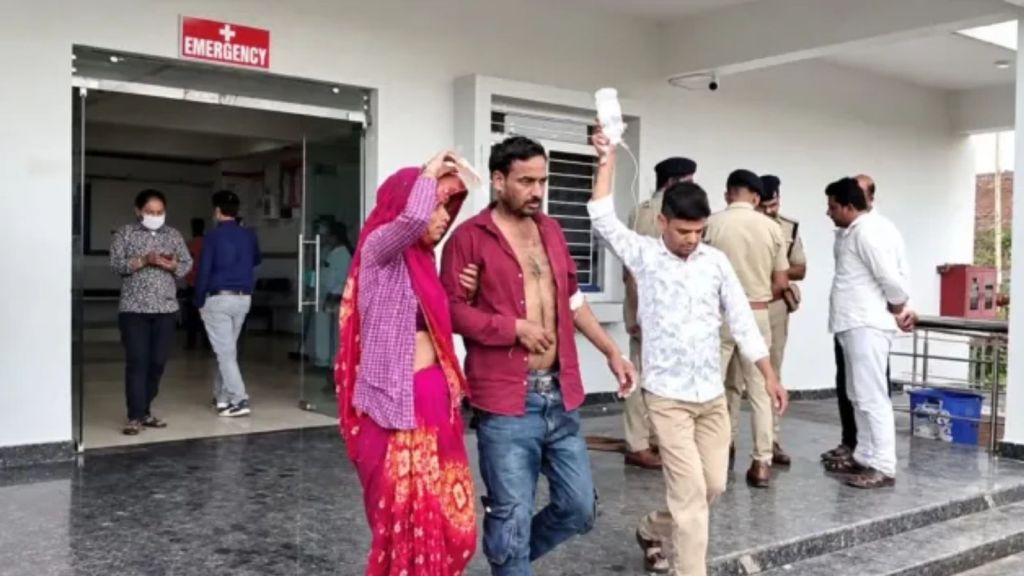
At least 12 people died in Sagar after allegedly consuming illicit liquor, with investigators tracing the suspected supply chain to a Lalitpur-based operation in Uttar Pradesh. (Express Photo)At least 12 people died in Sagar after allegedly consuming illicit liquor, with investigators tracing the suspected supply chain to a Lalitpur-based operation in Uttar Pradesh. (Express Photo)

The counterfeit liquor that killed at least 12 people in Madhya Pradesh’s Sagar district may have travelled through a supply chain that began with counterfeit bottles in Uttar Pradesh and ended inside what buyers believed was the legitimate liquor trade in Madhya Pradesh, The Indian Express has learnt.

Investigators suspect a Lalitpur-based operation was making spurious liquor, putting it into bottles made to resemble Madhya Pradesh brands and getting it across the border for sale in Sagar.

Madhya Pradesh Excise Department officials also suspect that an agent of a licensed liquor seller had sold the alcohol to customers who believed they were buying genuine liquor. The bottles, one official said, looked like the real thing, carrying the packaging of brands such as Sagar Gold whisky and a country-made liquor brand.

Sagar SP Anurag Sujaniya said the preliminary investigation had identified a Lalitpur-based gang that had previously faced legal action for allegedly manufacturing spurious liquor and distributing it in Madhya Pradesh. “They manufacture spurious liquor mimicking Madhya Pradesh brands and distribute it here,” Sujaniya said, adding that it was “highly likely” that the supply in the Sagar tragedy originated from that source.

Police are now trying to identify the people between the alleged manufacturer and the victims. About 10 people were initially detained for questioning as investigators traced the liquor backwards from the villages where people fell ill.
The investigation has also begun to expose how such a network can operate without the person buying the bottle necessarily knowing that anything is wrong. According to investigators, the Excise Department may have been deceived due to the packaging of the bottle.

“It’s difficult to crack down on them at times since they run a small operation in concealed locations,” said a senior police officer.

According to a senior police officer who has routinely cracked down on counterfeit liquor, the gangs operate in Lalitpur in the following way.

Story continues below this ad

“In one case, when we cracked down on a hideout, we found the counterfeit liquor was being made in Uttar Pradesh, packed in bottles carrying the labels, caps and even QR codes of established brands and then sent into Madhya Pradesh, where it was allegedly sold through liquor outlets and roadside establishments,” the officer said.
The choice of Lalitpur in Bundelkhand was significant because the alleged manufacturers were operating close to the market they intended to supply.

“Rather than moving the liquor over a long distance inside Madhya Pradesh, the network could manufacture it in a neighbouring district of Uttar Pradesh and then bring it across the state boundary in relatively small consignments. These consignments are sometimes delivered in luxury cars to evade detection… the operation could have been running for months before it was detected,” the officer said.

Price is another part of that equation. Liquor is cheaper in Uttar Pradesh than in Madhya Pradesh, according to people familiar with the probe, giving sellers an established reason to bring liquor across the border. However, the investigators acknowledged that if the suspected liquor was manufactured outside the state, brought across the border, passed through local hands and ultimately sold by an agent connected to a licensed outlet, there were “several points at which it could theoretically have been detected.”

That inquiry has already produced action. Three Excise officials and two police personnel have been suspended, while the Area Deputy Commissioner has been attached to headquarters. Police have registered three FIRs, named 30 accused and arrested 14 of them by Monday morning.

Story continues below this ad

The crackdown is now spreading through the villages as investigators try to find both the remaining accused and any stock that may still be in circulation. Police and Excise teams are conducting raids, while revenue officials and village representatives are going door to door to identify people who may still have bottles of the suspected liquor.

Twelve died and several were hospitalised after allegedly consuming illicit liquor in Madhya Pradesh’s Sagar district Saturday.

Police said the victims were primarily from Nauraj and Gogra villages in the Banda police station area.

Anand Mohan J is an award-winning Senior Correspondent for The Indian Express, currently leading the bureau’s coverage of Madhya Pradesh. With a career spanning over eight years, he has established himself as a trusted voice at the intersection of law, internal security, and public policy. Based in Bhopal, Anand is widely recognized for his authoritative reporting on Maoist insurgency in Central India. In late 2025, he provided exclusive, ground-level coverage of the historic surrender of the final Maoist cadres in Madhya Pradesh, detailing the backchannel negotiations and the "vacuum of command" that led to the state being declared Maoist-free. Expertise and Reporting Beats Anand’s investigative work is characterized by a "Journalism of Courage" approach, holding institutions accountable through deep-dive analysis of several key sectors: National Security & Counter-Insurgency: He is a primary chronicler of the decline of Naxalism in the Central Indian corridor, documenting the tactical shifts of security forces and the rehabilitation of surrendered cadres. Judiciary & Legal Accountability: Drawing on over four years of experience covering Delhi’s trial courts and the Madhya Pradesh High Court, Anand deconstructs complex legal rulings. He has exposed critical institutional lapses, including custodial safety violations and the misuse of the National Security Act (NSA). Wildlife Conservation (Project Cheetah): Anand is a leading reporter on Project Cheetah at Kuno National Park. He has provided extensive coverage of the biological and administrative hurdles of rewilding Namibian and South African cheetahs, as well as high-profile cases of wildlife trafficking. Public Health & Social Safety: His recent investigative work has uncovered systemic negligence in public services, such as contaminated blood transfusions causing HIV infections in thalassemia patients and the human cost of the fertilizer crisis affecting rural farmers. Professional Background Tenure: Joined The Indian Express in 2017. Locations: Transitioned from the high-pressure Delhi City beat (covering courts, police, and labor issues) to his current role as a regional lead in Madhya Pradesh. Notable Investigations: * Exposed the "digital arrest" scams targeting entrepreneurs. Investigated the Bandhavgarh elephant deaths and the impact of kodo millet fungus on local wildlife. Documented the transition of power and welfare schemes (like Ladli Behna) in Madhya Pradesh governance. Digital & Professional Presence Author Profile: Anand Mohan J at Indian Express Twitter handle: @mohanreports ... Read More


Advertisement
Loading Recommendations...
Advertisement
Advertisement
Latest Comment
Post Comment
Read Comments