
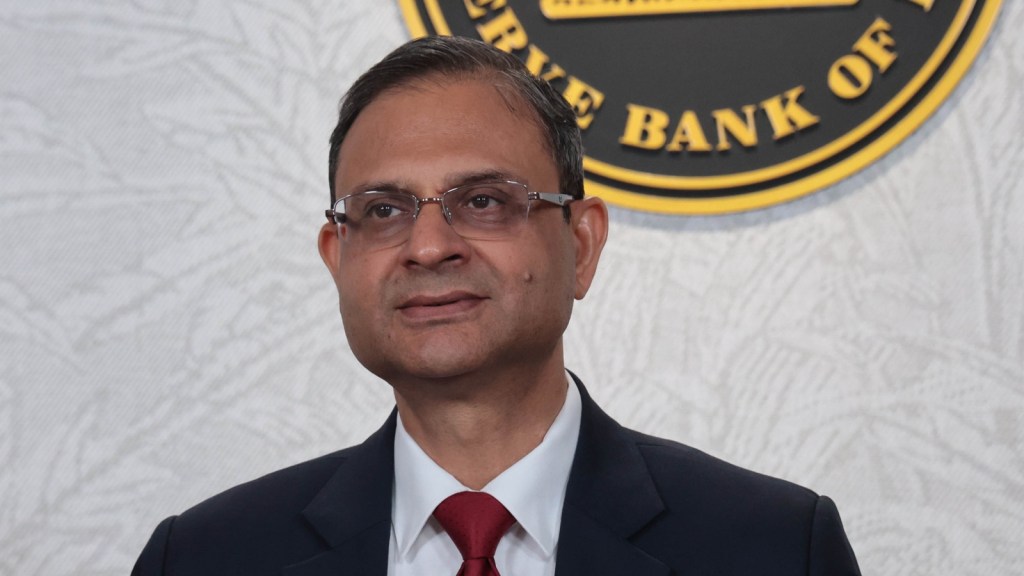
The Reserve Bank of India (RBI) has increased its policy repo rate by 25 basis points (bps) to 5.50 per cent, marking the first rate hike since February 2023 and signalling a shift towards tighter monetary policy amid rising inflationary pressures, elevated crude oil prices and a challenging global interest-rate environment. The Monetary Policy Committee (MPC) has changed the policy stance to ‘calibrated tightening’ from ‘neutral’ indicating further hike in the interest rates is a likelihood.
The MPC has also hiked the growth projection from 6.7 per cent to 7.1 per cent in FY27 in the wake of the higher economic activity in the country. The panel also raised the inflation forecast to 5.2 per cent for FY27 from 5 per cent previously.

The decision by the policy panel to hike rates comes after nearly two years of monetary accommodation. The increase is expected to push up borrowing costs across the economy, affecting interest rates on home, personal and vehicle loans, while also providing some support to deposit rates.
RBI Monetary Policy Meeting October 2026 LIVE
Announcing the monetary policy, RBI Governor Sanjay Malhotra said high frequency indicators show economic activity holding momentum in the second quarter albeit with some moderation when compared to first quarter. “The policy action ahead can only be a rate hike or pause, depending on the evolving conditions,” Malhotra said.
The RBI’s move follows growing concerns that inflationary pressures are becoming more broad-based. Retail inflation rose to 4.82 per cent in August, remaining above the central bank’s medium-term target of 4 per cent for the third consecutive month, although it continues to remain within the RBI’s tolerance band of 2-6 per cent.
The last rate hike – when it was hiked from 6.25 per cent to 6.50 per cent — occurred in February 2023, making any potential increase the first in over three-and-a-half years. Governor Sanjay Malhotra hinted at policy recalibration due to signs of inflation normalizing, while Deputy Governor Poonam Gupta acknowledged that conditions for a rate hike may arise during the year. Recent CPI data shows headline inflation at 4.82% in August, marking the third consecutive month above the 4% medium-term target, though still within the RBI’s 2-6% range. Forecasts project inflation to rise to an average of 5.9% in Q4 2026 before moderating in the following quarters. As inflation risks persist, a more extended rate hike cycle may be on the horizon.
Why has the RBI raised rates?
The decision comes against a backdrop of rising food and energy prices, weather-related disruptions and higher crude oil prices. Maharashtra has declared drought in about 265 of its 358 talukas, while the possibility of drought has also been flagged in Karnataka, Telangana, Andhra Pradesh and Rajasthan.
Reservoir levels across India are around 20 per cent below last year’s levels, raising concerns about agricultural output and the rabi crop. The possibility of El Niño conditions extending into 2027 remains another key risk to the inflation outlook.
Global developments have added to the pressure. Crude oil prices have risen above $100 a barrel amid geopolitical tensions, raising concerns about imported inflation and India’s external balance. The West Asia conflict and the Russia-Ukraine war have also added uncertainty to the global economic outlook.
At the same time, global interest rates remain elevated. The US Federal Reserve recently raised its policy rate by 25 bps to 3.75-4 per cent, while US benchmark yields have also risen sharply by 53 bps to 5.31 per cent in a month. The benchmark 10-year bond yield in India has gone up by 25 bps to 7.21 per cent in a month. A narrowing interest-rate differential with the US could increase pressure on India’s financial markets and currency, making the RBI’s policy response more important. Foreign investors have been pulling out funds from India in the wake of the rise in yields in the US.
What does the rate hike mean for borrowers?
The increase in the repo rate is expected to feed into lending rates, particularly for loans linked to external benchmarks. Home, personal and vehicle loan borrowers could see their equated monthly instalments (EMIs) rise as banks pass on the higher cost of funds.
Loans linked to the marginal cost of funds-based lending rate (MCLR) may also become more expensive. Banks, however, have flexibility in revising MCLR-based rates depending on their funding costs, liquidity conditions and deposit mobilisation.
Deposit rates could also rise marginally as banks reassess their funding requirements. The extent of any increase will depend on liquidity and broader funding conditions. Savers and depositors would like to see the deposit rates going up as high retail inflation has cut into their savings.
Inflation risks remain broad-based
The RBI’s decision to hike retail inflation to 5.2 per cent comes as price pressures extend beyond food and perishable commodities. Higher energy prices, food inflation and weather disruptions are adding to the risks.
Analysts expect retail inflation to peak at around 6 per cent in the third quarter and average about 5 per cent in FY27. The possibility of sustained inflation above the RBI’s target has strengthened expectations that monetary policy may remain tighter for longer. Economists have pointed to the widening gap between consumer and wholesale price inflation, with rising input costs gradually spreading across farming and non-farming sectors.
Growth outlook
The rate increase comes amid strong economic growth. India’s GDP grew 7.8 per cent in the first quarter of FY27, beating expectations, with consumption, investment and exports supporting momentum. GST collections, automobile sales and bank credit have also remained healthy.
While analysts expect FY27 growth at 7.3 per cent, RBI was conservative in its assessment and raised its growth projection to 7.1 per cent from the earlier estimate of 6.7 per cent.
However, higher crude prices, elevated global interest rates, geopolitical tensions, trade-policy uncertainty and weather disruptions pose risks to growth in the coming quarters.
The 25-bps increase to 5.50 per cent therefore marks an important change in the RBI’s policy direction. With inflation becoming broader and global financial conditions remaining tight, the central bank faces the challenge of containing price pressures without significantly weakening domestic growth.


 Share


