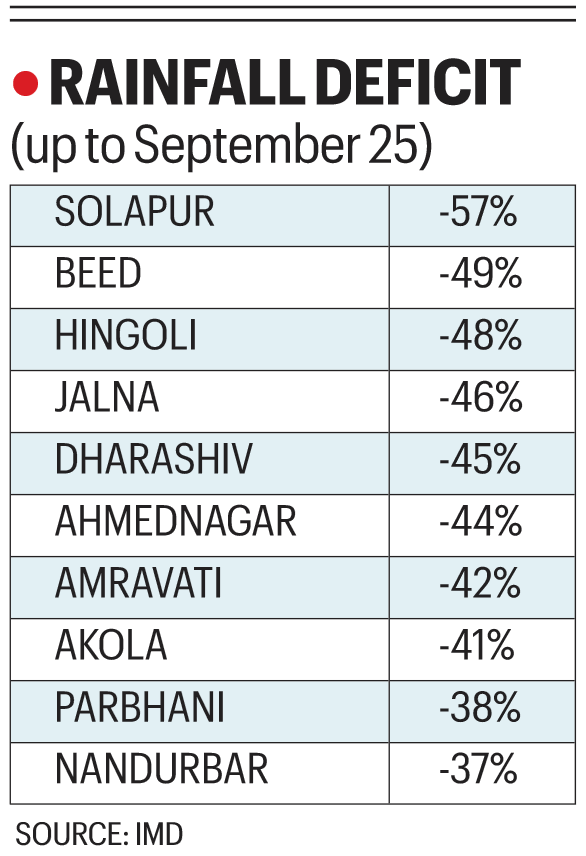
The big deficit is in seven districts — Solapur, Dharashiv, Latur, Hingoli, Jalna, Beed and parts of Nanded, which are away from Godavari river — where rainfall has been just around 50% of normal.
Except Solapur, all these districts fall in Marathwada region. Vidarbha region is a little less affected, while western Maharashtra, which is the sugarcane and onion producing zone, is in a relatively comfortable position. Nashik district, known for onion production, has received 37% excess rainfall till now.
What happens to crops?
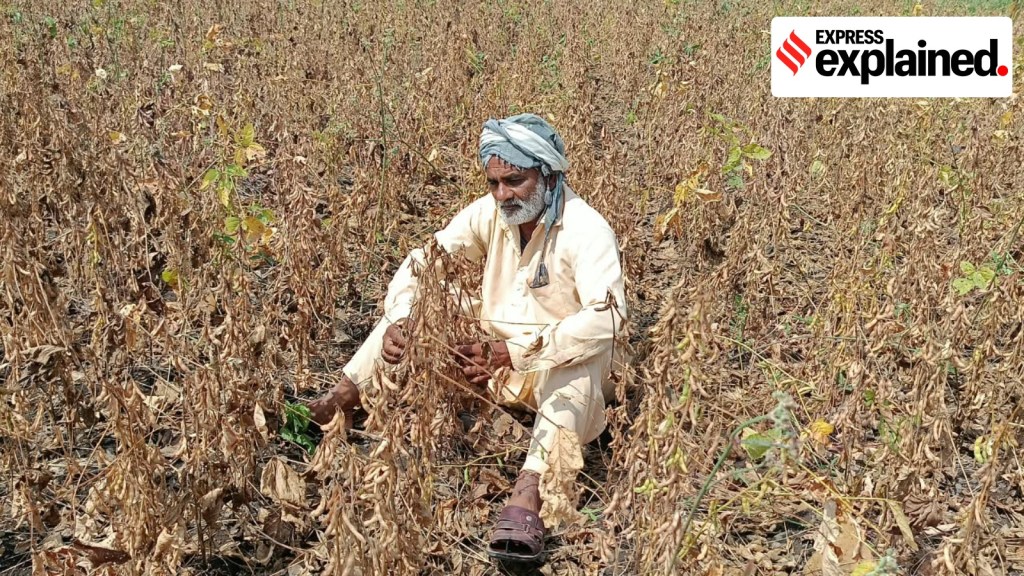
Traders and processors say the soyabean crop yield this year is likely to be 40-50% of normal in the Marathwada region, and 60-70% of normal in Vidarbha. The soyabean crop will start arriving in mandis in about 15 days, close to the Navratri festival. Prices in Latur are currently around Rs 5,600-5,700 per quintal, which is close to the government’s MSP of Rs 5,705.
In terms of availability of soyabean, an expected good yield in Madhya Pradesh is likely to offset the production losses from Maharashtra.
The problem is likely to be greater for crops like arhar/tur (pigeon pea), which is a longer-duration crop (160-180 days, versus 80-90 days for soyabean). Arhar will enter the flowering stage around the third week of October and pod-filling would begin around the first week of November. Harvesting generally starts in November-end and continues till the first week of December. Since rainfall is expected to remain sparse under the growing influence of the El Nino phenomenon, which is gaining in strength, this crop could experience terminal moisture stress.
Arhar prices are already at Rs 9,000-9,200 per quintal in Latur, well above the MSP of Rs 8,450. The market is clearly sensing a production shortfall. Even chana (chickepea) prices are at Rs 7,200/quintal or so, as against the MSP of Rs 5,875.
The real crisis, however, is likely to be experienced during the coming rabi season. The rainfall deficit has left very little moisture in the soil and reservoirs and borewells would also be depleted. Therefore, farmers may not go in for sowing of rabi crops like chana and jowar.




 Share


