Journalism of Courage



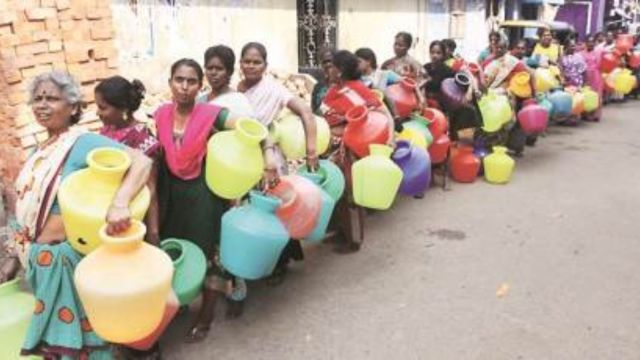 Study reveals nearly 12% of Kerala's wards are facing acute water stress, especially during peak summer months. (File Photo)
Nearly 12 per cent of the total wards in Kerala have been found to be facing acute water stress, especially when summer is at its peak during March-May, a new study led by multiple organisations in the state has said.
The top three worst affected districts are the state capital of Thiruvananthapuram, Kozhikode and Pathanamthitta districts where nearly 20 per cent of the wards are facing acute water shortage, it said.
As per the study, 2,567 (12 per cent) of the 21,908 total wards in the state are experiencing acute water stress. There has been a marked increase in the daily water consumption in comparison to previous years. The number of reliable water sources remains scanty, the study noted.
This first ever ward-wise water-stress study is an initiative by the Kerala State Council for Science, Technology and Environment and was jointly conducted by the Institute for Climate Change Studies, Kerala Forest Research Institute and the Centre for Water Resources Development and Management. The water consumption patterns, climate trends, community-level use and feedback were factored-in during the field study.
The joint study has recommended that if there are planned interventions at these identified water-stress hotspots, it is possible to manage water better in future.
In recent decades, Kerala has been receiving below normal rainfall. Kerala is a high-rainfall receiving Indian state with an average annual rain of over 3000 mm. The southwest monsoon season during June-September is the primary rainy season over the state when it receives nearly 70 per cent of its annual rainfall. Kerala also benefits from the northwest monsoon during October-December.
Some of the possible causes for the water stress, the researchers said, were erratic rainfall and longer dry spells, early summer onset, rising salinity levels, drying up of water sources — all of which were posing challenges even in meeting the basic water needs, particularly in urban and hill areas, the researchers said.
The findings of the study will be sent to the state government for implementing mitigation measures.

 2 min read