Journalism of Courage



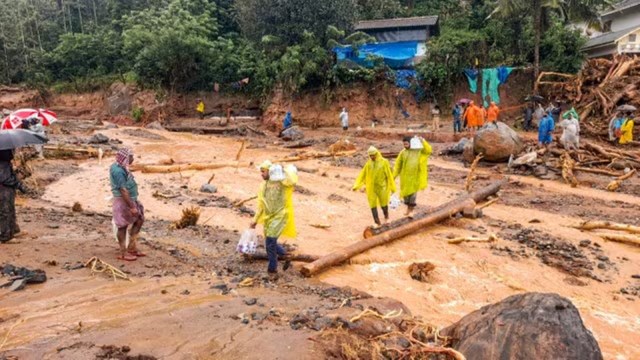 Wayanad received 140 mm rainfall in a day on July 30, which the study said was the third heaviest single-day rainfall event on record for the district. (File Photo)
The rainfall that triggered the recent landslides in Wayanad, killing more than 200 people, were made 10 per cent heavier by human-induced climate change, a new study has found.
The study by World Weather Attribution (WWA), an international group of researchers, found that the excessive rainfall in the early hours of July 30 that triggered the landslides was “once in a 50-year event”.
Wayanad received 140 mm rainfall in a day on July 30, which the study said was the third heaviest single-day rainfall event on record for the district.
“Overall, the available climate models indicate a 10 per cent increase in intensity. Under a future warming scenario where the global temperature is two degree Celsius higher than pre-industrial levels, climate models predict even heavier 1-day rainfall events, with a further expected increase of about 4 per cent in rainfall intensity,” the study said.
It said this would further increase the risk of landslides in the region. “The increase in climate change-driven rainfall found in this study is likely to increase the potential number of landslides that could be triggered in the future, raising the need for adaptation actions that may include the reinforcement of susceptible slopes, landslide early warning systems, and construction of retaining structures to protect vulnerable localities,” it said.
WWA researchers specialise in assessing the influence of climate change on extreme weather events worldwide. Their earlier studies had concluded that the heatwave in India in April last year, and again in June this year, had also been influenced by climate change.
“One-day spells of rainfall are increasing in Kerala… Before climate change, similar downpours in Kerala were incredibly rare. However, in today’s climate with 1.3°C of global warming, they are more likely, expected to occur on average about once every 50 years,” it said.
The study also found that factors such as quarrying for building materials, and a 62 per cent reduction in forest cover in Wayanad between 1950 and 2018, may have contributed to increased susceptibility of the slopes to landslides during heavy rainfall.
“More stringent assessments of landslides, restricting construction in hillside areas and minimising deforestation and quarrying are needed to avoid similar disasters in the future,” it said.

 3 min read