


Stay updated with the latest - Click here to follow us on Instagram
Tags:


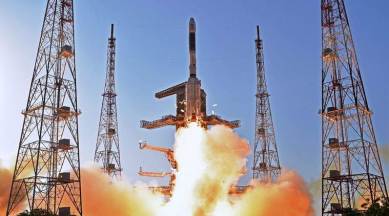
ISRO will usher in an age of high-speed Internet in India by launching three communication satellites — GSAT-19, GSAT-11 and GSAT-20 — in the next 18 months. These launches will not only revolutionise the way we use television and smartphones, but also drive the future communication needs of smart cities.
“The next big launch will be GSAT-19 in June… With this launch, we will begin a new age of communication satellites. It is also the beginning of high-throughput satellites (in India),” said Tapan Misra, director of Ahmedabad-based Space Applications Centre (SAC), an arm of ISRO that develops satellite payloads.

“You are already witnessing a change in the communication technology where voice and video communications are taking place through Internet. With future launches, television will be viewed through Internet using wireless Technology,” Misra said.
High-throughput satellites have been a gamechanger in the developed countries, providing Internet connectivity many times faster, smoother and cheaper.
“The effective data rate of GSAT satellites is one gigabyte per second. GSAT-19 will be able to transfer data at four gigabyte per second, thus making it equivalent to four satellites,” he said.
“One of the heaviest satellites ever to be built by ISRO — GSAT-11 — is scheduled to be launched in January 2018. It will have a data rate of 14 gigabyte per second. We plan to launch GSAT-20 by the end of next year. We plan to cover the entire nation with a satellite that will offer a data rate of 70 gigabyte per second. This is in sync with the requirement of high data-rate transmission needed by smart cities,” the ISRO scientist said.
GSAT-19 will also mark the first of three, full-fledged tests of GSLV Mark-III launcher (ISRO’s heaviest rocket) before it is officially declared operational. It will also test the new 25 tonne cryogenic engine which is three times bigger than the ones used earlier.
High-throughput satellite reuses satellite “beams” (signal) several times over smaller areas. In contrast, traditional satellite technology utilises a broad single beam to cover wide regions. “Till now communication satellites used a single beam to cover the entire country.
GSAT-19 will use eight narrow beams. GSAT-11 will have 16 beams. The narrow the beams, more is the power (sent by the antennas located on the satellite),” Misra added.
Stay updated with the latest - Click here to follow us on Instagram


