


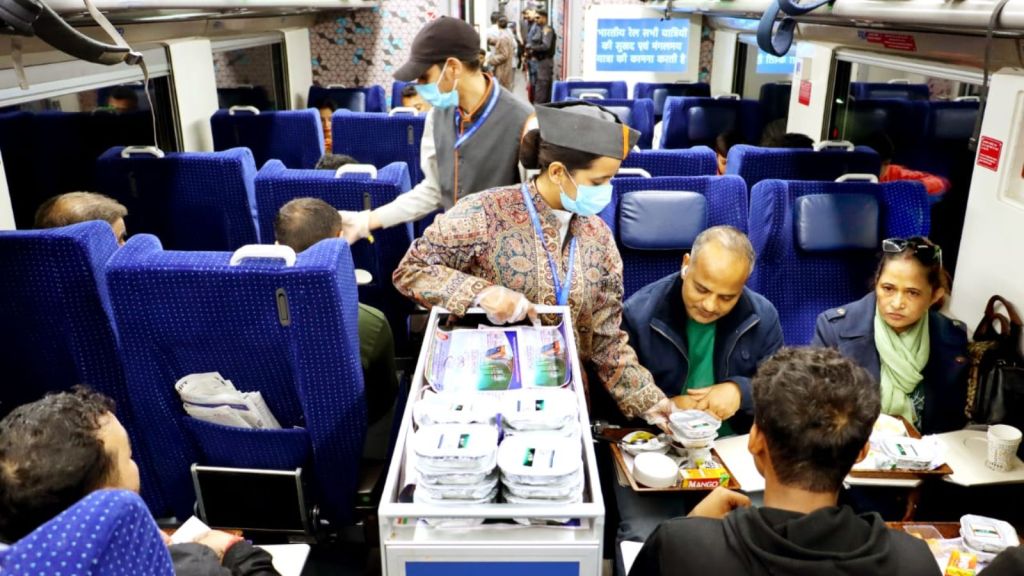
 IRCTC partners with QCI to audit food safety and hygiene on trains and at railway stations (Image: IRCTC)
Indian Railways Food Safety: IRCTC is introducing a digital monitoring system to tighten checks on food safety and hygiene at catering units on trains and railway stations. For this, the Indian Railway Catering and Tourism Corporation (IRCTC) has signed an agreement with the Quality Council of India (QCI) to bring its catering operations under a third-party audit mechanism.
The initiative aims to improve food safety checks, monitor hygiene standards, and make catering vendors more accountable for the quality of food served to railway passengers.
Under the agreement, QCI will inspect catering units managed by IRCTC on trains and at stations. The inspections will check food preparation and storage, staff hygiene, medical fitness, the use of protective equipment and pest control.
The official will use a mobile application to record their findings through photographs, geo-tagging and time-stamping. Audit reports must be submitted within 24 hours, helping IRCTC identify problems and track corrective action.
During the inspections, officials will also check the proper storage of vegetarian and non-vegetarian raw ingredients and temperature control for prepared meals. The audits will assess compliance with food safety rules set by the Food Safety and Standards Authority of India (FSSAI).
Food safety and hygiene are important concerns for passengers who depend on onboard catering during long-distance journeys or buy meals at railway stations. The new arrangement seeks to strengthen independent oversight of the catering services managed by IRCTC.
“This partnership marks a definitive shift toward a transparent, passenger-first future, ensuring every meal served on Indian Railways aligns with elite safety and health protocols,” IRCTC said in a statement.