
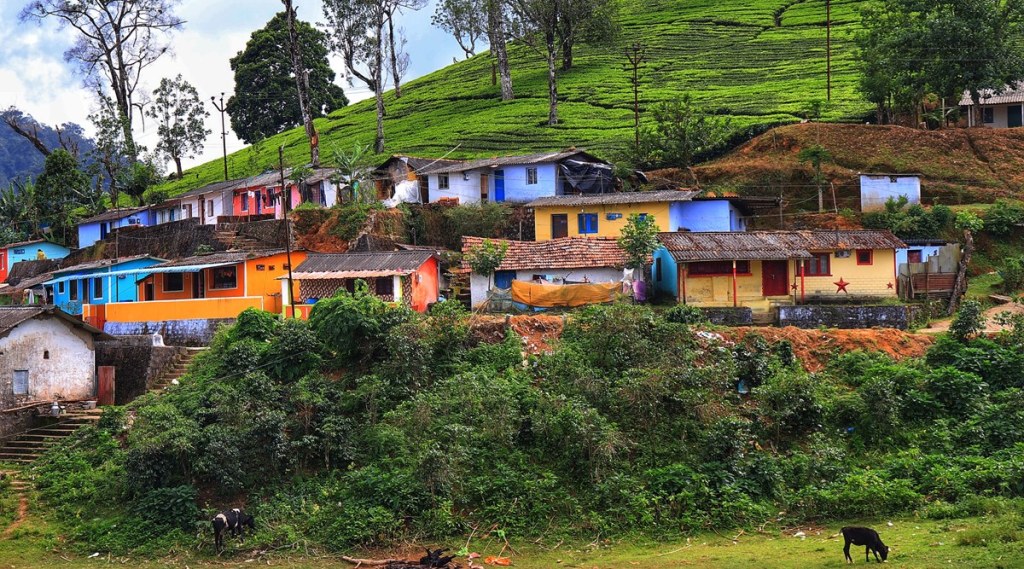
On the night of August 6, a river of mud and debris crushed four rows of living quarters of tea plantation workers in Pettimudi village in Kerala’s Idukki district, killing 70 people. The death toll, heaviest-ever inflicted by a landslide in Kerala, pointed to the dangerous living conditions of workers in line houses, or ‘layams’, in landslide-prone zones of the Western Ghats like the Nilgiris in Tamil Nadu.
“Do you know what layam is? It refers to kudhirai layam (horse shed). When thousands of people from southern Tamil Nadu districts were brought into the Ghats of India and tea-growing regions like Kandy in Sri Lanka as plantation workers, there were no proper shelters. Most of them lived in horse-sheds which were abandoned by British officials. That’s why they call their residential areas ‘layams or line houses,” said MS Selvaraj, Convener of Vivasayigal Thozhilalargal Munnetra Sangham (VTMS), an outfit that works among plantation workers and tribes.

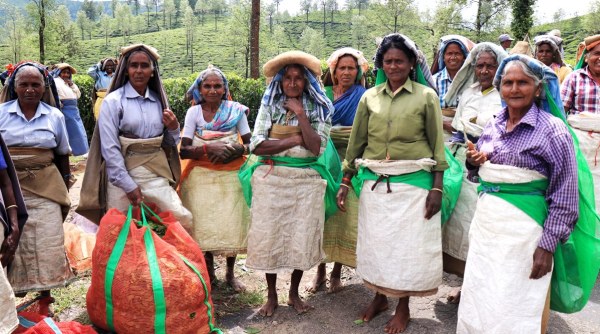 Living conditions in layams are poor and unimaginable. Plantation workers don’t have hygienic sanitation facilities and access to safe drinking water, said Selvaraj, an activist. (Express Photo: Nithya Pandian)
He is one among those who settled in the Nilgiris after the Sirima-Shastri pact was enacted. “People have blamed us for climate change, landslides and floods that have taken place in Nilgiris. I don’t understand direct or indirect connection between us and climate change. The Tamil Nadu government allocated living spaces for us in the most vulnerable areas,” he said.
According to a study, a total of 1,040 landslides have occurred in a period between 1987 and 2007 in the Nilgiris, with 65% of them occurring in railway slip areas. A massive landslide in October 1990 at Geddhai had claimed 36 lives. In August this year, incessant rain caused a 300-foot landslide in Emerald, Nilgiris with the district administration declaring 283 areas such as Avalanche, Gudalur, Manjoor and Keezh Kundah as ‘landslide-prone.’
Living conditions in layams are poor and unimaginable, underlined Selvaraj. The plantation workers don’t have hygienic sanitation facilities and access to safe drinking water. Two or three families are forced to share the same living space.
“I can say the living conditions and safety of tea plantation workers in Idukki is far better than the Nilgiris. Estates like Cherankodu, Cherambadi and Kolappalli TANTEA are adjoining forests home to elephants, boars, gaurs, snakes and bears. We record at least 2 human deaths every month in conflict with animals,” said Selvaraj.
He added, “When climate change occurs, it hits us first. In the last two years, unpredictable rain and weather conditions have led to so many landslides in tea estates which largely went unreported. Last year, a cloudburst caused a massive landslide in Kolappalli. The debris was cleared after three months. During the British Raj, we were made to work as bonded labourers. And now, we are working as semi-bonded labourers. Our lives, lifestyles, income and living conditions have witnessed no changes at all.”
 Heavy monsoons have been seen as adversely impacting the fortunes of tea growers. (Express Photo: Nithya Pandian)
Assistant Professor Manivannan at the Ooty Arts and Science College said the use of the weed-whacking herbicide called ‘roundup’ for many years has caused huge damage to the soil in the Western Ghats. As a result, the soil has become too loose, unable to absorb water. Several new dams on rivers flowing through the region has also caused changes in the direction and water current of the river, he said.
During the onset of the southwest monsoon, western parts of the Nilgiris receive copious amounts of rainfall. During the northeast monsoon, eastern parts of the slopes receive rainfall.
Also read | Pettimudi underlines why Kerala is the Petri dish for climate change and reckless development
Ramakrishnan, the managing trustee of Nakkubetta Foundation, remembers those days when rain poured every day through the second half of the year.
“Landslides are not happening all of a sudden. It is an absolute result of decades of wrongdoing to nature. Nilgiris became home to the poor after monoculture was introduced. This place initially had a lot of native trees and millet species but monoculture transformed the soil. With the use of pesticides, chemical fertilisers and repeat planting methods, the texture of the soil changed gradually. In olden times, our grandparents used to worship the land and would never touch the land for three months every year,” said Ramakrishnan, who has been planting native trees across the Nilgiris and encouraging people to do the same through social media and television programmes.
“But now, everything has changed. People are encouraged to grow tea, cash crops and imported tree species. Imported tree species cannot withstand the Nilgiris’ weather conditions and get uprooted even in a slight downpour.”
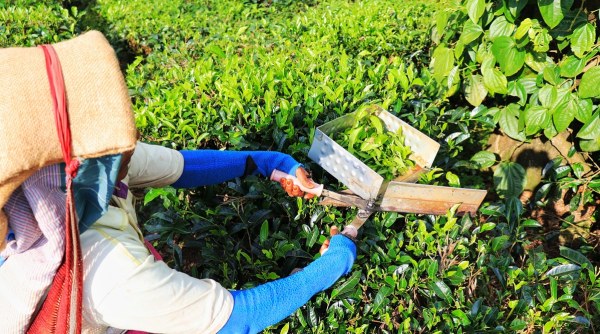 In the Nilgiris, tea bushes were introduced in 1835 by Lord William Bentinck, who served as Governor General of India from 1828 to 1835. (Express Photo: Nithya Pandian)
Ramakrishnan alleged that the government’s agriculture department is not promoting the importance of planting native trees.
“A small Badaga village in the proximity of Good Shepherd International School in Bygemandu once had more number of Neervanji trees (Salix Tetrasperma) which has the capacity to hold the water at its roots during the monsoon. Today, only Ooty botanical garden has a few trees,” he said.
In the Nilgiris, tea bushes were introduced in 1835 by Lord William Bentinck, who served as Governor General of India from 1828 to 1835. He procured seeds from China and planted it in parts of Coonoor and Ooty. After two years of hard work went into vain, the tea plants developed by Swiss-French botanist Georges Guerrard-Samuel Perrottet was put to trial in Doddabetta peak. With the help of John Sullivan, the first Collector of Coimbatore (encompassing parts of Nilgiris in the past), he got the approval to create tea plantations in the Nilgiris. The first tea estate was established at Thaishola in 1859. The British bought the land from indigenous people to expand the tea estates but the tribes were not willing to work as labourers. And so, British officials brought farm-workers from southern districts of Tamil Nadu to work in the estates.
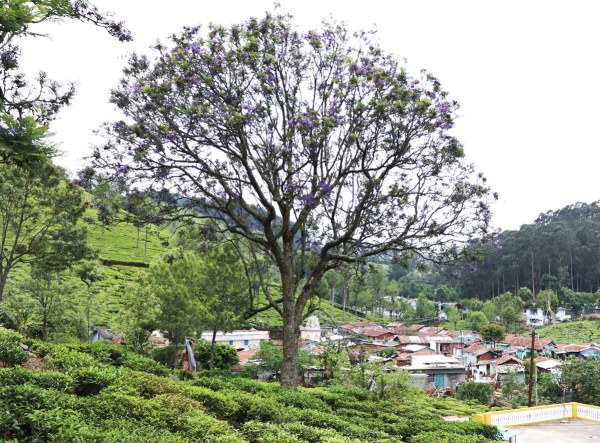 According to a study, a total of 1,040 landslides have occurred in a period between 1987 and 2007 in the Nilgiris, with 65% of them occurring in railway slip areas. (Express Photo: Nithya Pandian)
HN Shivan, founder-president of the Nilgiris Nelikolu Micro and Small Tea Growers and Farmers Devt Society in Ooty, believes the underlying reasons of natural disasters like landslides go back to the large-scale changes of land use.
He said, “Small and micro tea growers cultivate tea in around 1 lakh acres in the Nilgiris, contributing about 85% of the total tea production. But the procurement price for a kilogram of tea leaves fixed by the tea board is only Rs. 15. These growers don’t want to pile on more debt on their shoulders so they sell their lands to outsiders who in turn go on to develop cottages, resorts and hotels businesses in Ooty.”
Besides, heavy monsoons have been seen as adversely impacting the fortunes of tea growers.
“Last year, heavy rainfall leading to floods and waterlogging caused severe drawbacks to the small cultivators and 65000 people whose incomes are either directly or indirectly connected to tea. Tea shrubs worth more than Rs 500 crores were washed away from the Nilgiris along with 40,000 tonnes of soil into the Bhavani River,” said Shivan.
Vijayan, an advocate in the Nilgiris, attested that successive governments have failed to address the concerns of the workers in the ‘layams’ even as it allowed outsiders to come in and build properties by snatching land from the indeginous people.
“We should address them as man-made disasters, not natural calamities,” he said.
In the Nilgiris, like other tea plantations in Tamil Nadu and Kerala, demand for a piece of land of their own has been a prolonged issue among workers. As of now, plantation workers are forced to leave their layams at the time of their retirement, with benefits paid to them only once they leave the ‘layams’.
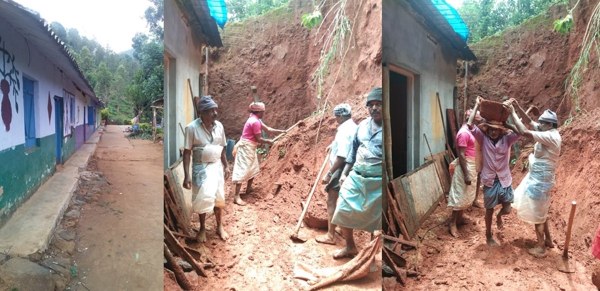 Kolappali landslide, 2019 (Photo: special arrangement)
Activists like Selvaraj say the government must provide 3-acre land to every plantation worker and help them form local societies to grow tea because the latter claims that the Tamil Nadu Tea Plantation Corporation Limited (TANTEA) has made no profits in recent years and plans to lease the land to private companies. At present, the TANTEA and all private tea plantation companies in Nilgiris and Valparai provide rent-free accommodation, provision of drinking water, free medical facilities, creche to the children and maternity leave for 84 days.
Meanwhile, workers in the Willony upper-division tea estate in Valparai said the tragedy at Pettimudi in Kerala persuaded the Tata Tea company to provide new living quarters. The quarters in which they lived earlier was next to a hill.
“The company doesn’t want to risk our lives. It is taking care of us and provides security to workers and layams. The Pettimudi incident and the unusual high rainfall led the company to take this decision,” said Karthi Priya, employed at a government ration shop at Willony since 2003. Her native village is Vasudevanallur in Tenkasi but her parents relocated to Valparai 60 years ago.
“If my kids or grandkids are not ready to work in these estates, we no longer have the right to live in the layam. This is the only thing that breaks our bond with the land that we reshaped from bushes and forests to tea-estates,” she said.
The company has appointed a health inspector to check the layams once a week and has also placed an electric fence with permission from the forest department to safeguard them from wild animals.
(Edited by Vishnu Varma)

 Share


