


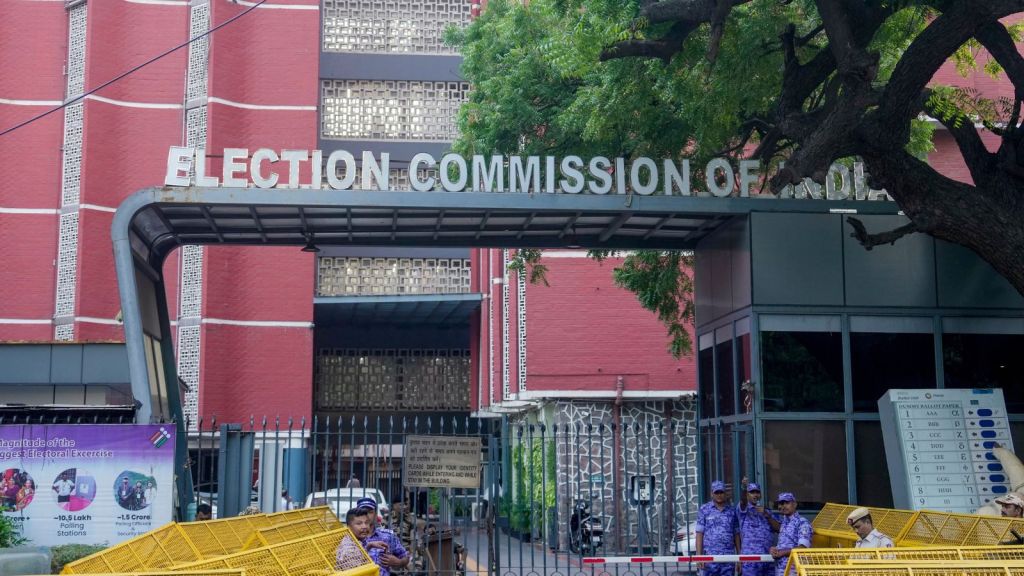


Noting that “instances” of filing of bulk Form 7s had led to “avoidable inconvenience” to voters, the Election Commission of India (ECI) Friday tightened limits on the number of applications that can be submitted by individuals. Form 7 is the statutory form to seek deletion of an elector or file objection to the inclusion of a name in the electoral roll.
In instructions issued to Chief Electoral Officers of all states and Union Territories, the ECI has put a limit of 10 Form 7s per individual, in both online and offline mode, during the claims and objections period of the revision process, and five per month during continuous updation of electoral rolls in the normal course.
While the ECI already caps the number of online Form 7s an individual can file to six at a time, there was no limit on the number of Form 7s that an individual could submit physically to Electoral Registration Officers (EROs).
The commission has been facing flak over reports of targeted bulk Form 7 submissions, and in its instructions Friday, the EC referred to the same.
“… instances have been brought to the notice of the Commission of filing of Form 7 objections in bulk by individual electors on unsubstantiated grounds, resulting in avoidable inconvenience to the elector objected upon and increased workload on field-level functionaries,” it said.
In recent days, Karnataka Chief Minister D K Shivakumar has alleged that BJP workers had been given pre-printed Form 7 applications to seek deletion of voters in the ongoing Special Intensive Revision (SIR). An FIR was registered against BJP workers in the state in connection with the same.
The ECI letter Friday said: “Although the number of applications to be filed online by an individual elector has been fixed as 6 at a time subject to disposal, the number of physical forms presented in bulk has not been defined and has been left to the judgement of the EROs, which is creating challenges for the field functionaries. Accordingly, the Commission with the intent to discourage bulk filing of objections by an individual elector has decided to prescribe… [limits] on filing of Form 7 applications in both online and offline mode.”
Story continues below this ad
Now, individuals can file 10 Form 7s in both online and offline mode during the entire period of claims and objections, which is usually for one month following the publication of a draft roll during an exercise like the Special Summary Revision or SIR. When the revision process is not underway and the electoral rolls are in continuous updation, individuals can file a maximum five Form 7s per month, the ECI said.
According to Rule 13 (2) of the Registration of Electors Rules, 1960, any objection to a name proposed to be included in the electoral roll or application for deletion of a name on the roll can only be through Form 7, and only an individual who is registered to vote in the same Assembly constituency can submit one.
Apart from individual electors, Booth Level Agents (BLAs) appointed by recognised political parties can also file forms for claims and objections. For the SIR, the ECI had allowed BLAs, who are also required to be registered as voters in the same constituency, to file up to 50 forms per day with Booth Level Officers (BLOs) in the period before the publication of the draft roll and 10 forms per day after that.
In its letter, the ECI reiterated the provisions of the Registration of Electors Rules, saying EROs are to issue a notice to the objector, hear the objector personally and record statements separately for each Form 7. Once an ERO is satisfied about the validity of the objections, the person objected to has to be given the opportunity of a hearing before the ERO passes an order.
Story continues below this ad
“It may also be ensured that in case the ERO finds that the complaint is false / fabricated, he shall proceed to take action against the applicant who has knowingly made a false statement or declaration in writing in the Form 7 as per the provisions of Section 31 of the Representation of the People Act, 1950. The Chief Electoral Officers are requested to bring the above to the notice of all concerned EROs / AEROs and other field-level functionaries for necessary compliance and also sufficient publicity be given to these instructions,” the ECI said.
Since the SIR started, political parties across states, including Jharkhand, Odisha and Telangana besides Karnataka, have levelled charges at rivals of filing bulk Form 7s to target voters.
In September, the Biju Janata Dal took up the issue with the Odisha Chief Electoral Officer, after 10 Booth Level Officers appointed by the ECI filed a police complaint that Form 7s were being uploaded in their names without their knowledge. The EC had then taken action and removed the Assistant ERO concerned for allegedly using the BLOs’ log-in credentials to submit the bulk forms.