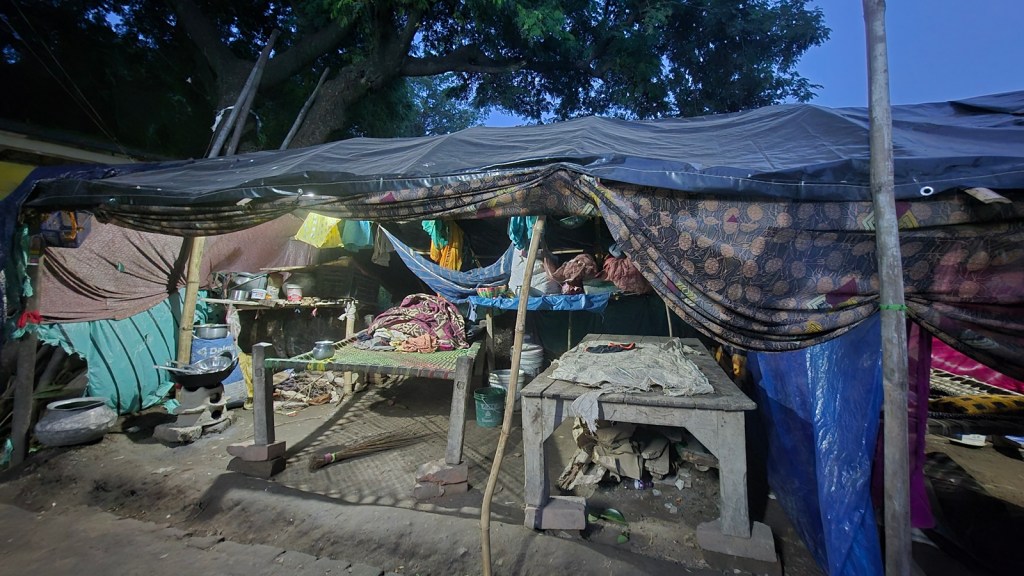
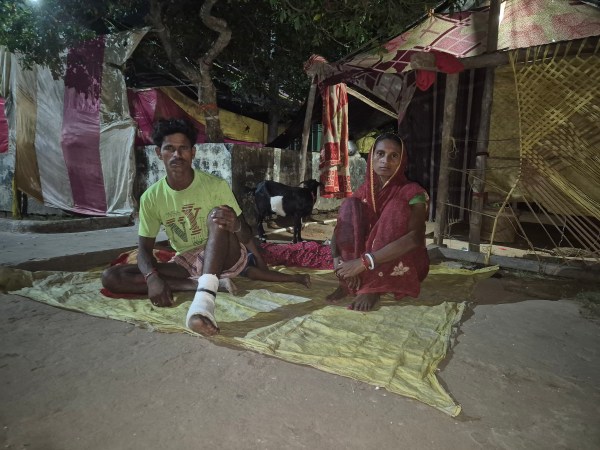
Outside a tent made up of black plastic sheets at Bhagalpur’s Tilha Kothi, Raj Kishore is lying on a cot — one thing his family managed to salvage from the floodwaters that entered their home nearly a month ago.
Apart from being a bed, the cot functions also as a chair, and a place to keep whatever remains of their belongings.
“Documents, cash, jewellery — everything was submerged, including the grain we had stored in drums,” says the 25-year-old.
 Even as the elders try to come to terms with their losses, the district administration has come up with a different routine for children in the camps. (Express Photo by Himanshu Harsh)
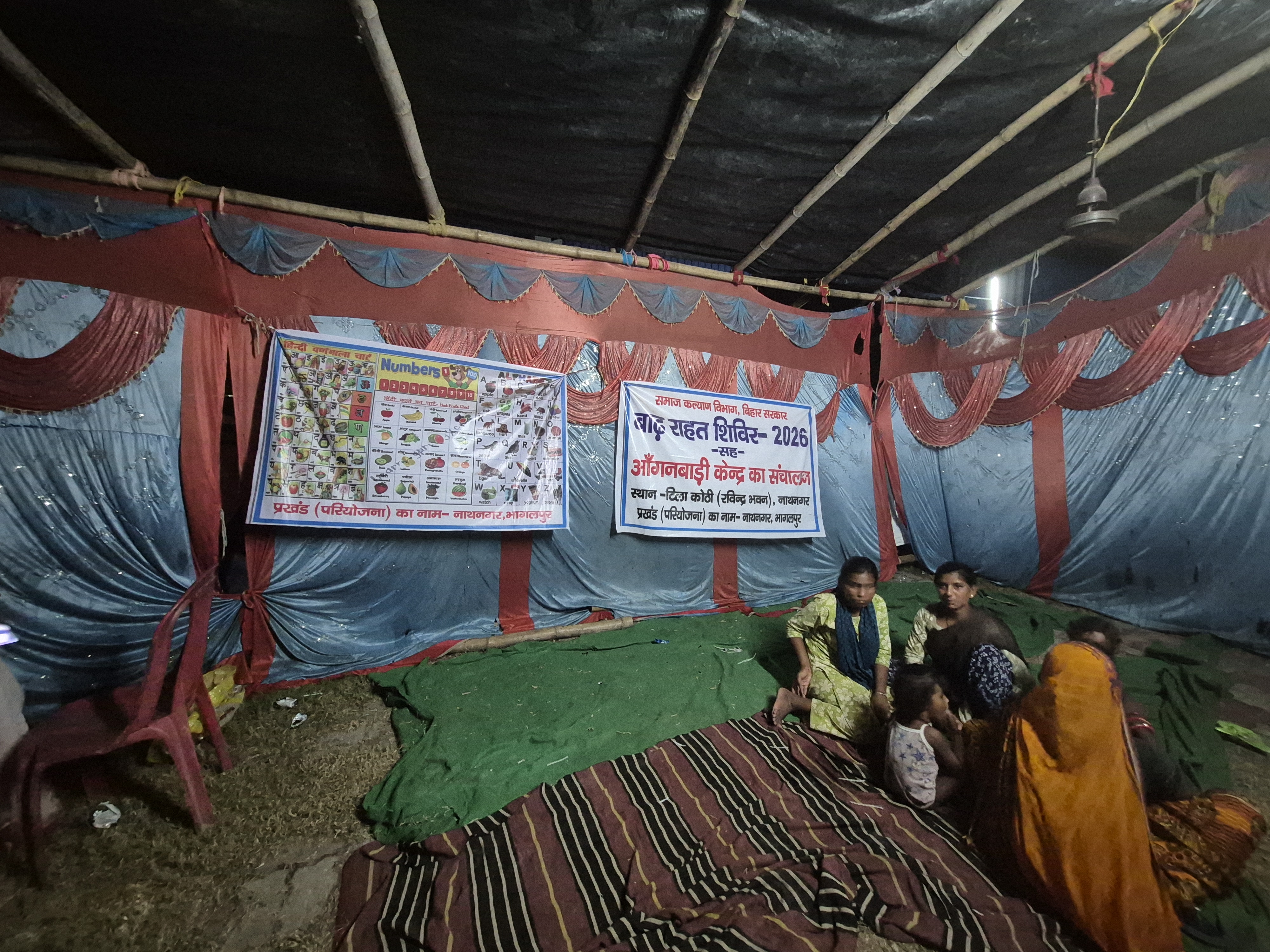
For Kishore, and hundreds of others like him in Bhagalpur, displaced in the recent floods, this kothi inside the Tilka Manjhi Bhagalpur University campus is their temporary home.
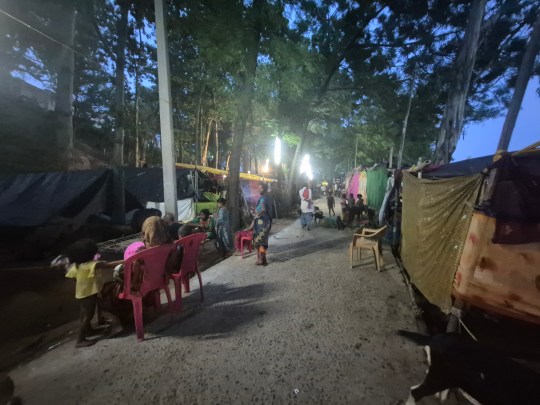
Black plastic sheets stretch over bamboo poles, forming low shelters along narrow cemented pathways. Some structures are covered with colourful fabric; others are wrapped in old saris.
Outside one tent, a group of women are talking. Children run around, weaving their way between tents, and goats.
Story continues below this ad
A medical team is stationed near the entrance; there is also an anganwadi centre where around 30 children attend classes in two shifts.
Even as the elders try to come to terms with their losses, the district administration has come up with a different routine for children in the camps. (Express Photo by Himanshu Harsh)
It could be a village compressed into a few hundred metres.
A small crowd is gathered around two men locked in an argument. Suman Kumar, 23, says this is very common. “Everyone here has lost so much. Emotions run high. Small disagreements can quickly escalate.”
Food is being served to the displaced at another building on the campus, Rabindra Bhawan. Incidentally, it is named after Rabindranath Tagore, who is known to have stayed here, with parts of Gitanjali, which earned him the Nobel Prize in Literature, associated with his time in Bhagalpur.
Story continues below this ad
A control centre here monitors the feeding of around 250 families. “We serve meals twice a day,” says Hanish Kumar, a teacher volunteer, as dal-chawal and soyabean-aloo is ladled out.
Even as the elders try to come to terms with their losses, the district administration has come up with a different routine for children in the camps. (Express Photo by Himanshu Harsh)
Suman was in Ludhiana when waters entered his house. He could reach home only four days later. “There is only one train connecting Ludhiana and Bhagalpur and it runs once a week,” he says.
Like Suman, many in the camp are migrant labourers living outside Bihar. Some say they could not even collect their wages. Among them is Karan Kumar, employed at a construction site in Hyderabad.
Kishore says he keeps going back to check on his house, which is still underwater. “The water is so dirty that you cannot see anything beneath it,” he says. But sometimes, if he is lucky, he adds, “things float to the surface”. He says, “We collect whatever we find.”
Story continues below this ad
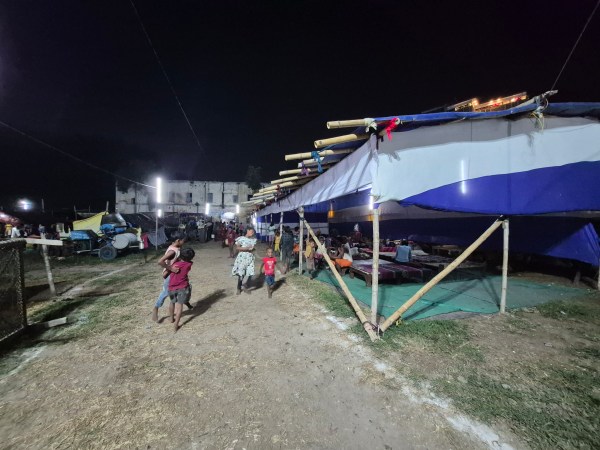
At the T N B Collegiate Ground Relief Camp, barely two kilometres away, around 650 people from the submerged areas of Dildarpur, Shankarpur and Bairariya are sharing space with animals, including cattle which are tied in the open.
A large rectangular common tent stands on one side, with rows of smaller shelters occupying the ground.
Even as the elders try to come to terms with their losses, the district administration has come up with a different routine for children in the camps. (Express Photo by Himanshu Harsh)
Even as the elders try to come to terms with their losses, the district administration has come up with a different routine for children in the camps. For the last few days, Local artists have been teaching them Manjusha — the traditional art form associated with the Bhagalpur region. There are also storytelling sessions, cultural programmes and film screenings.
“We are trying to make the situation a little better for children through art therapy,” says Bhagalpur district art and culture officer Ankit Ranjan.
Story continues below this ad
The programme, organised by the state art and culture department in collaboration with the district administration, is held daily, he adds.
“Although they are meant for children, many women are also beginning to participate,” he says.
For many families, the animals are the most valuable assets they have left. But, as Ram Mohan says, “Even the animals who survived need to be fed and watered. For now, they are getting that here. But we do not know about the future.”
Mrityunjay Kumar, a teacher helping run the relief camp, says there are around 400 cattle on the camp grounds. Many people whose homes are still standing also come in for meals, he adds. “They go back as they fear someone may break into their homes and steal whatever is left.”
Story continues below this ad
Rajesh Kumar says the flood couldn’t have come at a worse time. The maize crop had been harvested around April, with some left over for contingency. Now all of it is under water.
‘Art therapy’ for children
At the Tilha Kothi camp, local artists have been teaching the children Manjusha — a traditional art form associated with the Bhagalpur region – for the last few days. There are also storytelling sessions, cultural programmes and film screenings.
“We are trying to make the situation a little better for children through art therapy,” says Bhagalpur district art and culture officer Ankit Ranjan.
The programme, organised by the state art and culture department in collaboration with the district administration, is held daily and also gets women participants, he adds.
However, the road to normalcy will be long.
Story continues below this ad
Usha Devi, who is staying at the T N B Collegiate camp, says after the flood water recedes, they will need to clean their houses, remove the mud and sludge, salvage whatever can be saved, and make the homes habitable again. “It may take until Chhath (in November),” she says. “How will people earn a living in the meantime? After the relief camps close, we do not know what will happen.”
Back at the university camp, as the sun goes down, tubelights strung along wires and ropes begin illuminating the narrow paths between the shelters. People emerge from their dark tents, and some light cooking fires. “Since we have been serving rice in all meals, those who prefer roti make it themselves,” says a volunteer.
Adjusting the black sheet over his tent shared by 10 members of his family, Surya Narayan Mandal, 52, says: “Whatever we earn every year, the Ganga takes it away.”
He is worried about two loans, amounting to around Rs 70,000-80,000, he took from self-help groups earlier this year. The money had gone into crops and other household necessities, much of which is now gone.
Story continues below this ad
What Mandal wants is not another relief camp but a place where the river cannot reach the homes so easily. “The government should rehabilitate us, somewhere on higher ground.




 Even as the elders try to come to terms with their losses, the district administration has come up with a different routine for children in the camps. (Express Photo by Himanshu Harsh)
 Even as the elders try to come to terms with their losses, the district administration has come up with a different routine for children in the camps. (Express Photo by Himanshu Harsh)
 Even as the elders try to come to terms with their losses, the district administration has come up with a different routine for children in the camps. (Express Photo by Himanshu Harsh)
 Even as the elders try to come to terms with their losses, the district administration has come up with a different routine for children in the camps. (Express Photo by Himanshu Harsh)
 Even as the elders try to come to terms with their losses, the district administration has come up with a different routine for children in the camps. (Express Photo by Himanshu Harsh)
