4 min readBhubaneswarMar 14, 2025 10:23 PM IST
First published on: Mar 14, 2025 at 04:20 AM IST
Odisha’s Balasore witnessed one of the country’s worst railway disasters on the evening of June 2, 2023, when Chennai-bound Coromandel Express rammed into a stationary goods train at Bahanaga Bazar station. Minutes later, the coaches derailed in the collision were hit by the Yeshvantpur Express that was going towards Howrah from the opposite direction.
As many as 296 people died.

The then district magistrate (DM) of Balasore, Dattatraya Bhausaheb Shinde, got to know about the accident at around 7 pm. He then set out on the daunting task of mounting a multi-agency response to the tragedy.
Balasore was his first posting as a DM and he was appointed just a year earlier. Immediately after being informed about the accident, he alerted the district emergency operation centre and mobilised the fire service and the locally stationed state disaster response force to rush to the spot.
He also dialled the chief secretary and the Chief Minister’s Office to apprise them of the situation. The subsequent rescue and restoration operation was hailed as a model by experts. It has also been incorporated into district disaster management plans all over the country by the National Disaster Management Authority (NDMA).
“The key to the success of the massive rescue operation can be attributed to the excellent coordination between the district administration, fire services personnel, healthcare authorities and disaster management authorities. Our (state administration’s) capacity in terms of skill and equipment was massive and was mobilised with full capacity within hours,” said Pradeep Kumar Jena, who was serving as chief secretary and monitoring the coordination.
The engagement of community leaders and civil society helped drive the rescue operation in an effective manner, said Jena.
Local residents, police and the fire services team were the first responders who moved several injured passengers from the site of the accident to hospitals. The National Disaster Response Force and the Odisha Disaster Rapid Action Force took over after their personnel reached the spot within a few hours. Police personnel were assigned to manage the massive crowd that had gathered at the site.
Former Balasore DM Dattatraya Bhausaheb Shinde. (Express photo by Praveen Khanna)
Local residents not only provided food and water to the injured and distressed passengers but also arranged a special blood donation camp that saw thousands of participants. Women’s self-help groups distributed cooked food while members of Panchayati Raj institutions coordinated efforts at the local level, officials said.
The state government then further upgraded its response. Nine senior bureaucrats, including Additional Chief Secretary (Home) Satyabrata Sahu, who was then serving as special relief commissioner, were directed to reach the accident sites.
Along with Balasore and Bhadrak, the chief district medical officers of five nearby districts were asked to divert the majority of their ambulances with basic medicines to the accident site.
According to senior officials, a plan was prepared at the district level with specific assignments to district-level officials.
The district administration’s data said that over 3,000 people were injured in the collision and that 1,400 people were rushed to various hospitals. As many as 384 critical surgeries were conducted overnight which helped to save many lives. Nearly 140 doctors, 198 paramedics, 297 ambulances, 97 body carriers, over 1,000 volunteers and 600 rescue personnel worked for 56 hours non-stop to pull off the operation.
Following the massive rescue and restoration efforts, passenger train services resumed within 50 hours.
For the efficient, multi-agency response to the tragedy, creating a benchmark in disaster management, Dattatraya Bhausaheb Shinde has been recognised under the Disaster Management category of the Excellence in Governance Awards 2024, organised by The Indian Express.
“The sheer scale of the accident moved me… We analysed how such big accidents should be approached. Getting thousands of people medical assistance was a challenge. The biggest challenge was segregation according to injuries and as per needs,” Shinde said.
With ENS, New Delhi

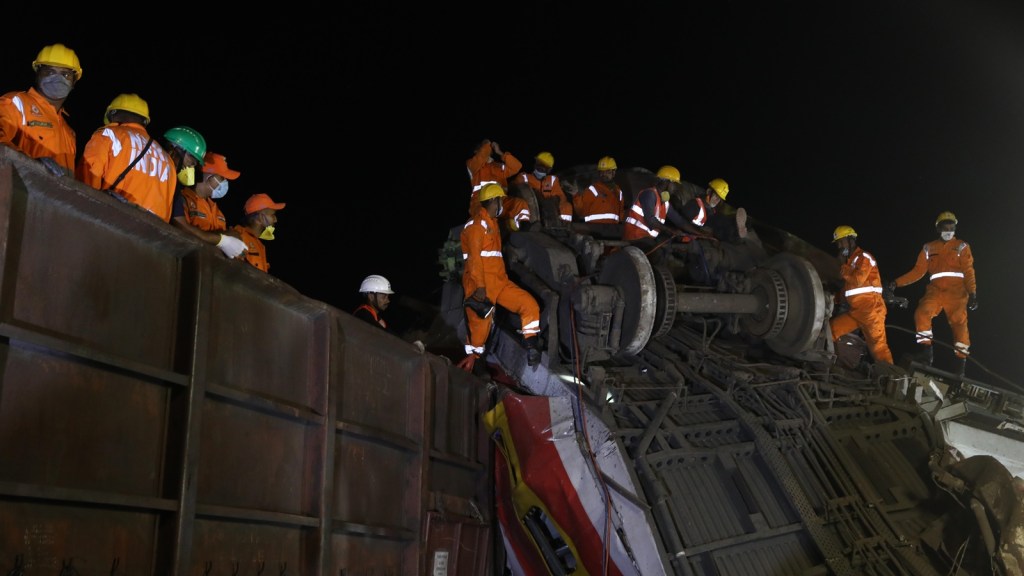 Rescue operations after the Balasore disaster. (Express photo by Partha Paul)

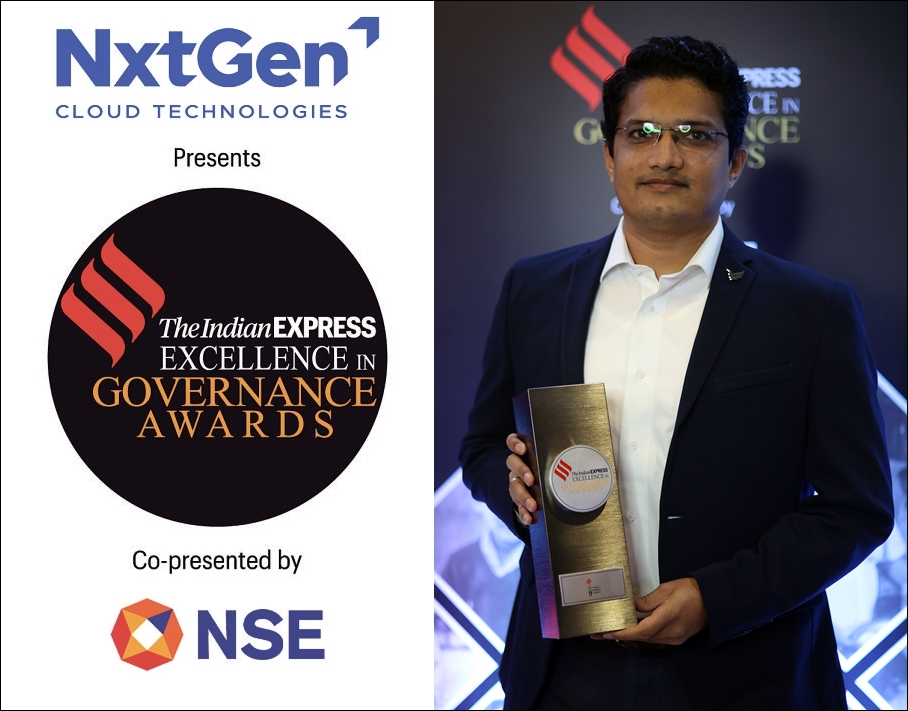 Former Balasore DM Dattatraya Bhausaheb Shinde. (Express photo by Praveen Khanna)


 Share


