

This is a colour bias that rarely gets spoken about but can be just as damaging. Ask 40-year-old Harsha Mukund, a resident of Coimbatore, who has been living with vitiligo, an autoimmune disorder that causes skin cells to lose their pigment. “From being bullied in my teens, ostracised for fear that my condition was infectious or leprosy and pitied for being an oddball, I have battled body shaming and stigma all along,” he says. But now he’s founded a company that makes medicated camouflaging cream, which not only blends with Indian skin tones but is long lasting and does not become runny in the sun.
Vitiligo has no cure but people manage the patchy appearance of it on the skin with various pigmentation therapies, skin grafts and cover-up concealers. Dr Kanika Sahni, additional professor in the department of Dermatology and Venereology at AIIMS, whom Harsha met after his struggle with body image, feels camouflaging creams are crucial tools in managing the disease. “We did research at AIIMS and found that with all the other treatments remaining the same, if one group received the camouflage, it significantly improved their quality of life, their social interactions and reduced the stigma. That’s why we have started emphasising that camouflage be prescribed to all patients of vitiligo,” she says. “Medicated camouflage creams today not only conceal white patches but prevent the skin from sunburn, rashes, blisters and acne that a person affected with vitiligo is more vulnerable to,” says Harsha.

WHAT CAUSES VITILIGO?
Vitiligo is a chronic autoimmune disorder that causes patches of skin to lose pigment or colour. This happens when melanocytes — skin cells that make pigment — are attacked and destroyed, causing the skin to turn a milky-white colour. Lack of melanocytes can also expose the skin to the harsher effects of the sun’s ultraviolet (UV) rays, leading to sunburns and boils. Approximately 30 per cent of people with the condition have a family history of vitiligo. Harsha’s case is one such though it can happen to anybody. “My uncles had the condition. So when I developed a patch on my chin at age 13, I wasn’t too self-conscious. But within a year, my chin was covered with a white patch. Soon the patch enlarged to cover my back,” says Harsha. Most cases of vitiligo start small but there is no predicting its progression. “Prompt treatment can improve your chances of slowing progression,” says Dr Sahni.
STIGMA IS A BIGGER DISEASE
Stigma and social isolation are what have led Dr Sahni to form the Vitiligo Foundation of India, where doctors, patients and researchers have created a safe space for discussing stigma besides therapies. “People still confuse vitiligo with leprosy. Patients often face stigma at the workplace. Many of my patients have had to give up their jobs or been asked to leave. The affected tell us how they have to miss ceremonies and family functions or are deliberately excluded from those events. Many prefer not to return to their villages where they are almost ostracised with some being asked to move out of their homes. Children are the worst hit and easily sink into depression,” says Dr Sahni.
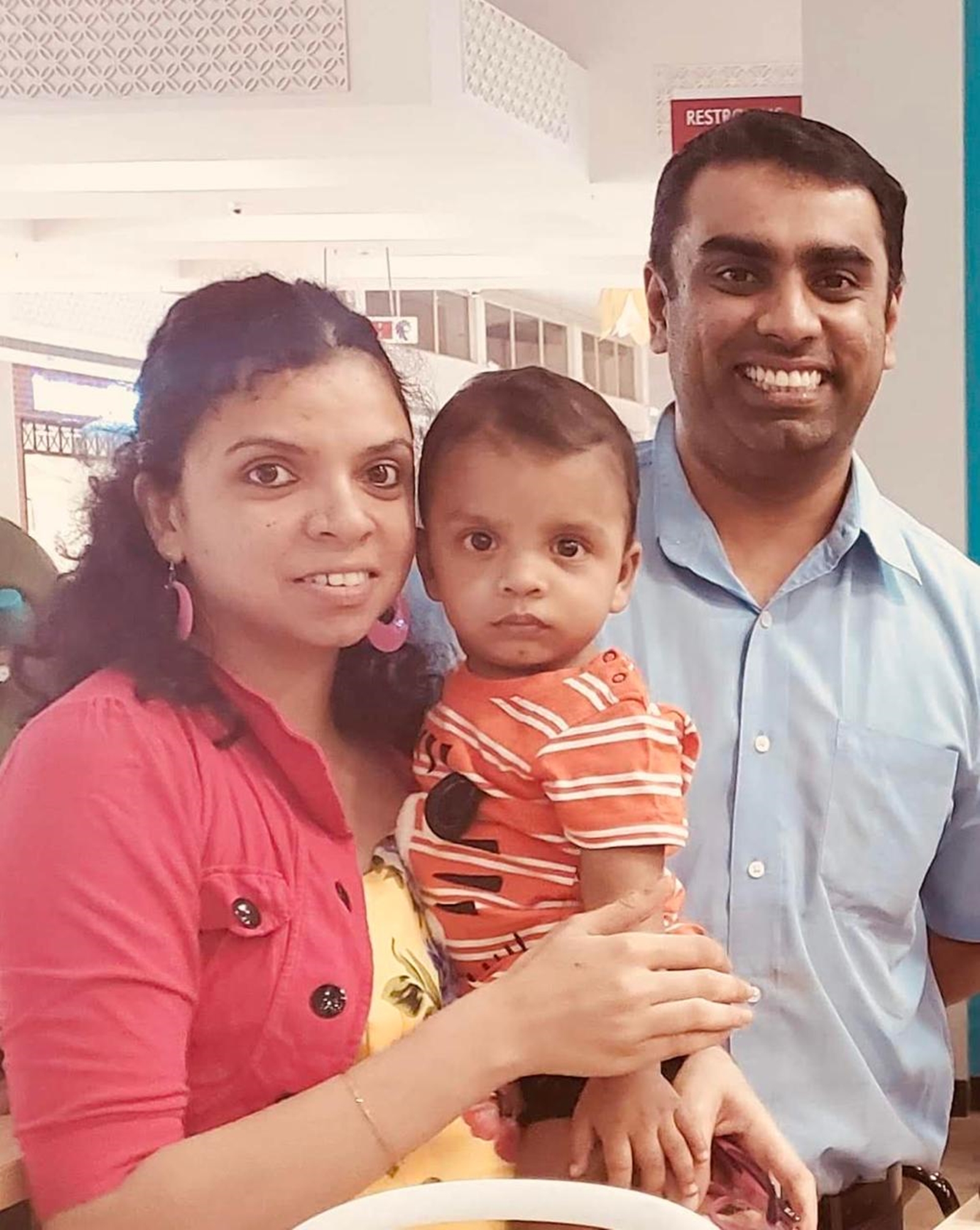 Harsha Mukund with his family
But the most severe challenge faced by vitiligo-affected people has been marriage. “People hesitate to even formalise alliances when any kin of the bride or groom have vitiligo,” she says. However, Harsha was fortunate to find a partner who valued him for who he was rather than his physical appearance. Dr Sahni now offers psychological support alongside medical, surgical and light therapy treatments.
LONG-WINDED THERAPY
Harsha has had a series of surgeries like punch grafting, which involves transplanting skin tissue from the donor area on affected patches. Many patients see a significant return of skin colour and a better look in the treated areas, with success rates ranging between 70 per cent and 90 per cent. He did balloon grafting, which involves implanting healthy skin just next to the scarred patch. By injecting a sterile solution into it over time, the healthy skin stretches and gradually encroaches into and covers the scar. Harsha also took pphototherapy treatment, which uses light beams to stimulate repigmentation in discoloured areas.
“These treatments are expensive (grafting could go up to Rs 70,000 per session) and may not help every patient equally. In fact, we get many patients who come to AIIMS with side effects because of incorrect advice. With correct procedures, repigmentation is a success with a large number of patients. Now there are advanced therapies like cellular transplants, where cells are extracted from the patient’s healthy skin grafts and transferred in a liquid medium,” she says.
BODY CONFIDENCE
Working closely with Dr Sahni and having researched on camouflage creams while working in Australia for 12 years, Harsha set up his own research and development team to roll out a cream for Indian conditions. “Properly applied camouflage techniques can help improve the patient’s self-esteem and body confidence,” says Dr Sahni, who sees around 200 patients every month at her vitiligo clinic as awareness drives are helping many people to seek the right therapy. “A patchy skin doesn’t matter to them. They just want to be included in society,” she adds.

 Share


