


Journalism of Courage
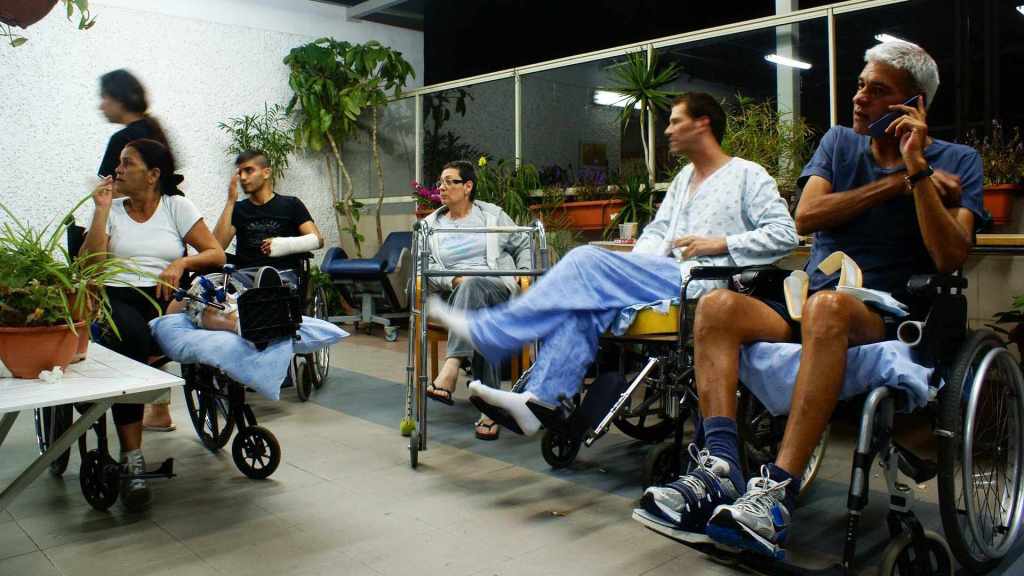 Early rehabilitation does not mean aggressive mobilisation. (Photo: Pixabay/Representational)
A stroke patient’s rehabilitation — a process of helping the person recover as much movement, independence, communication, thinking ability, and everyday function as possible — should not wait until the patient is discharged, physically stronger or ready for intensive physiotherapy.
That is one of the important messages emerging from the 2026 American Heart Association/American Stroke Association Guidelines for Adult Stroke Rehabilitation and Recovery, which were published on August 27.
But the new approach comes with an important distinction: early rehabilitation does not mean aggressive mobilisation. “Stroke rehabilitation can start as soon as the patient is medically stable, including soon after an emergency clot-dissolving procedure by drugs or a removal procedure via catheter to restore blood flow to the brain,” Dr Vinit Suri, senior consultant, Neurology, Indraprastha Apollo Hospital, Delhi, told The Indian Express. It is about carefully introducing movement and functional activity according to the patient’s condition. Excerpts:
The first hours and days after a stroke require careful monitoring. Neurological status, blood pressure, consciousness and overall medical stability all influence what a patient can safely do.
Early rehabilitation does not mean aggressive mobilisation. In practical terms, rehabilitation may begin with positioning, sitting with support, assessing swallowing, maintaining movement and gradually introducing simple functional activities before progressing to standing and walking.
The approach is to introduce movement and functional activity in a controlled manner. That could mean changing position, sitting with support, working on balance or practising simple movements before progressing to standing and walking.
The first few days can set the direction
There is a delicate balance to maintain. Prolonged immobility can contribute to stiffness, weakness, blood clots, pressure injuries and loss of functional ability. But pushing activity too quickly can also be counterproductive. The pace depends on the type and severity of stroke, the patient’s level of consciousness, blood pressure and other medical factors. There is no single rehabilitation schedule that fits every stroke survivor.
One of the most important misconceptions about stroke recovery is that walking equals recovery. It does not. A stroke survivor may walk independently but still struggle to find words, remember instructions, concentrate during a conversation or swallow safely. Some of the most disabling consequences of stroke may therefore be invisible.
Rehabilitation needs to address movement alongside speech, swallowing, cognition and everyday functioning. The goal is not simply a better gait or a stronger limb. It is whether the person can eat safely, communicate, dress, work and participate in family life.
Another frequently underestimated problem is fatigue. Even routine activities can require considerably more effort after a stroke. A patient who appears physically capable may become exhausted by activities that were previously effortless. Expecting an immediate return to the old level of activity can, therefore, lead to frustration for both the patient and family. Recovery has to be paced around the individual’s abilities rather than judged against a fixed timetable.
Stroke recovery is not only a physical process. Depression and anxiety can develop after a stroke and may sometimes be mistaken for a lack of motivation. Persistent low mood, disturbed sleep, withdrawal or loss of interest can affect participation in rehabilitation. Identifying these problems early can make it easier for a patient to engage with the rest of the recovery process.
That is why mental health support should not be treated as an optional addition to physical rehabilitation. The wider message is straightforward: a patient who is psychologically struggling may also find it harder to participate in physical recovery.
For many families, leaving the hospital feels like the finish line. Clinically, it can be the beginning of a difficult new phase. The transition from hospital to home can be one of the most difficult stages. Families may suddenly have to manage medication, feeding, mobility and exercises without knowing exactly what the patient can safely do. Caregiver education, therefore, becomes an important part of rehabilitation. Families need to understand how to assist without making the patient unnecessarily dependent, and when a change in symptoms requires medical attention.
Stroke recovery can continue for months, and progress is rarely linear. A patient may improve rapidly at first, then appear to plateau, only to make further gains when rehabilitation goals are modified or new challenges are introduced.
As new abilities emerge, the goals of rehabilitation may need to change. Returning to work, driving, travelling or resuming household responsibilities can reveal problems that were not obvious during the initial rehabilitation period. The larger shift, therefore, is away from viewing rehabilitation as a short course of physiotherapy.
The new AHA/ASA guidance places rehabilitation firmly within the continuum of stroke care.
For patients, that means rehabilitation can begin early when medically appropriate. It may start gently, with positioning, supported sitting, swallowing assessment and simple functional activities, and become more intensive as the patient becomes ready. For families, it means looking beyond the ability to walk. And for clinicians, it means recognising that recovery involves far more than motor function.
Rehabilitation should be seen as an ongoing process that addresses how a person moves, thinks, communicates and lives after the stroke. Discharge is just the first milestone, not a finish line.