Lancet study finds preschoolers clock 18,500 steps a day: Why it matters for your child

Global study offers a snapshot of how much three- and four-year-olds move, while highlighting the importance of active play and less sitting

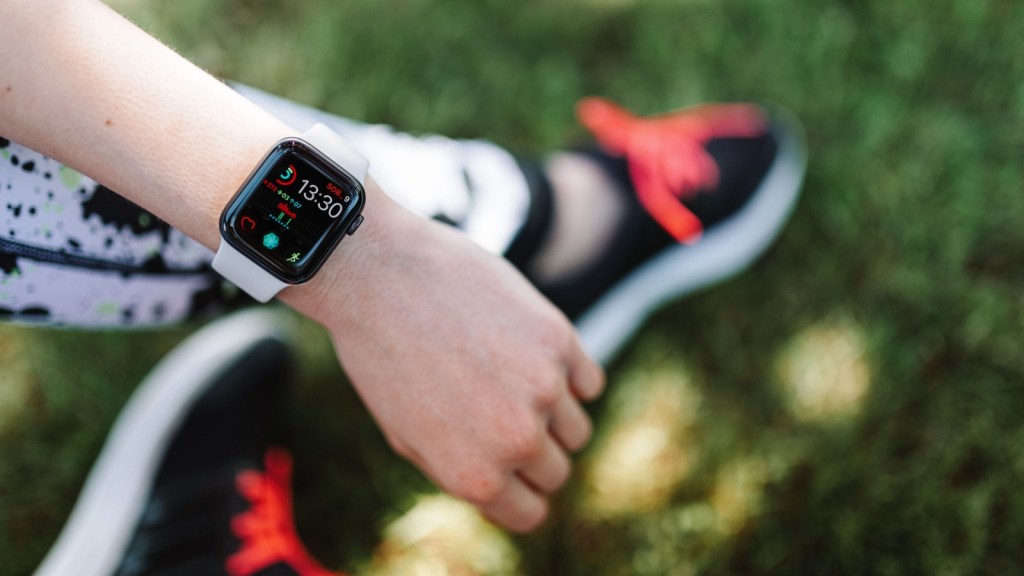
steps countingDr del Pozo-Cruz cautioned against treating 18,542 steps as a minimum requirement. (Source: Pexels)

Preschoolers are far more active than they may appear to be. A new international study involving more than 3,500 children across 44 countries, including India, found that three- and four-year-olds take about 18,500 steps a day. But the researchers stress that this figure is not a recommended daily target but an indication of what level of activity children are capable of and how they must be encouraged to engage with the outdoors.

“One important point is that the values reported in the study should be interpreted as reference values rather than recommendations or targets. We are not proposing that every preschool child should achieve a particular number of steps per day,” said lead co-author Jesús del Pozo-Cruz, from the University of Seville, Spain. The study, published in The Lancet Child & Adolescent Health, provides the first international reference values for daily step counts in preschool-age children.

Why step counts matter

Early childhood is a crucial period for growth and development. Low levels of physical activity during these years have been linked to excess weight gain and delayed motor development.

Yet measuring how active very young children are can be difficult. Step counts offer a simple, objective way of tracking movement, particularly because much of the physical activity of preschoolers involves walking, running and other forms of movement. Step counts have also been associated with several health measures, including cardiovascular and metabolic health. The researchers say such measures could be particularly useful in settings where more complex methods of monitoring physical activity are difficult to use.

A wide range of activity

The researchers found considerable differences in how much children moved. Across the 44-country SUNRISE (International Study of Movement Behaviours in the Early Years) study, the weighted median was 18,542 steps a day, meaning half the children took fewer steps and half took more.

The median was 17,502 steps a day among three-year-olds and 18,928 among four-year-olds. However, activity levels varied dramatically. Among three-year-olds, daily step counts ranged from just 1,124 steps among the least active children to 29,320 among the most active. Boys were consistently more active than girls. Among three-year-olds, the median was 18,064 steps for boys compared with 16,426 for girls. Among four-year-olds, the corresponding figures were 19,477 and 18,321.

The children wore a step-counting device on their hip continuously for 24 hours a day for at least three days. Data collected between 2018 and 2025 were analysed.

Story continues below this ad

Not a target for every child

Dr del Pozo-Cruz cautioned against treating 18,542 steps as a minimum requirement. “These numbers indicate where the midpoint of the international reference distribution lies; they should not be interpreted as minimum daily requirements,” he said.

He suggested thinking of the findings as being similar to a growth chart for physical activity — a way of seeing where an individual child or population falls within the range observed internationally. The researchers note that children below the third percentile could potentially be considered “low steppers”, but say more research is needed before such percentiles can be used as clinical or public-health thresholds.

Children in developing countries more active

Interestingly, children in low- and middle-income countries recorded higher daily step counts than those in high-income countries. Children living in rural areas also tended to record more steps than those living in urban settings. The researchers say this could reflect differences in children’s everyday environment and routines, including opportunities for outdoor play, walking and active transport. Greater urbanisation, motorisation and screen use may reduce opportunities for incidental movement.

What about India?

The study included 51 Indian children. Dr del Pozo-Cruz said this was a relatively small country-specific sample and should not be considered nationally representative. “Although this is a relatively small country-specific sample, the analysis was specifically designed so that each of the 44 participating countries contributed equally to the pooled international estimates,” he said.

Story continues below this ad

The researchers, therefore, used a method that prevented countries with larger samples from disproportionately influencing the overall results. At the same time, they stressed that the children were recruited through convenience sampling and cannot be taken as representative of all preschoolers in India.

Active play matters

Dr Vijay Natarajan, a cardiac surgeon who was not associated with the study, said prolonged sitting, particularly screen-based sedentary activity, should be minimised in three- and four-year-olds. The World Health Organization recommends no more than one hour of sedentary screen time a day for children in this age group, with less being better.

“What preschoolers need is an environment that encourages frequent active play throughout the day — which is the best form of exercise,” Dr Natarajan said. He added that the rise in childhood obesity seen in developed countries has been linked to sedentary lifestyles and unhealthy food choices, and that developing countries could face a similar challenge.

“The focus should be on active play, building lifelong habits of movement,” he said. Preschool children also need about 10-13 hours of good-quality sleep in a 24-hour period, including naps, he added.

Story continues below this ad

Why the findings need context

The study was observational, and the researchers caution that the relatively small samples from individual countries limit how widely the findings can be generalised. They also emphasise that step counts are only one part of children’s daily movement. Physical activity, sedentary behaviour and sleep are closely connected, and differences in one may coexist with differences in the others. They called for further research before step-count percentiles are translated into specific health thresholds or recommendations.

Anuradha Mascarenhas is a Senior Editor at The Indian Express, based in Pune. With a career spanning three decades, she is one of the most respected voices in Indian journalism regarding healthcare, science and environment and research developments. She also takes a keen interest in covering women's issues . Professional Background Education: A gold medalist in Communication and Journalism from Savitribai Phule Pune University and a Master’s degree in Literature. Author: She authored the biography At The Wheel Of Research, which chronicles the life and work of Dr. Soumya Swaminathan, the former Chief Scientist at the WHO. Key Focus: She combines scientific accuracy with storytelling, translating complex medical research into compelling public and human-interest narratives. Awards and Recognition Anuradha has won several awards including the Press Council of India's national award for excellence in journalism under the gender based reporting category in 2019 and the Laadli Media award (gender sensitivity -2024). A recipient of the Lokmat journalism award (gender category-2022), she was also shortlisted for the RedInk awards for excellence in journalism-2021. Her debut book At The Wheel Of Research, an exclusive biography of Dr Soumya Swaminathan the inaugural chief scientist of World Health Organisation was also nominated in the Popular Choice Category of JK Paper AUTHER awards. She has also secured competitive fellowships including the Laadli Media Fellowship (2022), the Survivors Against TB – New Research in TB Media Fellowship (2023) and is part of the prestigious 2025 India Cohort of the WomenLift Health Leadership Journey.” Recent Notable Articles (Late 2025) 1. Cancer & Specialized Medical Care "Tata Memorial finds way to kill drug-resistant cancer cells" (Nov 26, 2025): Reporting on a breakthrough for triple-negative breast cancer, one of the most aggressive forms of the disease. Discipline, diet and purpose; How a 97-year-old professor defies ageing'' (Nov 15, 2025) Report about Prof Gururaj Mutalik, the first Head of Department at Pune's B J Government Medical College who at 97 credits his longevity to healthy habits and a strong sense of purpose. 2. Environmental Health (The "Breathless Pune" Series) Long-term exposure even to 'moderate' air leads to chronic heart, lung, kidney issues" (Nov 26, 2025): Part of an investigative series highlighting that even "safe" pollution levels are damaging to vital organs. "For every 10 µg/m3 increase in PM2.5 level, there was 6-8% jump in medicine sales" (Nov 23, 2025): Using commercial data to prove the direct link between air quality and respiratory illnesses in Pune. 3. Lifestyle & Wellness News "They didn't let cancer, diabetes and heart disease stop them from travelling" (Dec 22, 2025): A collaborative piece featuring survivors who share practical tips for traveling with chronic conditions. At 17, his BP shot up to 200/120 mmHG; Lancet study flags why child and teen hypertension doubled between 2000 and 2020'' (Nov 12,2025)--A report that focusses on 17-year-old-boy's hypertensive crisis and reflects the rising global trend of high blood pressure among children and adolescents. 4. Scientific Recognition & Infrastructure For promoting sci-comm, gender diversity: IUCAA woman prof highlighted in Nature" (Nov 25, 2025): Covering the global recognition of Indian women scientists in gender studies and physics. Pune researchers find a spiral galaxy like the Milky Way from early universe'' (December 3, 2025)- A report on how Indian researchers discovered a massive galaxy that existed when the universe was just 1.5 billion years old , one of the earliest to have been observed so far. Signature Beat: Health, Science & Women in Leadership Anuradha is known for her COVID-19 reportage, where she was one of the first journalists to provide detailed insights into the Covishield and Covaxin trials. She has a dedicated interest in gender diversity in health and science, often profiling women researchers who are breaking the "leaky pipeline" in STEM fields. Her writing style is scrupulous, often featuring interviews with top-tier scientists and health experts from various institutions.   ... Read More


Advertisement
Loading Recommendations...
Advertisement
Advertisement
Latest Comment
Post Comment
Read Comments