Nearly 1.9 lakh cancer cases in India linked to viral, bacterial infections, says Lancet study

HPV, H.pylori and hepatitis viruses are among the key preventable causes. Vaccination, screening and timely treatment could reduce the burden, say experts

CancerIndia, which recently launched the national HPV vaccination programme, has already surpassed 80 lakh (8 million) doses.

An estimated 1,90,000 cancer cases in India were linked to infections caused by viruses and bacteria, according to a 2024 study, which was published in The Lancet Oncology journal. An estimated 2.3 million new cancer cases globally — 12% of all cancers diagnosed that year — were linked to infections.

In India, a majority of these infection-attributable cases, a little over a lakh, are driven by the Human Papillomavirus (HPV), which causes cervical cancer, and can be prevented by HPV vaccination. Chronic hepatitis B and hepatitis C infections primarily cause liver cancer, specifically hepatocellular carcinoma (HCC). H. Pylori (Helicobacter pylori, a stomach bacterium) accounts for an additional 47,000 cancer cases, mainly gastric cancer, followed by Epstein-Barr virus (22,000 cancer cases), Hepatitis B virus (10,000 cancer cases) and Hepatitis C virus (5,300 cancer cases).

According to data with the Global Cancer Observatory (GLOBOCAN), this accounts for about 12 per cent of the total annual cancer burden.

The authors of the report make a strong case about why these findings underline the importance of infection control in reducing rates of cancer. They highlight effective but underused measures: HPV and hepatitis B vaccination; testing and treatment for HIV (Human Immunodeficiency Virus), H pylori, HBV (hepatitis B virus) and HCV (hepatitis C virus); safe injection practices; access to condoms and pre-exposure prophylaxis to prevent HIV transmission; and screening for precancerous lesions in HPV-driven cervical and anal cancer.

Status of HPV vaccination in India

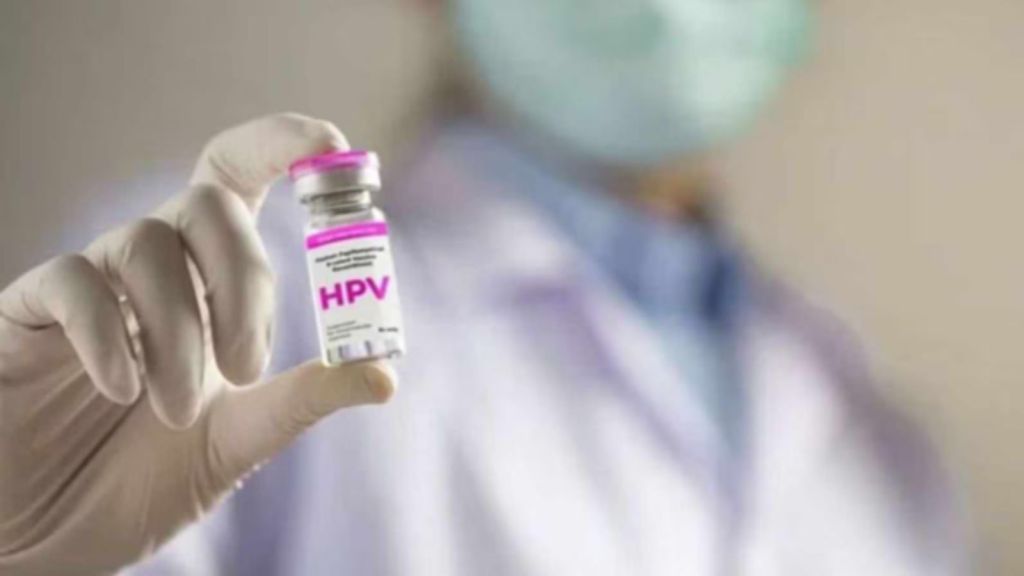
India, which recently launched the national HPV vaccination programme, has already surpassed 80 lakh (8 million) doses. The vaccine is transitioning into the routine immunization schedule. It uses Gardasil-4, a quadrivalent vaccine protecting against high-risk HPV types 16 and 18 (responsible for over 80% of cervical cancer cases in India) as well as types 6 and 11.
Dr Smita Joshi, senior scientist at Prayas health group (not attached with the study), says that some states in the country have done well on the uptake of the HPV vaccination target. “What is also important is screening of adult women with an HPV test and appropriate management if positive for prevention of cervical cancer,” she adds.

Dr I S Gilada, Secretary General of People’s Health Organisation-India, emphasises how both HPV and Hepatitis B infections are fully preventable through vaccination. “The Hepatitis B vaccine is available at low cost but often there are supply shortages,” he says. He notes that Hepatitis B testing was conducted in several settings as part of the “Triple H” screening programme (HCV, HIV and HBV), including antenatal care clinics, blood banks and pre-surgical evaluations. However, linkage to Hepatitis B vaccination remains very poor among individuals who test negative for HBV.

Of 12 pathogens assessed in the study, five accounted for almost all cases of cancers linked to infections.

Story continues below this ad

What the study reveals

Lead author Dr Harriet Rumgay, Cancer Surveillance Branch, International Agency for Research on Cancer, Lyon, and other researchers combined the estimated number of new cancer cases in 2024 with estimates of what share of each cancer type is caused by different infections. Of the 12 pathogens assessed in the study, five accounted for almost all cases of cancers linked to infections. H pylori was linked to 760,000 cases in 2024 (4% of all cancers diagnosed that year). HPV was linked to 750,000 cases (4%), Hepatitis B virus was linked to 360,000 cases (2%) Epstein–Barr virus (EBV) to 260,000 cases (1%) and Hepatitis C virus to 160,000 cases (under 1%).

Eastern Asia had largest number of infection-linked cancer cases

Low-income and middle-income countries accounted for 77% of all infection-linked cancer cases. Eastern Asia had the largest number with 990,000 cancer cases linked to infections, 42% of the global total, driven mainly by H pylori and hepatitis B. Sub-Saharan Africa had the highest proportion of any region, with a quarter of all cancers there linked to infection, largely because of high HPV-linked cancer rates.

The global burden of cancer is predicted to grow from 20 million new cases in 2024 to 35 million in 2050, due to population ageing alone. Infectious agents are a major preventable cause of cancer globally and are estimated to be the leading modifiable risk factor for cancer among women in 141 countries and men in 58 countries.

Anuradha Mascarenhas is a Senior Editor at The Indian Express, based in Pune. With a career spanning three decades, she is one of the most respected voices in Indian journalism regarding healthcare, science and environment and research developments. She also takes a keen interest in covering women's issues . Professional Background Education: A gold medalist in Communication and Journalism from Savitribai Phule Pune University and a Master’s degree in Literature. Author: She authored the biography At The Wheel Of Research, which chronicles the life and work of Dr. Soumya Swaminathan, the former Chief Scientist at the WHO. Key Focus: She combines scientific accuracy with storytelling, translating complex medical research into compelling public and human-interest narratives. Awards and Recognition Anuradha has won several awards including the Press Council of India's national award for excellence in journalism under the gender based reporting category in 2019 and the Laadli Media award (gender sensitivity -2024). A recipient of the Lokmat journalism award (gender category-2022), she was also shortlisted for the RedInk awards for excellence in journalism-2021. Her debut book At The Wheel Of Research, an exclusive biography of Dr Soumya Swaminathan the inaugural chief scientist of World Health Organisation was also nominated in the Popular Choice Category of JK Paper AUTHER awards. She has also secured competitive fellowships including the Laadli Media Fellowship (2022), the Survivors Against TB – New Research in TB Media Fellowship (2023) and is part of the prestigious 2025 India Cohort of the WomenLift Health Leadership Journey.” Recent Notable Articles (Late 2025) 1. Cancer & Specialized Medical Care "Tata Memorial finds way to kill drug-resistant cancer cells" (Nov 26, 2025): Reporting on a breakthrough for triple-negative breast cancer, one of the most aggressive forms of the disease. Discipline, diet and purpose; How a 97-year-old professor defies ageing'' (Nov 15, 2025) Report about Prof Gururaj Mutalik, the first Head of Department at Pune's B J Government Medical College who at 97 credits his longevity to healthy habits and a strong sense of purpose. 2. Environmental Health (The "Breathless Pune" Series) Long-term exposure even to 'moderate' air leads to chronic heart, lung, kidney issues" (Nov 26, 2025): Part of an investigative series highlighting that even "safe" pollution levels are damaging to vital organs. "For every 10 µg/m3 increase in PM2.5 level, there was 6-8% jump in medicine sales" (Nov 23, 2025): Using commercial data to prove the direct link between air quality and respiratory illnesses in Pune. 3. Lifestyle & Wellness News "They didn't let cancer, diabetes and heart disease stop them from travelling" (Dec 22, 2025): A collaborative piece featuring survivors who share practical tips for traveling with chronic conditions. At 17, his BP shot up to 200/120 mmHG; Lancet study flags why child and teen hypertension doubled between 2000 and 2020'' (Nov 12,2025)--A report that focusses on 17-year-old-boy's hypertensive crisis and reflects the rising global trend of high blood pressure among children and adolescents. 4. Scientific Recognition & Infrastructure For promoting sci-comm, gender diversity: IUCAA woman prof highlighted in Nature" (Nov 25, 2025): Covering the global recognition of Indian women scientists in gender studies and physics. Pune researchers find a spiral galaxy like the Milky Way from early universe'' (December 3, 2025)- A report on how Indian researchers discovered a massive galaxy that existed when the universe was just 1.5 billion years old , one of the earliest to have been observed so far. Signature Beat: Health, Science & Women in Leadership Anuradha is known for her COVID-19 reportage, where she was one of the first journalists to provide detailed insights into the Covishield and Covaxin trials. She has a dedicated interest in gender diversity in health and science, often profiling women researchers who are breaking the "leaky pipeline" in STEM fields. Her writing style is scrupulous, often featuring interviews with top-tier scientists and health experts from various institutions.   ... Read More


Advertisement
Loading Recommendations...
Advertisement
Advertisement
Latest Comment
Post Comment
Read Comments