Exam stress, extreme heat, uncertain future: Why young people’s mental health is becoming a bigger concern

From exam pressure and extreme heat to insecure homes, jobs and digital lives, a new UN report argues that young people’s mental health cannot be understood—or protected—in isolation

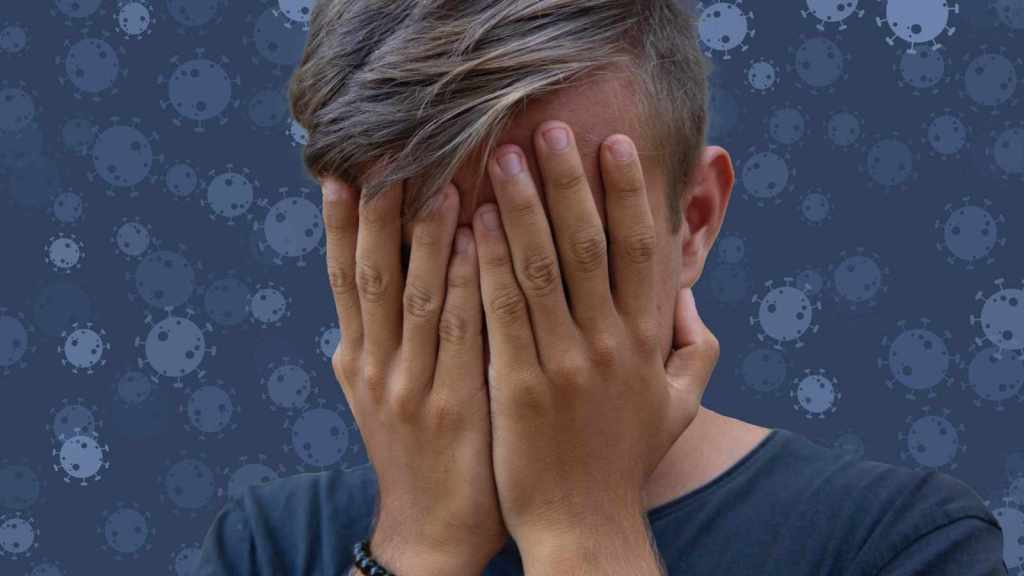
young stressIt was found that 7.3% of adolescents aged 13–17 had a mental disorder, with nearly 9.8 million young Indians estimated to need active intervention. (Image: Pixabay)

For a student appearing for an examination in 45°C heat, the problem may not begin and end with anxiety. While there is the fear of failure, expectations from family and the feeling that there is little room for a second chance, heat stress results in a drop in performance levels.

“Pathologising a problem that is actually systemic does not help,” says Aastha Sethi, senior officer, policy and advocacy at United for Global Mental Health in Mumbai. Having worked at the intersection of climate change and mental health, she explains, “There is evidence that shows that a spike in temperature can lower chances of excelling in an examination. It has led to stress-related illnesses among students.”

That question runs through a new United Nations report, Youth Mental Health and Well-Being in an Uncertain World: A Global Call to Action. It calls for a shift from treating mental health primarily as an individual health issue to looking at the social, economic and environmental conditions in which young people grow, study, work and connect.

The world around a young person matters

The report proposes a Youth Mental Health and Well-being Ecosystem Model. The phrase may sound technical but the idea is fairly simple: a young person’s mental health is shaped by much more than what happens inside a consulting room. School, work, housing, family, friendships, climate, conflict, digital spaces and the wider community all matter. So do sport, art, culture and spirituality.

Dr Michael A. Lindsey, Dean of the NYU Silver School of Social Work and an academic committee reviewer of the report, says, “We fail to ask if they also face challenges relating to safety, housing, food, or obstacles that create stress in their lives,” he says. A young person worried about money, housing, safety or the future may understandably experience distress. That does not mean clinical care is unnecessary. It means the circumstances surrounding that young person matter too.

Pressures begin early in India

The country’s National Mental Health Survey, conducted by NIMHANS with support from the Ministry of Health and Family Welfare, found that 7.3% of adolescents aged 13–17 had a mental disorder, with nearly 9.8 million young Indians estimated to need active intervention. The survey covered 12 states and was conducted in 2015–16, so the figures are not a measure of the situation today.

But the survey offers an important insight: the pressures and needs of adolescents are not uniform. Reported prevalence was 13.5% in urban metros compared with 6.9% in rural areas. The survey also found that nearly 80% of people affected by mental health conditions had not received care after the onset of illness. The gap between need and access is crucial in a country where a young person in a large city may have a counsellor or specialist within reach, while someone in a smaller town, village or remote community may have far fewer options.

Story continues below this ad

The pressures, too, vary. For some young Indians, it is the relentless competition around board examinations, entrance tests and professional courses. For others, it may be unemployment, financial uncertainty, family conflict, relationship pressures or loneliness. For students and young workers exposed to extreme heat, climate is increasingly part of the picture as well.

India’s suicide data underline the importance of looking at these wider social pressures. A 2026 study in PLOS Global Public Health, based on mortality data from 2001–2019, estimated that about one in four suicide deaths globally occurred in India. It found that 44% of suicide deaths in the study period were among people aged 15–29. The researchers also found substantial regional differences, with suicide risks in selected southern high-burden states considerably higher than in selected northern states.

Prevention before crisis

This is where Prof Ramesh Raghavan of the NYU Silver School of Social Work uses the phrase “social vaccines”—positive environment and support systems that help protect mental well-being before a crisis develops.

He points to India’s school meal programme as one example. A school meal is usually discussed in terms of nutrition and attendance. But it can do more: ease some pressure on families, encourage children to remain in school and support physical development and learning. These are not mental health services in the conventional sense, but they can contribute to a more secure environment for a child.

Story continues below this ad

The same principle can apply to safe schools, decent work, stable housing, sport, recreation, supportive families and communities, and safer digital spaces.

From the clinic to the community

Revati Phalkey, Director of the United Nations University International Institute for Global Health, says the ecosystem approach can help governments move beyond fragmented responses and bring mental health into policies across sectors. Nandita Bhatla, Vice President and Country Director, WorldBeing India, puts it more simply. “Young people’s mental health is not a side issue,” she says. “It is central to sustainable development.”

eom

Anuradha Mascarenhas is a Senior Editor at The Indian Express, based in Pune. With a career spanning three decades, she is one of the most respected voices in Indian journalism regarding healthcare, science and environment and research developments. She also takes a keen interest in covering women's issues . Professional Background Education: A gold medalist in Communication and Journalism from Savitribai Phule Pune University and a Master’s degree in Literature. Author: She authored the biography At The Wheel Of Research, which chronicles the life and work of Dr. Soumya Swaminathan, the former Chief Scientist at the WHO. Key Focus: She combines scientific accuracy with storytelling, translating complex medical research into compelling public and human-interest narratives. Awards and Recognition Anuradha has won several awards including the Press Council of India's national award for excellence in journalism under the gender based reporting category in 2019 and the Laadli Media award (gender sensitivity -2024). A recipient of the Lokmat journalism award (gender category-2022), she was also shortlisted for the RedInk awards for excellence in journalism-2021. Her debut book At The Wheel Of Research, an exclusive biography of Dr Soumya Swaminathan the inaugural chief scientist of World Health Organisation was also nominated in the Popular Choice Category of JK Paper AUTHER awards. She has also secured competitive fellowships including the Laadli Media Fellowship (2022), the Survivors Against TB – New Research in TB Media Fellowship (2023) and is part of the prestigious 2025 India Cohort of the WomenLift Health Leadership Journey.” Recent Notable Articles (Late 2025) 1. Cancer & Specialized Medical Care "Tata Memorial finds way to kill drug-resistant cancer cells" (Nov 26, 2025): Reporting on a breakthrough for triple-negative breast cancer, one of the most aggressive forms of the disease. Discipline, diet and purpose; How a 97-year-old professor defies ageing'' (Nov 15, 2025) Report about Prof Gururaj Mutalik, the first Head of Department at Pune's B J Government Medical College who at 97 credits his longevity to healthy habits and a strong sense of purpose. 2. Environmental Health (The "Breathless Pune" Series) Long-term exposure even to 'moderate' air leads to chronic heart, lung, kidney issues" (Nov 26, 2025): Part of an investigative series highlighting that even "safe" pollution levels are damaging to vital organs. "For every 10 µg/m3 increase in PM2.5 level, there was 6-8% jump in medicine sales" (Nov 23, 2025): Using commercial data to prove the direct link between air quality and respiratory illnesses in Pune. 3. Lifestyle & Wellness News "They didn't let cancer, diabetes and heart disease stop them from travelling" (Dec 22, 2025): A collaborative piece featuring survivors who share practical tips for traveling with chronic conditions. At 17, his BP shot up to 200/120 mmHG; Lancet study flags why child and teen hypertension doubled between 2000 and 2020'' (Nov 12,2025)--A report that focusses on 17-year-old-boy's hypertensive crisis and reflects the rising global trend of high blood pressure among children and adolescents. 4. Scientific Recognition & Infrastructure For promoting sci-comm, gender diversity: IUCAA woman prof highlighted in Nature" (Nov 25, 2025): Covering the global recognition of Indian women scientists in gender studies and physics. Pune researchers find a spiral galaxy like the Milky Way from early universe'' (December 3, 2025)- A report on how Indian researchers discovered a massive galaxy that existed when the universe was just 1.5 billion years old , one of the earliest to have been observed so far. Signature Beat: Health, Science & Women in Leadership Anuradha is known for her COVID-19 reportage, where she was one of the first journalists to provide detailed insights into the Covishield and Covaxin trials. She has a dedicated interest in gender diversity in health and science, often profiling women researchers who are breaking the "leaky pipeline" in STEM fields. Her writing style is scrupulous, often featuring interviews with top-tier scientists and health experts from various institutions.   ... Read More


Advertisement
Loading Recommendations...
Advertisement
Advertisement
Latest Comment
Post Comment
Read Comments