


Journalism of Courage
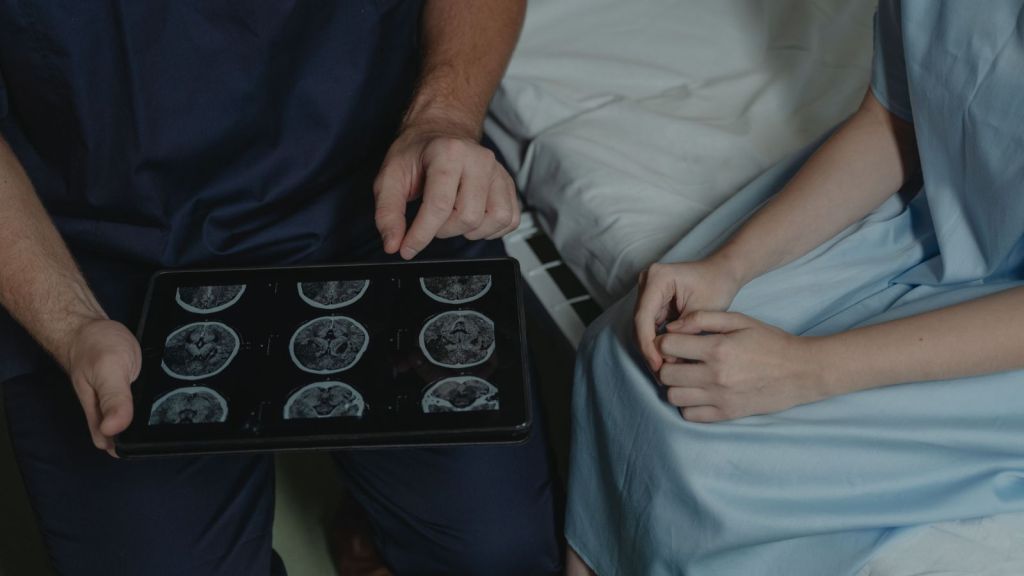 Recovery does not always begin immediately after the initial haemorrhage. (Credit: Pexels)
When actor Emilia Clarke suffered a brain haemorrhage at the age of 24, surviving the immediate medical crisis was only the beginning of a much longer recovery. She underwent surgery and later spoke about experiencing problems with speech and memory. She suffered a second brain haemorrhage a few years later and has since spoken publicly about the long-term effects of brain injury and the importance of rehabilitation.
Her experience highlights an important distinction in brain haemorrhage recovery: Being medically stable does not necessarily mean that a person has recovered from the injury. When a brain haemorrhage occurs, the immediate priority is to stop the bleeding, control pressure inside the skull and stabilise the patient. But once these concerns are addressed, another phase begins: recovery from the injury that the brain has already sustained.
“A patient may, therefore, be medically stable but still have difficulty with movement, speech, memory, balance or other everyday functions. Recovery can continue for weeks or months, depending on the part of the brain affected and the extent of the injury,” Dr Vinit Suri, senior consultant, Neurology, Indraprastha Apollo Hospital, Delhi, told The Indian Express. Excerpts:
Recovery does not always begin immediately after the initial haemorrhage. There can be a period when the patient’s condition worsens before the brain starts to recover. In the first 1 to 3 days, the haematoma, or collection of blood in the brain, may expand, increasing pressure and causing further injury to the surrounding brain tissue.
This may be followed by another phase of worsening, usually from around the third to the tenth day, as swelling or oedema develops around the haematoma. The swelling can affect the function of neurons in the surrounding brain tissue and may lead to further neurological problems, even when there is no further expansion of the original bleed.
Once these two phases have settled, recovery can begin, often around 10 to 14 days after the haemorrhage. This does not mean that recovery is complete at this point. Rather, it marks the beginning of a longer phase in which the brain gradually works towards regaining affected functions.
The timing, however, can vary from patient to patient. Some people may begin showing improvement earlier, while others may continue to have significant problems for much longer.
A haemorrhage can affect the brain in different ways depending on where it occurs. Different parts of the brain are responsible for functions such as movement, speech, coordination, memory and balance. Damage to areas involved in movement, for example, may cause weakness on one side of the body. If areas involved in speech or coordination are affected, the difficulties may be different.
The blood that has collected in the brain also takes time to be broken down and cleared by the body. As the initial injury, swelling and surrounding effects settle, the affected brain tissue can gradually regain function.
The extent of recovery can also depend on whether the haemorrhage has affected important pathways connecting different parts of the brain. This is one reason why two people with seemingly similar haemorrhages can have very different symptoms and recovery journeys.
Why a stable scan does not always mean full recovery
A follow-up scan may show that the bleeding has stopped or that swelling has reduced. This is an important sign of medical improvement, but it does not necessarily mean that the person has regained normal function.
A scan shows the structural changes inside the brain. Recovery also needs to be assessed by looking at what the person can actually do. Someone may have a reassuring scan but still struggle to walk, speak clearly, remember information or carry out routine tasks. This difference can sometimes be difficult for families to understand, particularly when the immediate medical crisis has passed.
Once the acute phases have settled, recovery can be gradual. The size and location of the haemorrhage, the extent of the initial injury, the functions affected and the person’s overall health can all influence how quickly different abilities return.
The brain also has the ability to adapt after an injury. Rehabilitation can support this process by helping a person practise and regain affected functions. Depending on the individual’s needs, this may include physiotherapy, speech therapy or occupational therapy.
Recovery may also not be uniform. A patient could regain the ability to walk relatively quickly but continue to have difficulty with speech, memory or concentration. Improvement can continue for months, and in some cases longer, particularly with continued rehabilitation.
Being discharged from hospital does not necessarily mark the end of recovery. For many patients, it marks the beginning of a longer phase focussed on regaining function and independence. The important point for families is that the end of the immediate medical emergency and the end of brain injury recovery are two different milestones. A patient may be out of danger but still have a long road ahead before they regain their previous level of functioning.