


Journalism of Courage
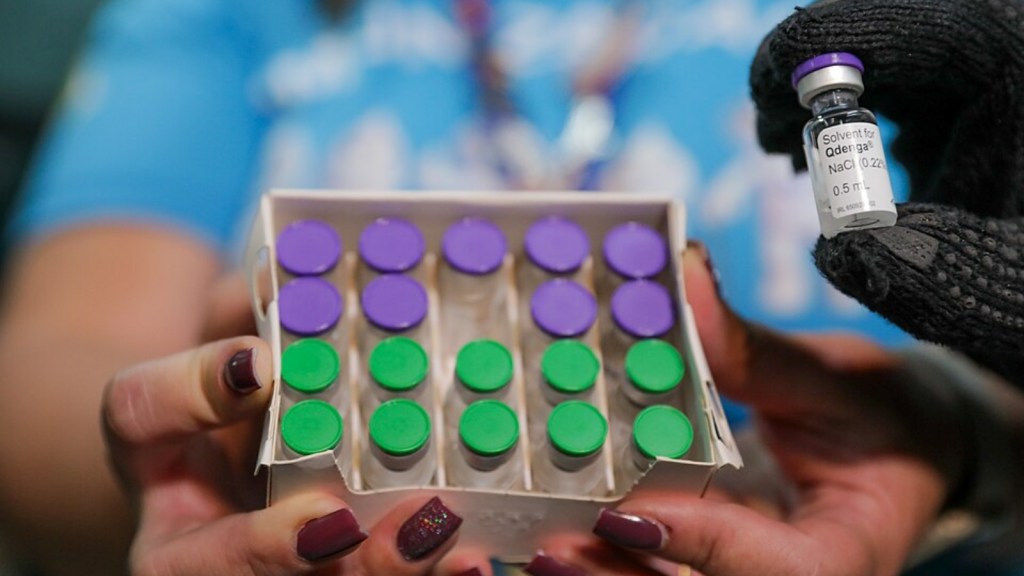 Dengue vaccine Qdenga. (Source: Wikimedia Commons)
India’s first approved dengue vaccine, Qdenga, is expected to become available in the country’s private market in the first half of 2027, subject to completion of the remaining regulatory and quality-related processes.
On Friday, Takeda Pharmaceutical Company and Dr Reddy’s Laboratories announced an exclusive collaboration under which Dr Reddy’s will promote and distribute the vaccine across India’s private market for paediatric and adult vaccination. The Central Drugs Standard Control Organisation (CDSCO) granted marketing authorisation to Qdenga in July 2026 for individuals aged 4 to 60 years. The price is still being negotiated as local processes are yet to be completed for fixing one.
The approval is significant because dengue is caused by four virus serotypes: DENV-1, DENV-2, DENV-3 and DENV-4; all of which have been found to circulate in multiple regions of India. A nationwide molecular surveillance study cited by Takeda found concurrent infection with multiple dengue serotypes in one in 14 patients. Infection with one serotype does not necessarily protect a person against infection with the other serotypes.
Qdenga uses a weakened DENV-2 virus as its backbone, along with structural proteins from DENV-1, DENV-3 and DENV-4. The vaccine has been approved in 43 countries since 2022, according to the company, with more than 32 million doses distributed globally through public and private programmes. It has also received World Health Organization (WHO) prequalification. The WHO has recommended the vaccine without pre-vaccination screening for use in high-endemic countries.
Takeda’s 2025 analysis reported 61.2 per cent efficacy against virologically confirmed dengue and 84.1 per cent efficacy against dengue-related hospitalisation at 4.5 years after vaccination.
The Indian approval covers individuals aged 4 to 60 years. An important feature is that vaccination does not require a person to first establish whether they have had dengue infection in the past.
According to Dr Mahender Nayak, Head of Intercontinental Markets, International Business Unit, Takeda, “Qdenga is indicated for prevention of dengue disease caused by any of the four dengue virus serotypes in people aged 4 to 60 years, regardless of whether they have previously had a dengue infection. No pre-vaccination screening or blood testing is required. The approval needs to be viewed alongside Takeda’s broader effort to expand access to dengue vaccination in India.”
M V Ramana, CEO, Global Generics, Dr Reddy’s Laboratories, said the company viewed the introduction of the vaccine as an important development for India. “As the second-largest vaccine player in India, we believe the introduction of India’s first approved dengue vaccine is an important development for the country’s healthcare landscape. Dr Reddy’s will leverage its healthcare-professional network, vaccinators, physicians and distribution infrastructure for the private-market launch.”
Qdenga is a two-dose vaccination course. Each dose is 0.5 mL and is administered subcutaneously, meaning the vaccine is injected into the tissue beneath the skin. The two doses are given three months apart. Nayak described it as a “one-time only immunization course” comprising the two-dose regimen.
The marketing authorisation does not mean that Qdenga is already available for purchase. There are several steps that need to be completed before commercial distribution can begin. These include obtaining the required Registration Certificate and Import Licence, followed by the necessary quality-release processes before the vaccine can be released for commercial distribution in India. “Receiving marketing authorization is just the first step,” Nayak said.
Subject to completion of the applicable processes with local authorities, Qdenga is anticipated to become available in India in the first half of 2027.
Dr Reddy’s will be the exclusive partner for promotion and distribution of Qdenga in the private market for paediatric and adult vaccination. The companies will also undertake healthcare-professional engagement and disease-awareness activities, in accordance with regulatory requirements.
The private-market launch and inclusion in a government immunisation programme are two separate processes. Takeda has said that inclusion in India’s public immunisation programme remains an important long-term ambition. The company has also welcomed the recent Parliamentary Committee on Health’s recommendation to consider a dengue vaccine for the Universal Immunization Programme (UIP).
According to Takeda, the most frequently reported reactions during clinical trials were pain at the injection site, headache, muscle pain, redness of the skin around the injection site and fever. These reactions were reported in the company’s clinical trial programme.
Does vaccination mean people can stop taking precautions against dengue?
No. Dengue is transmitted by infected mosquitoes, and vaccination is one component of prevention. Measures to reduce mosquito breeding and prevent mosquito bites remain important. The companies have also highlighted surveillance, awareness, vector control and community engagement as continuing components of dengue prevention.