Surya Pratap Bharati was 30 when he suffered a brain stroke inside the University of Hyderabad campus. He reached a private hospital within the critical window in which treatment can sometimes dissolve or remove the clot, which obstructs blood flow to a part of the brain, depriving brain cells of oxygen and damaging them in the process. Over the next 24 hours, his condition deteriorated, his brain began to swell and, his family later argued, crucial opportunities to intervene were missed. By the time he was transferred to another hospital, he was unconscious and had suffered catastrophic brain injury. He died four days after the stroke.

At the centre of the case are three treatment windows — the first few hours when clot-dissolving treatment may be possible, the extended window in which selected patients may undergo mechanical thrombectomy (removing clot via a catheter), and the period when worsening brain swelling may require urgent intervention.
A dream cut short
Bharati, a first-generation graduate from a village in Mau, Uttar Pradesh, was pursuing a PhD in Hindi at the University of Hyderabad. He was expected to receive his doctorate in 2021 and hoped to teach, a profession his friends say he loved. His Junior Research Fellowship also enabled him to support his family, who had made a living through daily-wage and farm labour.
“He was a first-generation graduate from his village. He was a brilliant student,” recalls his friend and batchmate Vishal Kumar, now head of the Hindi department at a college in Bihar.
His parents, Ram Avadh and Bindu, know that no compensation can bring their son back. “Nothing will bring him back. But ours was a fight for justice,” they say.
The first window
August 17, 2020 began like an ordinary day.
At around 2 pm, Bharati called his uncle. It was a routine conversation, asking how everyone was doing at home. Within an hour, he collapsed in a corridor of the New Research Scholar Hostel on the university campus. His friends found one side of his body paralysed. His limbs had given way and he could not get up. They rushed him to the university medical centre, where a resident doctor referred him to Citizens Hospital in Nallagandla.
There, he was assigned to consultant neurologist Aparna Vijayakumar. He had had an ischaemic stroke, in which a blood clot blocks blood flow to a part of the brain. For eligible patients, intravenous thrombolysis — medication that can dissolve the clot — may be given within a limited time window, depending on factors including when the patient was last known to be well and the results of clinical assessment and imaging.
According to advocate Rajasri Manche, who represented the family before the consumer commission, the hospital’s position was that doctors could not establish when Bharati had suffered the stroke. That, she argued, was not so.
The 2 pm phone call established that Bharati had been conscious and functioning shortly before he collapsed, she said, placing him within the critical early period when thrombolysis could have been considered. “This was the first window to save Bharati’s life,” Manche says.
His friends, who were with him at the hospital, say since Covid-19 screening was important in keeping with the protocols of the time, he underwent a chest scan and a rapid antigen test. He tested negative and was admitted. But the stroke was progressing.
The second window
The next critical period involved the possibility of mechanically removing the clot. The procedure involves guiding a device through the blood vessels to physically remove the clot and restore blood flow to the brain. According to Manche, the hospital argued that it had not received parental consent for such an intervention.
The family disputed this. Kumar recalls how his father had greenlighted any procedure that would save his son. By the time the parents reached the hospital, through all the Covid curfews, Bharati’s neurological condition had deteriorated. “When he was admitted, he was wide awake and was even texting from his phone. He could move one side of his body. But his motor ability kept reducing. By the next day, he could not move,” says Kumar. Then he developed oedema or swelling in the brain.
The third window
A major stroke can cause the brain to swell. As the brain sits within the rigid confines of the skull, severe swelling can raise intracranial pressure and cause further injury. Patients whose neurological condition deteriorates need close monitoring. In selected cases, when swelling becomes life-threatening, surgery may be required to relieve pressure on the brain.
According to Manche, this was the third opportunity that the family alleged had been missed. “After 24 hours, the patient should be continuously monitored to see whether he is responding to sounds and other stimuli,” she says. If the patient’s neurological condition deteriorates, she argues, surgery to relieve pressure on the brain should be considered.
But Covid-19 once again became part of the story. An RT-PCR test subsequently came back positive. According to the family and their lawyer, the result was a false positive. The hospital told them Bharati would have to be shifted to a Covid hospital in accordance with the prevailing protocol. The transfer came as his condition was rapidly worsening.
“By the time we were shifting him to a Covid hospital, he was not even able to hold his neck straight. Then he was unconscious,” says Kumar.
The Covid hospital repeated the RT-PCR test. This time it came back negative. But by then, the damage had been done as doctors told Bharati’s family that he was brain-dead.
The challenges of stroke care
Dr Daljit Singh, neurosurgeon and head of neurosurgery at GB Pant Hospital, Delhi, declined to comment on the merits of this particular case but said many centres are not adequately equipped to manage stroke patients during the crucial first 24 hours. “Several centres are not well equipped to deal with cases of stroke within the first 24 hours,” he says, adding that outcomes depend on several factors, including the brain’s reserves and its tolerance to hypoxia (low oxygen).
A fight till the end
By then, there was little hope. Bharati was intubated and placed on a ventilator. Doctors at the second hospital told the family that his chances of survival were extremely low. His friends refused to give up.
“We said that he should be kept alive till his last breath,” Kumar recalls. On August 21, four days after his stroke, Bharati died of cardiac arrest while on life support.
His friends initially tried to register a police case alleging medical negligence. The SHO wrote back saying the matter was “non-cognizable”. The family then chose the consumer court route.
For Bindu, the memory of her son leaving for Hyderabad remains inseparable from the hope she had given him. Before he travelled, Bharati had worried about how he would survive so far from Uttar Pradesh. She had reminded him of another journey. “If Ambedkar could travel to London, what is a trip to Hyderabad?” she told him. It was the sort of encouragement that had always been part of Bharati’s life. He came from a Dalit family of daily-wage and farm workers, but his parents said he had always been drawn to education. His academic success had changed the family’s expectations for his future.
“He was a Junior Research Fellow and from his fellowship amount he used to financially help his family when he was doing his PhD,” Kumar says. “They had high hopes.”
A fight beyond compensation
Before the consumer commission, Manche sought Rs 5 crore in compensation for the family.
The legal team submitted salary records of Kumar to help establish Bharati’s potential future earnings and the financial support he might have provided his parents over his lifetime. The commission ultimately awarded Rs 1 crore, directing the hospital and the consultant neurologist to pay the compensation.
For the family, however, the amount has never been the measure of what was lost. Bharati would have turned 36 this March. His friends believe he would have completed his PhD, entered teaching and built the life he had been working towards.
“Nothing will bring him back,” his parents say. “But ours was a fight for justice.”
The legal battle may not be over. The hospital and the consultant neurologist are expected to challenge the order before the state consumer commission and potentially higher courts. But Bindu is prepared to continue the good fight. “This is about justice. I don’t want others to go through the plight my son underwent,” she says.
His friends, meanwhile, are trying to give Bharati a place within the university he never got to leave as a doctor. They have donated more than 200 books from his personal collection to the University of Hyderabad and want a shelf named after him in the English Department. They also want the university to confer his PhD on him posthumously. “No other family should have to ask whether their loved one’s life might have been saved if someone had acted sooner,” says Bindu.

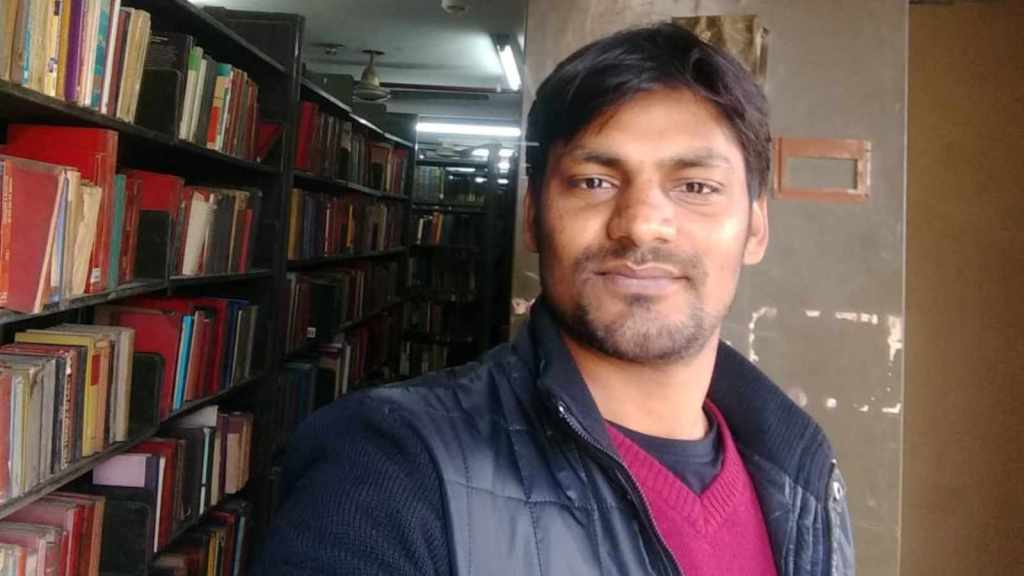 By the time Surya Pratap Bharati was transferred to another hospital, he was unconscious and had suffered catastrophic brain injury. (Photo: Arranged)


 Share


