
I’ve spent my life defending Bihar. Jamui made it harder.
I grew up defending the state my parents left behind. Jamui reminded me of the social realities they were trying to leave behind too.
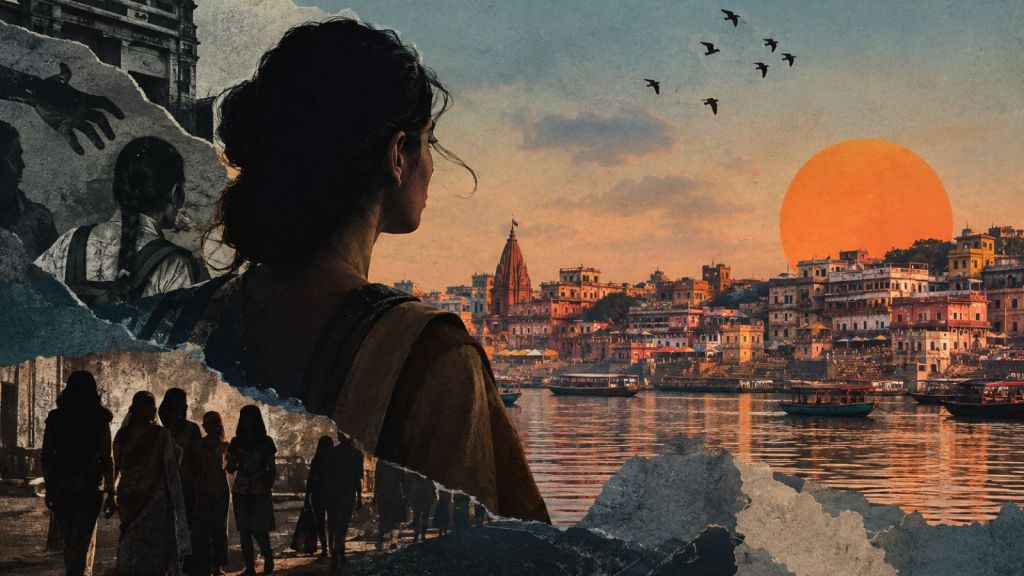 If we want to tell the rest of India that Bihar is more than its stereotypes, we have to give them something better to see. (AI generated image)
For years, I have defended Bihar to people who have never really known it.
I have heard “Bihari” used as a gaali. I have had people hear me speak English and, with the strange surprise reserved for a stereotype that has just been disproved, tell me: “Hey, you don’t look like a Bihari.”

I have always hated that sentence.
Not because I am particularly sentimental about the state, but because I know enough about Bihar to know that it is far more complicated than the caricature people have built of it. My parents are migrants from Bihar. I grew up away from the state, but Bihar was always present in our home — in our food, our language, our relatives, our stories, our anxieties. Every time someone mocked the state, I found myself defending it.
But then something like the Jamui sexual assault case happens, and I am reminded of the Bihar I know too.
Not the Bihar of IAS toppers and competitive-exam factories. Not the Bihar that politicians invoke during election season. Not the Bihar I am expected to defend when someone calls its people uncouth or backward.
The Bihar of my childhood.
I was eight when my parents told me not to wear shorts outside our ancestral home in Patna.
My mother would tell me stories about girls being abducted in broad daylight — stories that were meant to scare me into being careful, but also quietly taught me that the world outside was something I, as a girl, had to negotiate.
I grew up hearing warnings about where girls should go, who they should talk to, how late they should stay out and what they should wear.
And somewhere in all of that were the other constants: caste, family honour, patriarchy, the endless policing of girls disguised as concern for their safety.
So when I see people in Jamui asking why a minor girl was out with a boy in the evening, why they were in a secluded place, or what she was doing there in the first place, I am not just angry.
I am tired.
Because this is the Bihar I have spent years defending — and the Bihar I have spent years trying to distance myself from.
The questions after the crime
The Jamui case brought out a question I have heard in different forms for as long as I can remember: But why was she there?
It is an infuriatingly familiar question.
A woman is assaulted, and before the conversation has even settled on what was done to her, we start reconstructing her evening. Where did she go? Who was she with? Why did she go there? Why was it so late? Somewhere along the way, the crime becomes a footnote to an investigation into her choices.
This isn’t uniquely Bihari. It isn’t even uniquely Indian. Women across the country have had their clothes, relationships, drinking habits, friendships, commutes and decisions put on trial after being assaulted.
But I can’t pretend the reactions to Jamui don’t hit differently.
Because this is precisely the kind of world my parents spent years trying to shield us from. Not from Bihar itself, but from the social rules that could make a girl’s freedom conditional on how other people might perceive her.
And here’s where it gets complicated.
My parents left Bihar and built their lives elsewhere. So did thousands of other families. We moved for jobs, education, opportunity, a different life. But moving cities doesn’t necessarily mean leaving every old social instinct at the railway station.
I have grown up around families who embraced the anonymity and freedom of a city while carrying surprisingly familiar rules into their homes. Daughters could study outside the state but dating was still unthinkable. They could have careers but marriage remained non-negotiable. Sons could come home at any hour; daughters had explanations to give. Caste could disappear from everyday conversation until the subject became marriage.
It is a strange kind of migration — changing your pin code without necessarily changing the hierarchy inside your home.
And perhaps that is why the Jamui conversations bother me more than I would like to admit.
Because the problem isn’t simply that people in one Bihar village still ask these questions.
It is that I recognise the questions.
I have heard them far away from Bihar, too.
The stereotypes Biharis keep defending
There is another uncomfortable part of being Bihari that I don’t talk about enough: defending yourself from the stereotype, and then sometimes finding yourself with no answer when reality appears to validate it.
The discrimination hasn’t exactly disappeared with time.
I have watched political leaders make disparaging remarks about migrants from Bihar and Uttar Pradesh. After the Jamui case, a Bengaluru-based CEO reportedly said he would not hire men from Bihar and Uttar Pradesh. Every time I hear something like this, I am furious. An entire state cannot be reduced to the actions of a few people. Millions of Biharis leave home every year to work, study, build businesses and keep cities running. Their identity cannot become a shorthand for criminality, incompetence or backwardness.
But then someone hears where I am from and asks, almost hesitantly: “Bihar ke log sach mein aise hote hain kya?” (Are people from Bihar really like this?)
And I don’t always know what to say.
There is anger, because I know how lazy the stereotype is. There is shame, because I know the uglier parts aren’t entirely imaginary. And there is guilt, which is perhaps the strangest emotion of all — as if I have somehow inherited responsibility for things I did not do.
A few weeks ago, I was in a cab in Delhi with a friend from Allahabad. Our accents had barely settled into conversation when the driver turned around.
“Sir, main bhi Bihar se hoon. Bhojpuri laga dein?” (Sir, I am also from Bihar, can I play Bhojpuri songs?)
We laughed and said yes.
What followed was one of those conversations that stays with you precisely because it contains so many contradictions.
He was a young man from a small village in Bihar who had come to Delhi, driven cabs, saved every rupee he could and eventually bought his own car. He told us about his village near Patna, known for producing government officers, policemen and bureaucrats from seemingly every other household. He spoke about the ambition that runs through Bihar — the single-minded desire to study, get a government job and, if possible, leave.
“Har ghar ka sapna hai Bihar se bahar nikalna,” he told us.
And there we were, three migrants from UP-Bihar, in a Delhi cab, listening to extremely vulgar Bhojpuri songs, talking about a state that had simultaneously given us our accent, our ambitions, our anxieties and, in different ways, our escape routes.
That cab ride felt like Bihar to me.
Not the caricature people make of it. Not the polished defence I sometimes make of it either.
Just a place full of contradictions: fiercely ambitious and deeply conservative, capable of producing extraordinary public servants and still wrestling with ideas that should have been left behind generations ago.
And perhaps that is why the Jamui case leaves me with something more complicated than anger.
It makes me wonder whether Bihar can ever outrun the image the rest of India has of it if it is still struggling to outrun some of the things that created that image in the first place.
Today, I’m angry with Bihar
I keep coming back to Jamui because I don’t think the blame ends with the men who assaulted a girl.
It also lies, in a different way, with the people who watched and questioned her choices. With the women who repeat the same rules they were once taught. With those who hear about an incident and shrug, ye toh har jagah hota hai. With those of us who live outside Bihar, proudly claim where our families come from, and then become defensive the moment its uglier realities are brought up.
Yes, sexual violence happens everywhere. Yes, patriarchy is not a Bihar problem. But “it happens everywhere” cannot become an excuse for refusing to confront what happens here.
There will be another Jamui. And another. In Bihar, in Delhi, in Bengaluru, somewhere else. The point cannot be to keep defending our state every time someone points at it. The point has to be to make the defence mean something.
I love Bihar’s culture. Its languages, food, festivals, contradictions and extraordinary diversity remain deeply close to my heart. I will continue to defend Biharis from lazy stereotypes and discrimination.
But pride comes with responsibility.
If we want to tell the rest of India that Bihar is more than its stereotypes, we have to give them something better to see.
Today, I am angry with Bihar.
Perhaps that is because, despite everything, I still care enough to expect better from it.


Vaishnawi Sinha is a Deputy Copy Editor with indianexpress.com, with an experience of over 6 years i... Read More
 Share


