
Sanjay Leela Bhansali’s Padmaavat: More fiction than history
In killing the spiritual core of the epic on which his film is based, Sanjay Leela Bhansali set up his movie, and its characters, all wrong.
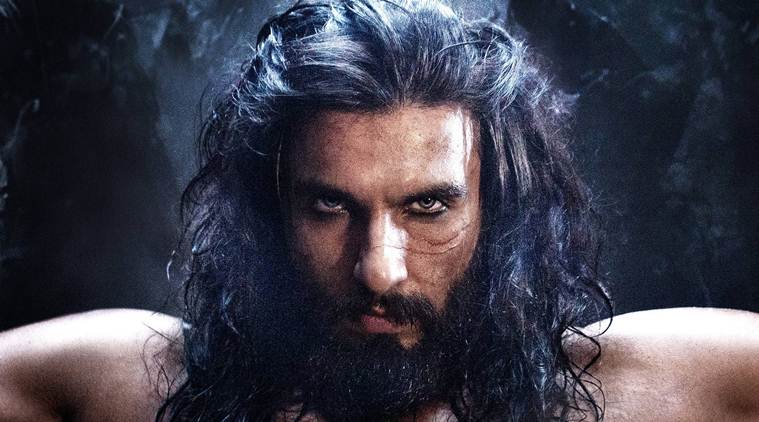 The portrayal of the Khiljis in Padmaavat has no real basis in history.
Padmaavat, the film by Sanjay Leela Bhansali, which is supposed to be historical fiction, is more fiction than history. Set against the backdrop of patriarchy and Rajput morality vs Khilji, the Muslim invader’s immorality, it is neither faithful to Malik Mohammad Jayasi’s epic poem Padmaavat that the film proclaims it’s based on, nor to the Khilji rulers.
Some of the most vociferous complaints about the movie have been about the glorification of the jauhar scene. First, in the poem, Ratansen dies fighting another Rajput king Devpal, [who also coveted Padmaavati] in a duel and both his wives commit sati. Jayasi was a Sufi, who used many allegories to describe what is essentially a Sufi’s journey of seeking God and ultimately annihilating himself/herself in the divine. Thus, the first step is to learn about the divine and to seek him with the guidance of a spiritual teacher who shows the way. Many sacrifices have to be made on the way, the most important being the sacrifice of the ego and of worldly trappings. The last stage is the stage of gnostic knowledge of the divine and a state of spiritual experience, leading to a union (after death) with the beloved (god). Likewise, the relationship between the hero and heroine in a Sufi romance is that of the seeker and the beloved (god). Thus, sati was included in the poem as the ultimate aim of the seeker to annihilate oneself to become one with him. In deleting the character of Hiraman, the parrot who signifies Padmavati’s companion and spiritual guide, Bhansali’s film is wholly bereft of the Sufi overtone. Sati, then, becomes a glorification of a medieval patriarchal custom in the film.

The constant clash of civilisations in the film is another disservice to Jayasi’s spirit as is Bhansali’s characterisations. In fact, in the preface of the first English translation (1944) of Padmaavat, the translator A G Shirreff, writes, “If we could meet him in the Elysian fields and could ask him whether he approached the theme from a Muslim or Hindu standpoint, he would, I imagine, answer with a smile, that he did not know and that he had never seen any difference between the two.”
 Sultanpur, UP, where Jayasi lived and Shirreff was district magistrate of, had never seen communal clashes in that era according to records. The portrayal of the Khiljis also has no real basis in history. Jalauddin Khilji came to the throne in 1290 only to bridge the chaos after the death of Balban. He was never ambitious and did not launch any attack on Hindustan from Ghazni.
Ali Gurchasp, however, was the opposite of his uncle Jalaluddin — ambitious, cunning, unscrupulous and aggressive. He killed his uncle and ascended the throne in 1296. Alauddunya wad Din Muhammad Shah us Sultan was the name he adopted as king. Alauddin, as he came to be known, was also patient, ruthless, bold, cautious and capable of planning and organisation. Though a tyrant, he was not a manic barbarian — tearing into meat with his hands, as he is shown in the film, would have been very uncharacteristic for a royal. His reign saw the threat of the Mongols who had devastated much of Central Asia and his priority was strengthening his borders and army. He effected far-reaching agrarian and market reforms, which he ruthlessly implemented.
Alauddin broke the domination of the Turks and broadened the administrative machinery and made governance independent of shariat. He saw himself as a second Alexander and though he could not conquer the world with Mongol hordes at his doorsteps, he expanded his kingdom within Hindustan. Chittor was one such conquest. Neither Amir Khusrau, the court chronicler who was with him on this war, nor any other near contemporary chronicler like Isami or Barani, make any mention of any Padmavati or jauhar. Khusrau did refer to jauhar in Ranthambhor, so obviously had no scruples in describing it.
 Who is the bad guy? A 17th century painting of Alauddin Khilji.
Just as Jayasi felt no obligations to be bound by facts of history or geography while writing his epic, Bhansali was faithful to neither history, geography nor the epic on which he based his film. Both the poet and filmmaker used their creative freedom and are entitled to it. What I find unforgivable, though, is Bhansali’s use of Hazrat Amir Khusrau’s famous verse in the film. Not content with showing the great Sufi poet saint as a pale shadow of himself, Bhansali uses the epic verse that encapsulates the entire Sufi philosophy of annihilation of self and ishq e haqeeqi or love for the divine in the context of Alauddin’s obsession for Padmavati that was driven by ego and lust.
Khusrau darya prem ka, ulti wa ki dhaar,
Jo utra so doob gaya, jo dooba so paar.
Oh Khusrau, the river of love is such that it runs in strange ways
One who jumps into it drowns, while one who drowns in it, reaches the other side.
Rana Safvi is a Delhi-based writer
 Share


