© The Indian Express Pvt Ltd
 6 min read


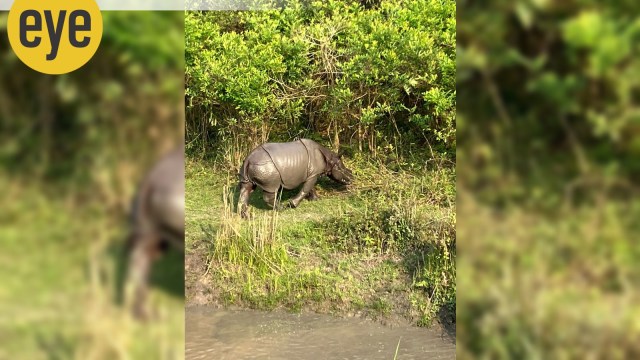 Kaziranga’s most popular resident – the one-horned rhino (Credit: Philipp Ackermann)
Travelling in India is always rewarding, no matter where you go. Hence it is very difficult for me to decide where my favourite spot would be on the subcontinent— there is just too much to discover. But amongst the numerous trips I did in 2023, one of the most scenic led me to Assam. The North-East is not as much on the agenda of European tourists as it should be. After having spent a week in Assam, I would highly recommend a trip to the banks of the Brahmaputra and to the hills and parks of the State; it is a unique experience.
First, it is the river itself that is breathtaking: its sheer size and its width are as stunning as is its “wild” character. I spent two days on a beautiful wooden boat on the river, slowly moving up and down. The water seems to run slowly and peacefully, but un-channelised as it is, it changes its course regularly. New sand banks appear; others disappear. Quite a challenge for the boatmen on the river, we learned, as they have to manoeuvre their boats through the difficult current. During our boat ride, dolphins showed their noses every now and then, birds flew over the river and boats with fishermen crossed our way. From our boat, we could observe them catching their fish. The slow and majestic moving of the water had an impact on everybody – we became more and more relaxed and enjoyed the peaceful scenery. Chilling on deck! A dinner served ashore on a sandbank during sunset made the river trip certainly a high point of my stay in Assam.
The second high point was Kaziranga. It is a wonderful natural reserve, full of wildlife. The river and many wetlands are attractive to an enormous variety of birds. As I am a bird watcher, I was excited to see the great hornbill again (I had seen it in Periyar in Kerala before, where the species has a disjunct population). Different raptors and waterfowl are widely spread and I encountered several red jungle fowl, the ancestors of our domestic chicken. I am always surprised how similar the wild form looks to the chicken we know from European farms, although domestication happened more than 8,000 years ago.
We drove with our naturalist through the dirt roads and it took only a very short time to discover the “signature” animal of Kaziranga: the Indian rhino. What an impressive mammal! The most striking characteristic are its thick grey flaps of skin. They make the animal look like it wears a knight’s armour. To see these animals grazing from a close distance is literally jaw dropping – there are more than 2,000 of them in Kaziranga, which is more than 50 per cent of the world’s population of this endangered species. I kept thinking of the German artist Albrecht Dürer who in 1515 made a woodcut depicting the Indian rhino – he had never seen one but read a description of it by a traveller. Against this background, one has to say: it is pretty accurate.
The second big animal in Kaziranga is more widely spread in India and it is nothing short of fantastic: Elephants can be found all over the park. We walked for half a day through the hills when we suddenly had to freeze at the command of our rangers: 50 metres ahead, a big herd of elephants crossed our way, cows and calves and young bulls. I watched, fascinated – and I realised only later that the rangers were pretty nervous because of the closeness of the herd. Later, in the car, our naturalist again made us wait near a wetland with high reeds. He suspected elephants in the reeds (how on earth could he have spotted them I thought) and right he was. After a while, elephants came out and crossed the dirt road, amongst them two very young calves. A fabulous view.
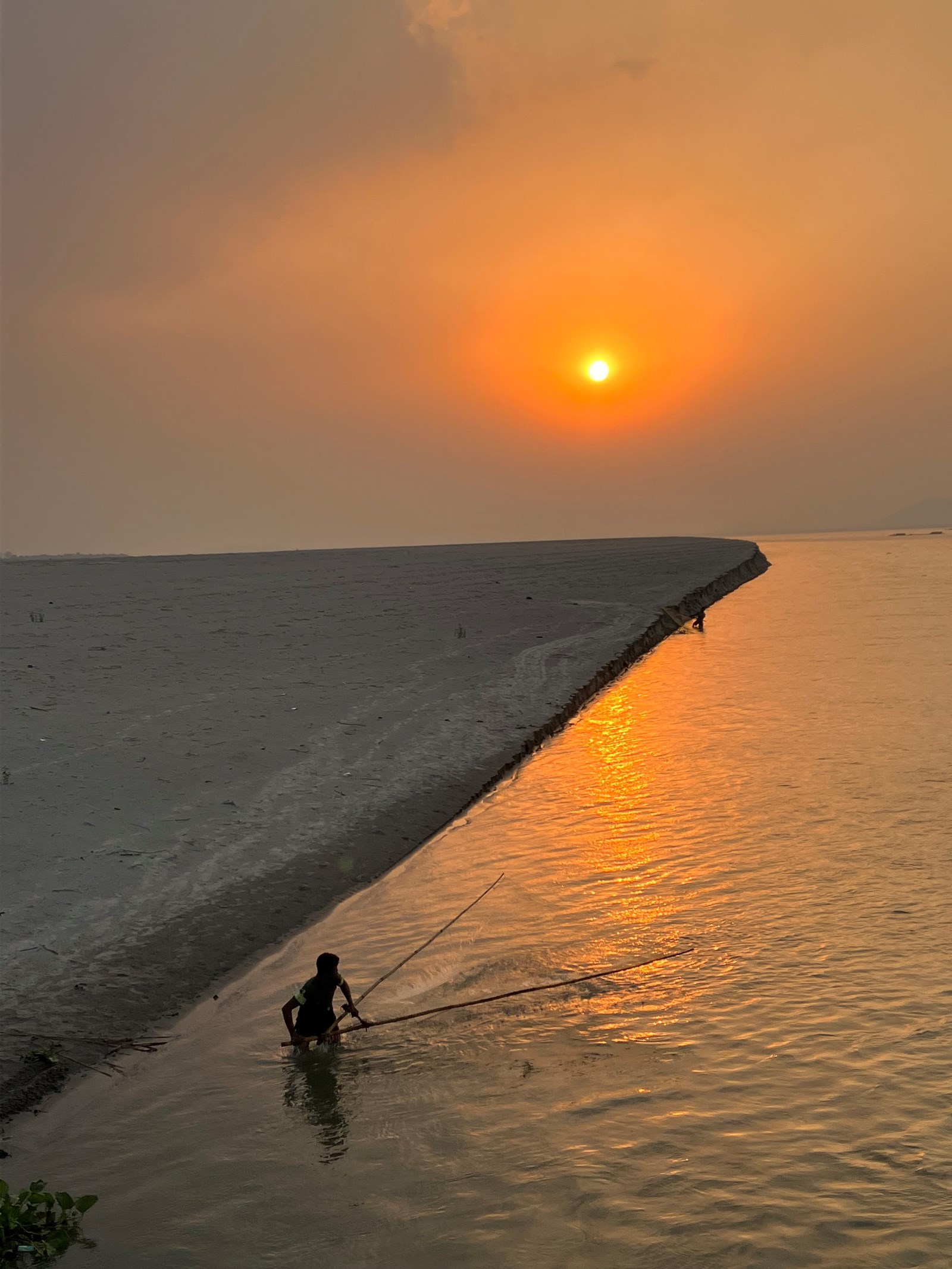 A view of the magnificent Brahmaputra (Credit: Philipp Ackermann)
Outside Kaziranga, we visited tea plantations, where the tea grows in the plains and not on hillsides like elsewhere in India. Assam tea comes from a different tea plant variety; a variety that is indigenous to India (unlike the one in Darjeeling, for example). Strolling through the tea bushes protected by the shade trees feels great – again because of the many birds one can see. What is more: We had a quick glance at a group of hoolock gibbons jumping in the trees right across the plantation with their long arms and white eyebrows – a great sight of another mammal that is very rare.
But Assam is way more than wildlife and tea: It has a great and interesting history. With our naturalist, we discussed the 600 years of history of the Ahom kingdom and the battles against the Bengali sultanates and the Mughals. He knew all about the intricacies of the historical development of his state. We discussed the different layers and histories of Assam’s considerable Muslim population. We saw beautiful Hindu temples. And we had fabulous Assamese food: not overly spicy (good for me) but very hot, full of chilies (not so good for me). Assam is in a way a typical Indian state: a confluence of peoples, languages, religions, traditions and – at the same time – very distinct: With its own language, its own history and its own crafts and skills it is a unique part of the subcontinent, a wonderful travel destination full of surprises. I loved my stay and would strongly recommend going there. So maybe I do have a favourite state in India? Let’s wait for 2024…
The writer is German Ambassador to India and Bhutan