


Journalism of Courage
 The Viking Ship Museum, in Roskilde, Denmark (Photo: Rohan Banerjee)
To visit one of Oslo’s best museums, you have to leave the quaint city centre and venture deep into suburbia. A ferry or a bus will get you there, though the bus may take an unexpected turn and deposit you on a leafy lane lined with prim cottages. You will have to find your way using Google Maps because there’s nobody around to give you directions. Your fear that you have stumbled into an idyllic ghost town is put to bed when you see two topless tennis players — who must be male models on a day off — firing forehands at each other on a clay court.
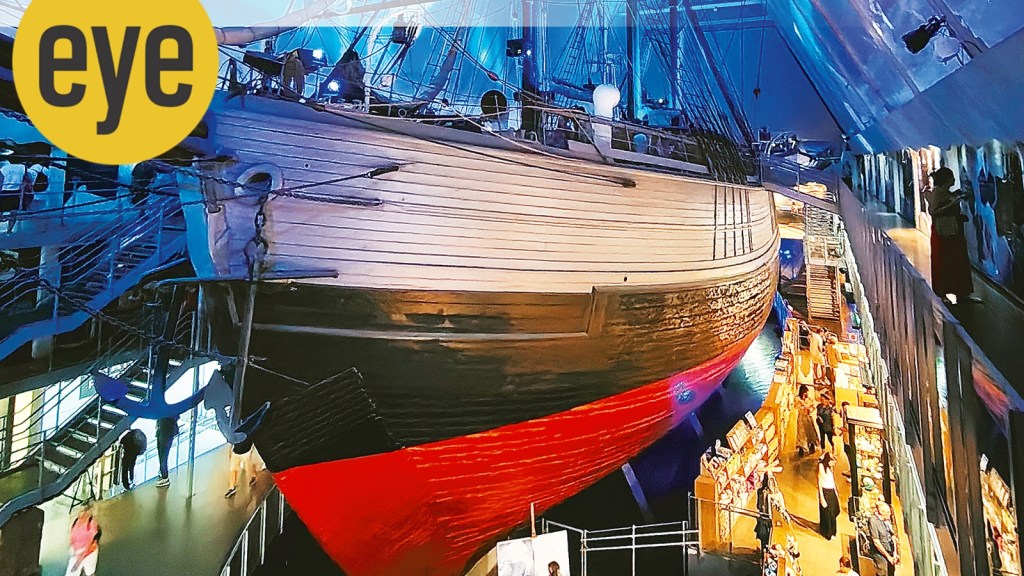
The sun is scorching but your long walk is made worthwhile when you arrive at your destination, enter a building with a teepee-shaped facade and step onboard the ship that travelled to both poles of our planet.
The Fram Museum sits by a waterfront, as if the legendary vessel it houses may want to slip into the sea again someday. The museum resembles a giant shed, with narrow staircases and ramps built along its walls to showcase exhibits and artefacts across multiple levels. Fridtjof Nansen and Roald Amundsen, two of Norway’s most famous sons, are recurring characters in the displays. The former was the first man to cross the Greenland ice cap (and a Nobel Peace Prize winner). And Amundsen was the first to reach the South Pole. Their exploits, and those of other explorers, fill the museum.
In some darkened corners, grainy footage of polar expeditions play on loop. Dioramas of Arctic deserts are populated with Thumbelina-sized figurines of men and dogs. There is even an ersatz cryo chamber, a kind of kitschy amusement park installation, that you can enter to get a brief taste of the polar chill. The star attraction, however, is the ship preserved at the heart of it all: the Fram.
Fram, a three-masted schooner, was built to test one of Nansen’s wilder theories: that if a ship could avoid being crushed by the polar icepack, it could stay afloat and be carried along by ocean drift. In 1893, he set sail to test this hypothesis and blessedly — for him, his 11 shipmates, and future visitors to the museum — the Fram survived and spent three years ‘floating’, trapped in the Arctic icescape.
Later, the ship would make another trip to the Arctic and then carry Amundsen far into the Antarctic Ocean during his famous South Pole expedition (1910-1912). It feels remarkable, as you stroll on the deck and enter the belly of the boat, to envision a dozen or more crew members spending years in such cramped quarters. The Fram is not a large ship, but when you are in its bowels, space bends and folds over itself. There is the galley with its assortment of pots and pans, the engine room, the cargo hold, and, while this may be hard to imagine, a captain’s cabin that is smaller even than the typical bedroom in a Mumbai flat. Below deck, you must stoop at all times and constantly turn sideways to let other people pass. In such conditions were heroic deeds accomplished and history made. You feel a sense of awe, certainly, but there is also an empathetic crick in your neck.
 The Fram Museum in Oslo, Norway (Photo: Rohan Banerjee)
The ancient Viking ships, in comparison, may have involved the tedious business of rowing, but at least they offered better sleeping postures.
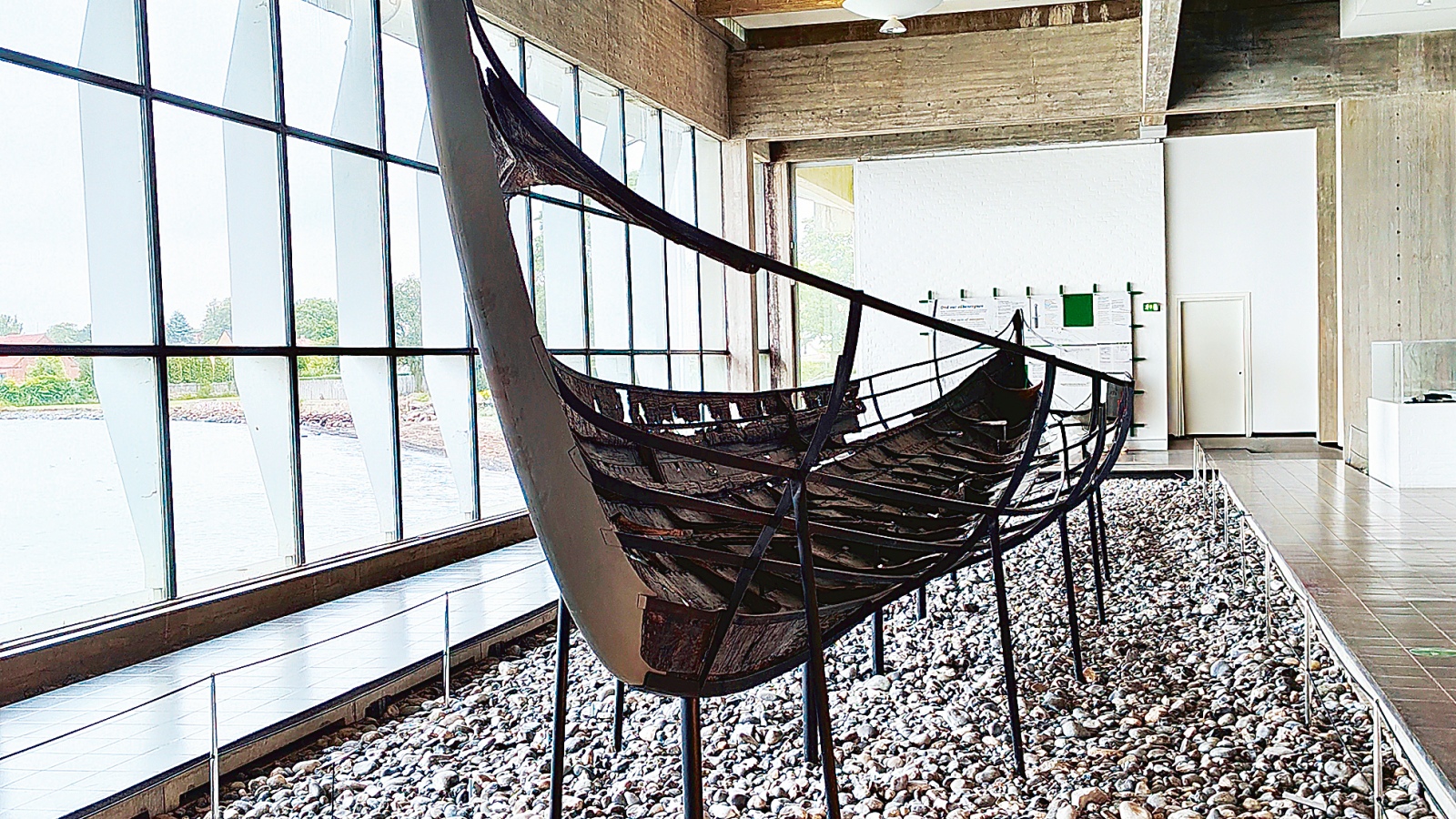
In the Danish town of Roskilde, a 30-minute train ride from Copenhagen, another ship-themed museum skirts the water’s edge. This one, the Vikingeskibsmuseet, contains the re-assembled remains of five millennia-old Viking ships; though I’m sorry to report that unlike at the Fram Museum, visitors are discouraged from clambering onto the exhibits. Still, there is much to admire.
The glass-panelled walls of the room offer clear views of the Roskilde fjord, the water a slate-grey reflection of a leaden sky. Archaeologists believe the five ships were sunk, deliberately, in these very waters to create a subsea barrier against raiding sailors. After being submerged for a thousand years, the wooden ships had disintegrated into truckloads of fragments. Recovering these pieces and cobbling the ships back together was a mammoth enterprise. Thankfully, assembling tiny, sharp-edged scraps into jaw-dropping models comes naturally to the people who invented LEGO. It is thanks to these archaeologists-cum-jigsaw-enthusiasts that visitors can see the fascinating details of a resurrected Viking ship: its prow, its oar holes, its eel-like sleekness.
These ships, that are canoes on steroids, could travel to distant shores, as far afield as Ireland. This, just to clarify, is not a theoretical assumption. In 2007, a sixty-member crew sailed a reconstructed Viking vessel (modelled on the largest ship unearthed in Roskilde) from Denmark to Dublin.
The voyage was no Survivor-style adventure but a serious scientific experiment — much like how my daily consumption of Danish pastries in Copenhagen was driven by dispassionate research on bakeries. They undertook the voyage to get an actual taste of how the Vikings must have battled bitter winds and high-sea storms with mediaeval equipment. It was horrible, I suppose their field notes recorded, but we did get to stretch our legs when asleep.
Rohan Banerjee is a writer and lawyer based in Mumbai