7 min readUpdated: Sep 6, 2026 06:27 PM IST
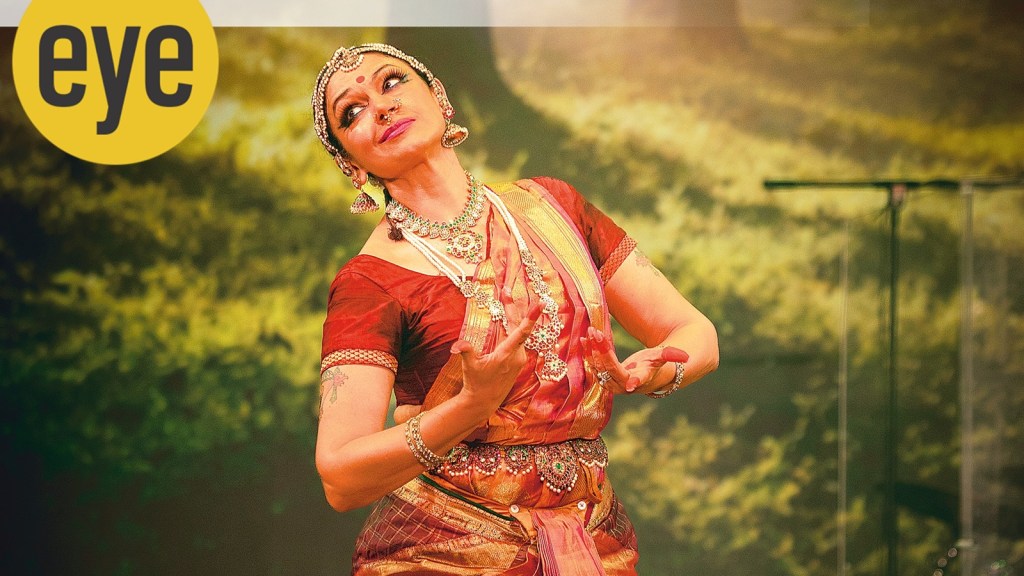
During a performance at Delhi’s Indira Gandhi Sports Complex last week, actor and Bharatanatyam dancer Shobana walked onto the proscenium, turned into the court of Janaka, the king of Mithila. She entered the scene of Sita Swayamvaram — the episode from the Ramayana where Sita’s suitors compete to lift Shiva’s mighty longbow — with a comic twist. As various kings took turns to string the bow, contemporary film music replaced the expected classical score. When the peppy ‘Ravana’ from the NTR Jr-starrer Telugu film Jai Lava Kusa (2017) played, Shobana, as one of the suitors, made her entrance with a cocky flourish, channeling Ravana’s swagger. The melody amplified the comedy and soon there is an inevitable faltering, much to the delight of the audience, who burst into laughter. Then she becomes Rama, serene and composed, lifting the bow and splitting it in two. The music shifts to Seetha kalyana vaibhogame, 18th-century saint Tyagaraja’s popular krithi that celebrates the wedding of Rama and Sita and is played at weddings even today.
Shobana’s performance was part of South Side Story, an annual festival otherwise alive with rock, rap, contemporary sounds and the attendance of Gen Z, making Bharatanatyam an unexpected presence in the lineup. Two years in a row.

“It is unquestionably a divine and ritualistic art form, but divinity does not somehow cancel entertainment. The two are not mutually exclusive,” says Shobana in an exclusive conversation with The Indian Express. She adds that if a platform created space for someone in Delhi to watch a south Indian classical dance performance for the first time and leave with an interest in knowing more about it, then that is already “a meaningful contribution to the growth of the art.”
“When the audience connects with art, irrespective of whether they are familiar with the form or not, it becomes a meaningful experience for an artiste,” she says.
In a career spanning four decades, Shobana has inhabited distinct artistic worlds that often do not intersect naturally. She is a National Award-winning actor with a comprehensive cinematic oeuvre in Malayalam, Telugu and Tamil cinema besides a significant career as a Bharatanatyam dancer. This ability to move between the classical and the popular has been the hallmark of Shobana’s journey that has often brought the two ideas together.
On stage, she integrates the actor into the dancer. She uses theatre, popular music and humour to contemporise traditional stories. Her Bharatanatyam is accessible, even to an audience not part of the classical circuit. She has used electronic beats, presented the Ramayana through the perspective of Ravana with English dialogues and voiceovers, danced to spoken-word poetry in ‘Krishna’ besides showcasing Balinese dance aesthetics and presenting sharp social commentary on dowry in ‘Shyama’.
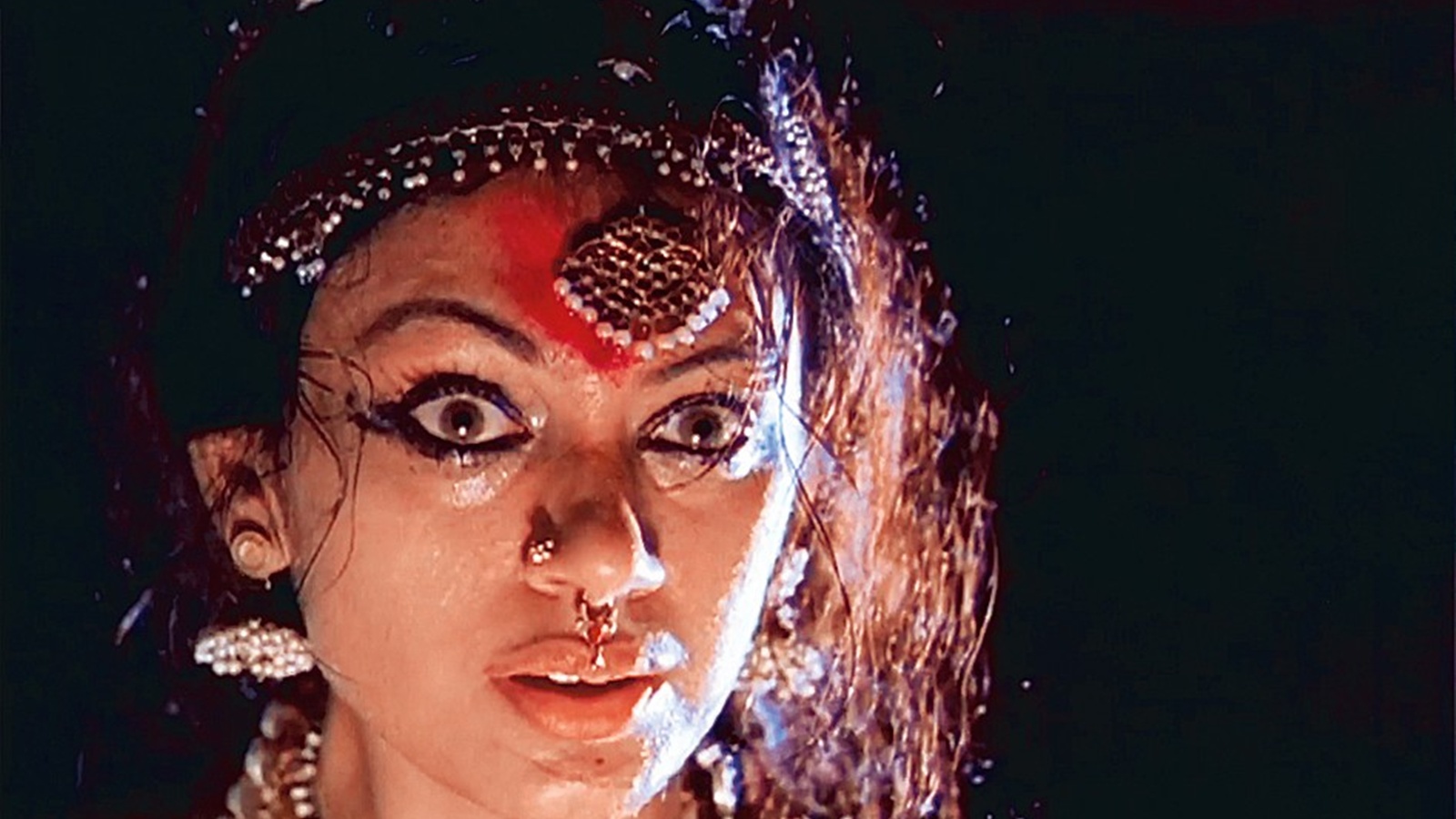
A still from Manichitrathazhu
“Everybody adapts dance for the medium it is presented in. Cinema adapted it for the camera. Today, people adapt it for social media. The form changes because the frame changes,” says Shobana, who has often drawn criticism from purists for her approach. “Perhaps, what people mean is a clarity of form, clean lines. Technical precision, maybe, and some adherence to a recognised vocabulary,” she says. “But to call that purity is a misappropriation of the word.” She points out that Bharatanatyam, as we recognise it today, is a comparatively modern term compiled around the time of Indian Independence into a movement vocabulary and performance structure called the margam. Indian dance has continued to move forward since. “The strongest claim to historical authenticity lies with the nattuvanars (traditional dance masters) and hereditary performing communities, including the devadasis. After that, change is inevitable. Our gurus changed it. Their gurus changed it. We have changed it. Our students will change it again. That is not necessarily a criticism. It is how an art form remains alive,” says Shobana.
Born into a family steeped in the arts, Shobana was introduced to Bharatanatyam early and trained under some of its finest practitioners. Her lineage includes her three aunts, the Travancore sisters: Lalitha, Padmini and Ragini. Padmini was among the most celebrated dancers and actors of her generation who also found attention through Raj Kapoor’s Mera Naam Joker (1970). But it was her eldest aunt Lalitha, who actually taught her dance as a child. “It was 1975 and the way she used to lure me… dangling a bright green dance costume she had stitched for me, and saying, ‘If you want to wear this, you have to dance’,” says Shobana, who also trained under the Bharatanatyam exponent, Chitra Visweswaran.
Story continues below this ad
Padmini was already married and had left India before Shobana was born. It was during the shooting of the Malayalam film Udayam Padinjaru (1986) in the US that Shobana stayed with her and the two bonded. Shobana was 16 then. “She was just my appachi. One thing I have understood from all the great artistes is that they are all humble,” says Shobana, who began acting at nine. Her first lead role came at 14 with Balachandra Menon’s April 18 (1984).
In her long cinematic journey, Shobana has moved fluidly across Malayalam, Tamil and Telugu cinema and worked with leading filmmakers, including Adoor Gopalakrishnan, Priyadarshan and Mani Ratnam. Her notable performances include Rudraveena (1988), Innale (1990), Thalapathi (1991) and Manichitrathazhu (1993), in which her dual role as Ganga and her alter ego Nagavalli won her the National Award. She won the coveted honour again for Revathi’s Mitr, My Friend (2002) for her portrayal of a lonely Indian homemaker in the US searching for an identity. She took a break from acting, returning in 2020 with Varane Avashyamund, all the while running her dance school Kalarpana Institute of Bharatanatyam in Chennai.
For her contribution to the arts, Shobana was also awarded a Padma Bhushan in 2025. She won a Padma Shri in 2006.
In 2024, Shobana, who strictly stayed away from politics for most of her career, made a rare appearance in the political arena. While she stated she was “just an actor with my own hopes and dreams” and was not going to be in active politics, in April 2024, weeks before the Lok Sabha election, she publicly endorsed BJP candidate Rajeev Chandrasekhar in Thiruvananthapuram. Chandrasekhar, then a former Union Minister of State for Electronics and Information Technology, lost to Congress’s Shashi Tharoor by a narrow margin. Shobana also attended Prime Minister Narendra Modi’s campaign programme and later described meeting him as a “huge fan moment.”
Story continues below this ad
She will soon be seen in director Nitesh Tiwari’s upcoming magnum opus Ramayana. In the film starring Ranbir Kapoor and Sai Pallavi as Ram and Sita, she will play Kaikesi, Ravan’s mother.
With inputs from Anusree K C




 A still from Manichitrathazhu
