
The Supreme Court this week expressed concern over a submission by the CBI that since 2018, around 150 requests for sanction to investigate have been pending with eight state governments that have withdrawn general consent to the agency.
“It is not a desirable position,” a Bench led by Justice S K Kaul observed, and referred the matter to Chief Justice of India N V Ramana.

The CBI had filed the affidavit after the court inquired last month about the bottlenecks it faced, and the steps it had taken to strengthen prosecutions.
What is general consent?
The National Investigation Agency (NIA), which is governed by The NIA Act, 2008, has jurisdiction across the country. But the CBI is governed by The Delhi Special Police Establishment (DSPE) Act, 1946, and must mandatorily obtain the consent of the state government concerned before beginning to investigate a crime in a state.
The consent of the state government can be either case-specific or general.
A “general consent” is normally given by states to help the CBI in seamless investigation of cases of corruption against central government employees in their states. Almost all states have traditionally given such consent, in the absence of which the CBI would have to apply to the state government in every case, and before taking even small actions.
Section 6 of The DSPE Act (“Consent of State Government to exercise of powers and jurisdiction”) says: “Nothing contained in section 5 (“Extension of powers and jurisdiction of special police establishment to other areas”) shall be deemed to enable any member of the Delhi Special Police Establishment to exercise powers and jurisdiction in any area in a State, not being a Union territory or railway area, without the consent of the Government of that State.”
Which states have withdrawn general consent, and why?
Eight states have currently withdrawn consent to the CBI: Maharashtra, Punjab, Rajasthan, West Bengal, Jharkhand, Chhattisgarh, Kerala, and Mizoram. All except Mizoram are ruled by the opposition.
Mizoram in fact, was the first state to withdraw consent in 2015. The state was ruled by the Congress at the time, and Lal Thanhawla was chief minister. In 2018, the Mizo National Front (MNF) under Zoramthanga came to power; however, even though the MNF is an NDA ally, consent to the CBI was not restored.
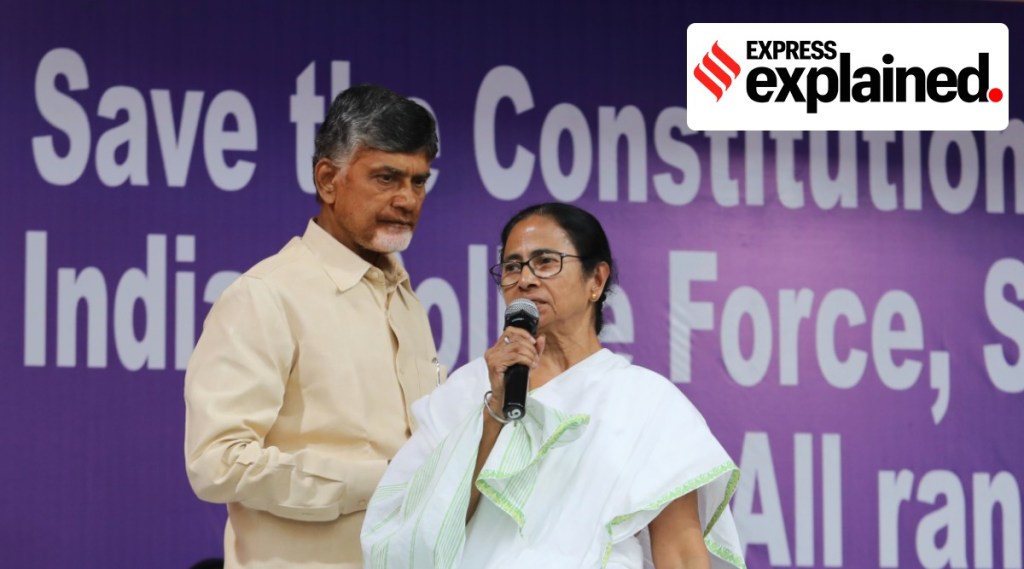
In November 2018, the West Bengal government led by Mamata Banerjee withdrew the general consent that had been accorded to the CBI by the previous Left Front government back in 1989. West Bengal announced its decision within hours of Andhra Pradesh, then ruled by N Chandrababu Naidu’s TDP, taking a similar decision.
“What Chandrababu Naidu has done is absolutely right. The BJP is using the CBI and other agencies to pursue its own political interests and vendetta,” Banerjee said.
After Naidu’s government was replaced by that of Y S Jagan Mohan Reddy in 2019, however, Andhra Pradesh restored consent.
The Congress government of Bhupesh Baghel in Chhattisgarh withdrew consent in January 2019. Punjab, Maharashtra, Rajasthan, Kerala, and Jharkhand followed in 2020.
At the time of withdrawing consent, all states alleged that the central government was using the CBI to unfairly target the opposition.
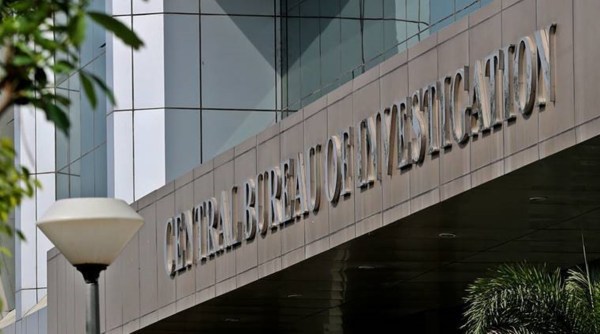 Central Bureau of Investigation headquarters in New Delhi (Express Photo)
What does the withdrawal of general consent mean?
It means the CBI will not be able to register any fresh case involving officials of the central government or a private person in the state without the consent of the state government.
“CBI officers will lose all powers of a police officer as soon as they enter the state unless the state government has allowed them,” a former CBI officer who has handled policy during his time in the agency, said.
Calcutta High Court recently ruled in a case of illegal coal mining and cattle smuggling being investigated by the CBI, that the central agency cannot be stopped from probing an employee of the central government in another state. The order has been challenged in the Supreme Court.
In Vinay Mishra vs the CBI, Calcutta HC ruled in July this year that corruption cases must be treated equally across the country, and a central government employee could not be “distinguished” just because his office was located in a state that had withdrawn general consent.
The HC also said that withdrawal of consent would apply in cases where only employees of the state government were involved.
The petition had challenged the validity of FIRs registered by the CBI’s Kolkata branch after the withdrawal of consent.
So where does the CBI currently stand in these eight states?
The agency can use the Calcutta HC order to its advantage until it is — if it is — struck down by the Supreme Court.
Even otherwise, the withdrawal of consent did not make the CBI defunct in a state — it retained the power to investigate cases that had been registered before consent was withdrawn.
Also, a case registered anywhere else in the country, which involved individuals stationed in these states, allowed the CBI’s jurisdiction to extend to these states.
There is ambiguity on whether the CBI can carry out a search in connection with an old case without the consent of the state.
But the agency has the option to get a warrant from a local court in the state and conduct the search.
In case the search requires an element of surprise, Section 166 of the Criminal Procedure Code (CrPC) can be used, which allows a police officer of one jurisdiction to ask an officer of another to carry out a search on their behalf.
And should the first officer feel that a search carried out by the latter may lead to loss of evidence, the section allows the first officer to conduct the search himself after giving notice to the latter.
Finally, consent does not apply in cases where someone has been caught red-handed taking a bribe.
But what about fresh cases?
Again, the CBI could use the Calcutta HC order to register a fresh case in any state. Alternatively, it could file a case in Delhi and continue to investigate people inside these states.
In an order passed on October 11, 2018, Delhi High Court ruled that the agency could probe anyone in a state that has withdrawn general consent, if the case was not registered in that state. The order came on a case of corruption in Chhattisgarh — the court said that since the case was registered in Delhi, the CBI did not require prior consent of the Chhattisgarh government.
In sum, avenues remain available to the CBI to proceed even without consent. “The CBI could register cases in Delhi if some part of the offence is connected with Delhi, and still arrest and prosecute individuals in these states,” a CBI officer said.
 Have states started denying consent only after the present government came to power in Delhi?
No. States, including Sikkim, Nagaland, Chhattisgarh and Karnataka, have done this throughout the history of the agency.
In 1998, the Janata Dal government of Chief Minister J H Patel withdrew general consent to the CBI in Karnataka. The Congress government of S M Krishna, which took over in 1999, did not revoke the previous government’s order. The home minister of Karnataka then was Mallikarjun Kharge, the current Leader of Opposition in Rajya Sabha.
“Consent wasn’t renewed for eight long years. The CBI had to virtually close down its office (in Karnataka),” said an officer who was with the agency at the time. The CBI had to seek the permission of the state government for every case and every search it conducted on central government employees, the officer said.
Political accusations aside, to what extent is the CBI “its master’s voice”?
After the 2018 amendments to the Prevention of Corruption Act, 1988, the Centre has come to exercise power over the CBI not just administratively, but also legally.
In 2018, the government pushed through Parliament amendments to Section 17A of the Act, making it mandatory for the CBI to seek the Centre’s permission before registering a case of corruption against any government servant.
Earlier, the Centre had mandated that such permission was required only for officials of the level of joint secretary and higher. The amendments were brought after the Supreme Court struck down the government’s directive.
CBI officers say the 2018 amendment virtually means the agency can investigate only the officers that the government of the day wants investigated. In fact, corruption cases registered by the CBI dropped by over 40 per cent between 2017 and 2019.
Newsletter | Click to get the day’s best explainers in your inbox

 Share


