
On this day 25 years ago, an invaluable devaluation
Twenty-five years later, the Rupee has emerged as one of the most stable currencies on the back of improved macroeconomic indicators.
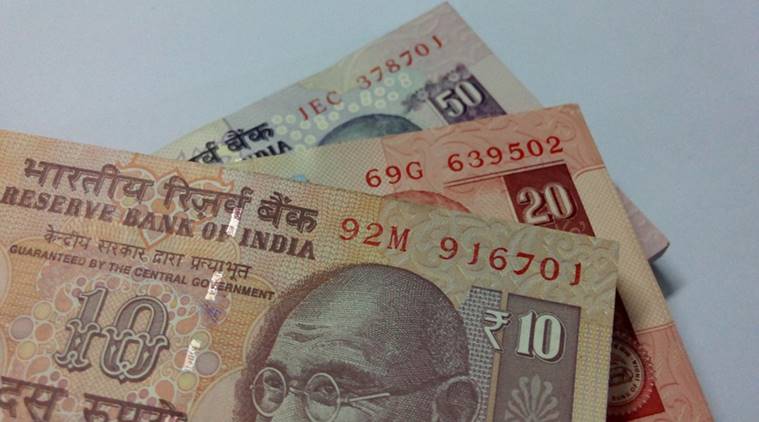 On July 1, the RBI announced a downward revision in the rupee’s external value against major foreign currencies.
On June 20, 1991, on the evening before he was sworn in as head of a minority government, P V Narasimha Rao met senior officials at a government bungalow in New Delhi’s Willingdon Crescent, a stone’s throw away from both Race Course Road, the official residence of the Prime Minister, and Rashtrapati Bhawan.
The meeting was to brief the Prime Minister-elect on the state of the economy — the crisis and the risk of defaulting on external payments. Since the previous December, the Chandra Shekhar government had been struggling to battle the crisis brought about by the 1980s’ policy of expansionary growth and failure of V P Singh’s government to act, as well as the first Gulf War that began in August 1990. Surging crude prices inflated India’s oil bill hugely, and a sovereign downgrade by global credit rating agencies choked funds flow from non-resident deposits and foreign borrowings. The break-up of the Soviet Union heightened the crisis. By end-June 1991, India’s reserves of foreign currency had plunged to $ 1,124 million, adequate to cover just about two weeks of imports.

Rao was briefed by chief economic advisor Deepak Nayyar and finance secretary S P Shukla. Nayyar handed over a 12-page note on some of the steps that needed to be taken swiftly to address the challenges.
[related-post]
Watch Video: What’s making news
Within days of Rao taking charge, a series of meetings took place among top officials of the Prime Minister’s Office, the Finance Ministry and the Reserve Bank. One of the earliest and most significant decisions that needed to be taken was on the exchange rate. It had been clear to most policy managers — including the RBI and the Chandra Shekhar government — for quite some time then that India’s currency was overvalued, with a negative impact on export competitiveness.
While a devaluation of the Rupee seemed the obvious step, it was fraught with political risk. Memories of the 1966 devaluation — carried out, again, during an economic crisis and under pressure from multilateral lenders — and its political fallout were still alive. But there was little option — and with an unprecedented sovereign default looming, the Rao government decided to take the plunge. The extent of devaluation was an important part of the decision — there were many in the policymakers’ team who felt it ought to be over 20 per cent.
Once approval was obtained from the Cabinet Committee on Political Affairs and RBI Governor S Venkitaramanan was informed, the operationalisation of the decision was left to Deputy Governor
C Rangarajan. In those days, RBI announced the buying and selling rates of the Rupee against the Pound Sterling at the start of each day. It used to buy four currencies: the Pound Sterling, the US Dollar, the Deutsche Mark and the Japanese Yen. It was decided that the devaluation would happen on July 1.
Manmohan Singh has said it was important to tackle the exchange rate quickly to kill speculation on the Rupee’s future. But the situation was dire, and the devaluation was rammed through in two stages. On July 1, the RBI announced a downward revision in the rupee’s external value against major foreign currencies. The spot selling rate for the Dollar was raised to Rs 23.04 from Rs 21.14 on June 30. Government officials called the exercise a “realignment” or “downward adjustment” of the Rupee, and Finance Minister Singh assured the media that nothing that was inconsistent with India’s national interests had been done.
Two days later, on July 3, the RBI announced a second devaluation, taking the Dollar to Rs 25.95. In a matter of three days, the Rupee had been devalued by over 18.5% against the Dollar, and by 17.4% against the Sterling in an operation that was codenamed Hop, Skip and Jump.
Nayyar recalls: “The exchange rate adjustments were absolutely essential. It was not just that the Rupee was overvalued. The erosion of international confidence over the preceding six months had shaped market sentiment. It was believed that the Rupee was bound to depreciate. And speculation was inevitable. The risk of capital flight and a run on the Rupee were a clear and present danger. The challenge was to assess how much depreciation was needed to stem destabilising expectations so that markets believed that the new parity of the Rupee was sustainable. It was an ex ante intuitive judgment. But we did come to a decision, which turned out to be right ex post. In an ideal world, this adjustment should have been done at one stroke. But it was done in two steps on July 1 and 3, 1991.”
According to Nayyar, “the proposition that we were testing the waters with the first step is a polite euphemism for reasons beyond our control in the realm of politics”. There was complete agreement on how much depreciation would be needed. “There were second thoughts on the mode of implementation. Even so, the decision that the new exchange rate would be Rs 25 = $1 was implemented, even if in two steps. It was termed as a realignment of the currency or an exchange rate adjustment, rather than a devaluation, in deference to political sensitivities.”
As the Opposition attacked the government for “bowing to the IMF’s diktat”, Singh was to say on July 3 that the world community was delighted that India was taking some of these measures — and that the depreciation and scotching of speculation on the Rupee would ensure both the return of capital and renewal of international confidence in the Indian economy.
Twenty-five years later, the Rupee has emerged as one of the most stable currencies on the back of improved macroeconomic indicators. Current foreign exchange reserves (including gold) of $363.83 billion can take care of over 11 months of imports.
 Share


