


Journalism of Courage
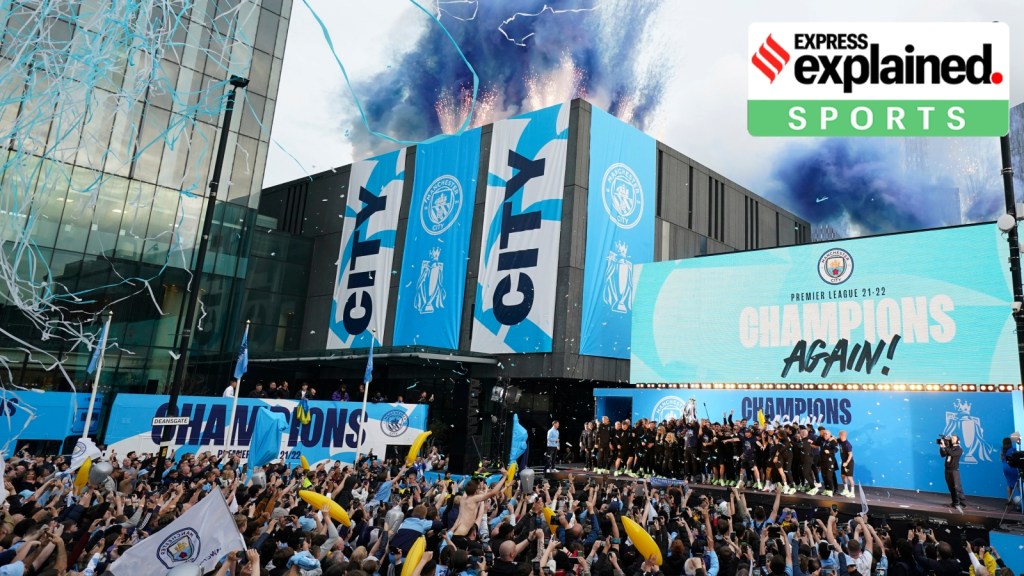 During Manchester City's Premier League title parade in Manchester, England, on May 23, 2022. The PL has levelled charges that the club allegedly breached over a hundred financial regulations over a decade. Photo: AP/Jon Super/File
In a 1,500-word statement this week, the Premier League has said that Manchester City, the eight-time champions of England’s top-flight football league, “systemically broke” more than a hundred financial regulations between the 2009-10 and 2017-18 seasons.
The allegations, essentially, are that City artificially inflated its revenue through “sham” sponsorship deals to disguise its losses, and sought to cover this up. This has cast a cloud over the achievements of the Abu Dhabi royal family-owned club and sparked calls for severe penalties.
We explain the charges, how they contravene Financial Fair Play (FFP) rules and the possible consequences for the club.
The Premier League, through an independent panel that has been probing these charges, said that the club, owned by Sheikh Mansour bin Zayed al-Nahyan through the City Football Group, has committed Financial Fair Play (FFP) fraud over a decade. Sheikh al-Nahyan is Vice President and Deputy Prime Minister of the UAE.
Out of the many charges, the one that stands out is this: Between 2009 and 2018, Manchester City declared a commercial sponsorship revenue of $1.25 billion — more than that of traditional giants Real Madrid, Barcelona and Manchester United. The panel found out that the actual amount of sponsorship revenue was $157 million.
The PL has strict financial rules in place, known as Profit and Sustainability Rules. These draw upon the Financial Fair Play (FFP) rules instituted by Europe’s governing footballing body, UEFA, in 2009 to ensure that European football clubs adopted financial sustainability and responsible governance.
This broadly means that clubs can only make a certain amount of losses before penalties start to be put in place. The amount of money a club can spend on transfers is tied to the revenue it makes.
This is where the Premier League has flagged issues. What it is accusing, with receipts, is that Manchester City essentially onboarded commercial partners via “sham” contracts, inflated the sums of money those partners invested by adding money from their own purse, and showed that a commercial revenue of around $157 million was actually over $1 billion. The inflated sums were essentially paid for by the owners themselves and received by the club for transfers and other business activities.
But what’s the problem if City’s owners were themselves paying for inflated contracts?
By inflating their revenue, Manchester City essentially tried to fool the FFP model. The club’s finances, bankrolled not by their profits but by the wealth of their owners, were used to buy some of the best players in the world. And whenever those players failed to click, City had the resources to go and purchase replacements as well.
Many might argue that legacy clubs like Manchester United and Arsenal needed the competition of wealthy owners from different parts of the world to come in, and that a club with new owners would find the already full-to-the-brim revenues of the legacy clubs tough to compete against when FFP rules came into play.
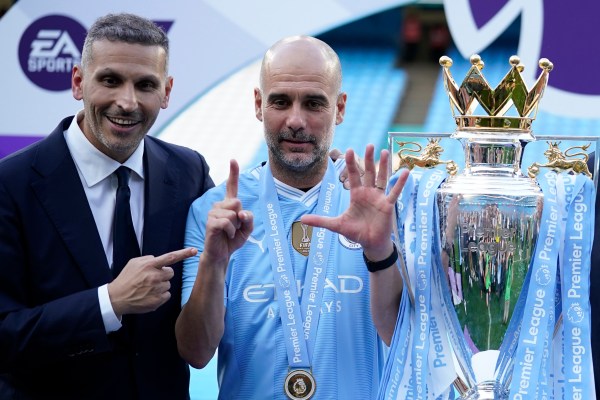 Former Manchester City head coach Pep Guardiola (right) and chairman Khaldoon Al Mubarak celebrate with the Premier League trophy on May 19, 2024. Photo: AP/Dave Thompson/File
But the argument against that notion is that these legacy clubs spent over a hundred years ingraining themselves into the everyday lives of their communities. Their success was built over decades of up-and-down growth cycles that exploded when the sport found an eager global audience and developed it into one of the greatest revenue models, ever. Their businesses were built on results achieved on the pitch and not through revenues made from other businesses that were then offloaded onto a football club.
What is the sentiment in English football at these revelations?
Many players have come out asking for Manchester City to be stripped of their medals and their trophies. Some such as former England striker Wayne Rooney, who played for Manchester United and Everton, believes that despite the clear instances of wrongdoing, the players who put on the colours of the club won a title based on their abilities; so, any change now would also constitute as unfair.
There are managers who have lost their jobs for finishing below Manchester City in the league standings and not making the top four, which usually determine who qualifies for the UEFA Champions League the following season. There are players who have careers that are questioned because they don’t have an PL title to their names.
All of this has led to a general sentiment of dismay, and hope that adequate punishments will be handed out for a deception of this scale.
The club has until Friday (October 2) to appeal the decision. City have already said that the club is “innocent of the accusations made by the Premier League and a comprehensive body of irrefutable evidence exists in support of all of its positions, relating to this case”.
But there is no precedent for a violation of this magnitude in the Premier League.
Recently, Everton received a 10-point deduction for breaking FFP rules — it was reduced to six upon appeal. That was because they overshot their FFP budget by just $20 million. City’s alleged crimes go well over a billion dollars. Punishments could include point deductions, steep fines or even removal from the top flight.
But considering the club’s global commercial heft as well as the owners’ influence — UK Prime Minister Andy Burnham even praised them after the charges came out — it remains to be seen what action the Premier League ends up taking.


