
Explained: How climate change is destroying the world’s oldest cave art in Indonesia
Researchers have reported that Pleistocene-era rock paintings dating back to 45,000-20,000 years ago in cave sites in southern Sulawesi, on the Indonesian island of Sulawesi, are weathering at an alarming rate.
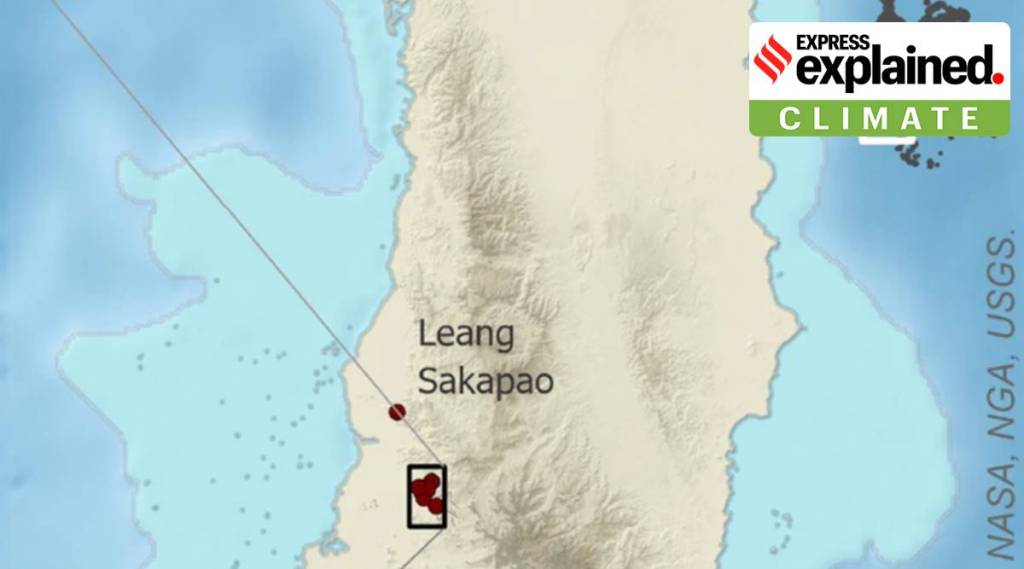 Location of the studied rock art sites in the limestone karsts of Maros-Pangkep, Sulawesi (Indonesia). (Sources: GEBCO, Esri, NASA, NGA, USGS)
Scientists have warned that environmental degradation is killing one of the oldest and most precious pieces of the world’s human heritage. Researchers writing in the online peer-reviewed open access journal ‘Scientific Reports’, published by Nature Research, have reported that Pleistocene-era rock paintings dating back to 45,000-20,000 years ago in cave sites in southern Sulawesi, on the Indonesian island of Sulawesi, are weathering at an alarming rate. (‘The effects of climate change on the Pleistocene rock art of Sulawesi’: Scientific Reports, 13 May 2021; Huntley, et al.)
Newsletter | Click to get the day’s best explainers in your inbox

Significance of the cave paintings
A team of Australian and Indonesian archaeological scientists, conservation specialists, and heritage managers examined 11 caves and rock-shelters in the Maros-Pangkep region in Sulawesi.


 Share


