Kenyatta, the leader of the dominant Kikuyu people of central Kenya, chose to back Odinga, who had contested against him in 2017, over his deputy Ruto. The electoral support that Ruto, who faced a new coalition, received, split the Kikuyu people down the middle.
Both Ruto and Odinga had Kikuyu deputy presidential running mates. Deputy President elect Rigathi Gachagua, a career public servant, seems to have brought more to the Ruto campaign than Martha Karua, the first woman candidate for the post, could do for Odinga.
Ruto’s narrow victory met the ‘50 per cent plus 1’ rule of Kenya’s elections, obviating the need for a runoff. As of now, Ruto is expected to be sworn into office on August 30.
Post-election concerns
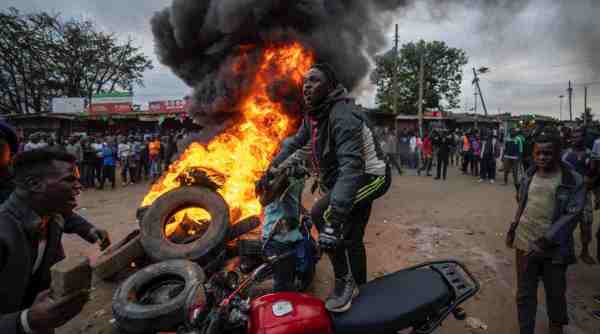
Odinga has rejected the result as “null and void”, and is expected to appeal in the Supreme Court. Four of the seven election commissioners have dissociated themselves from the result. Kenya, which has a history of post-election violence, is on tenterhooks — hoping that the matter would be settled in court rather than on the streets.
In 2007, rioting and strikes followed the announcement that Odinga had lost to Mwai Kibaki. In 2017, police used deadly force against opposition supporters protesting the victory of Kenyatta.
To keep his country together will be Ruto’s first challenge. Africa, and the world as a whole, could do without a meltdown in Kenya. The country is in transition, with a different tribal and class coalition, and new kinds of engagement. Expectations are high among younger citizens of Africa’s sixth largest economy — but Kenya’s debt is 67% of its GDP, and the country received a 38-month, $2.34 billion IMF finance package in April 2021.
An important nation
Continued stability in Kenya in the post-Kenyatta period is crucial because of a number of factors.
One, Ruto does not have the stature of the outgoing President, a senior African regional leader who largely kept his deputy in his shade. As President, Ruto will have to build relationships with other leaders in the region, and effectively leverage Kenya’s position of influence. His ability to do that will be impacted by any serious domestic post-election problems that he gets mired in.
Two, under Kenyatta, Kenya pursued a close economic partnership with China while aligning itself strategically with the United States, which included criticising Russia. Both the Chinese and Russians are expected to aggressively woo Kenyatta’s successor. As a member of the 23-nation Indian Ocean Rim Association (IORA), Kenya is a strategically important player in the Indian Ocean region.
Three, Kenya is currently a non-permanent member of the UN Security Council. During its rotational presidency of the UNSC in October 2021, Kenya took initiatives including dealing with issues of regional conflict, and acceptance of diversity to prevent conflicts. Kenya has promoted coordination among African and Caribbean representatives, and as a member of the Peace and Security Council of the African Union, played a role in resolving conflicts on the continent.
Four, Kenya is the economic locomotive of the region, involved in 45% of the trade within the East African Community (EAC). It was instrumental in expanding the EAC just before Kenyatta gave up chairmanship in July — the community admitted the Democratic Republic of the Congo (DRC), the largest country in central Africa. This took the EAC to the port of Matadi on the Congo river in the DRC, and established the vision of a cross-continent link between the Indian and Atlantic Oceans.
 A supporter of presidential candidate Raila Odinga stands on his motorcycle as he and others protest next to a roadblock of burning tires in the Kibera neighborhood of Nairobi, Kenya Monday, Aug. 15, 2022. (AP Photo/Ben Curtis)
This move may have, however, alienated the DRC’s small but influential neighbour Rwanda, and its long-serving President Paul Kagame, who are at loggerheads with Kinshasa. Kenyatta had led the effort to station an EAC peacekeeping force in eastern DRC — without him, and with Burundi as Chair of the EAC, the future of this initiative is uncertain. Ruto is junior to the other tall leaders of the region such as Kagame, Yoweri Museveni of Uganda, and Salva Kiir of South Sudan.
Five, the Horn of Africa remains a tinderbox. Among the earliest to congratulate Ruto were Ethiopia’s Prime Minister Abiy Ahmed, and both the past and present Presidents of Somalia. This was interesting, because Ethiopia, Eritrea, and Somalia had tried to unseat Kenya from its traditional position of influence in the Inter-Governmental Authority on Development (IGAD), the eight-nation East African trade bloc. Somalia had had a series of diplomatic spats with Kenya, and Ethiopia was ambivalent towards Kenyatta. His calls for peace in Tigray were seen as interference.
The Ethiopian and Somalian outreach to Ruto was intended perhaps to take advantage of his rivalry with Kenyatta, and possibly ensure a reset of their relations with Kenya.
Ruto’s foreign policy inclinations are not clear. He did not have much responsibility as Kenyatta’s deputy. For now, he is likely to concentrate on stabilising domestic politics, in fulfilling promises he made to the people, and in balancing the coalition that he has creatively established. Africa needs a stable and steady Kenya.
The author is former Ambassador of India to Germany, Indonesia, Ethiopia and the African Union

 William Ruto, center, shows a certificate after the announcement of the results of the presidential race at the Centre in Bomas, Nairobi, Kenya, Monday, Aug. 15, 2022. (AP Photo/Sayyid Abdul Azim)

 A supporter of presidential candidate Raila Odinga stands on his motorcycle as he and others protest next to a roadblock of burning tires in the Kibera neighborhood of Nairobi, Kenya Monday, Aug. 15, 2022. (AP Photo/Ben Curtis)

 Share


