Critical minerals refer to mineral resources, both primary and processed, which are essential inputs in the production process of an economy, and whose supplies are likely to be disrupted due to the risks of non-availability or unaffordable price spikes. To tackle such supply risks, major global economies periodically evaluate which minerals are critical for their jurisdiction through a quantitative assessment.
A recent working paper from Centre for Social and Economic Progress (CSEP) extends the earlier minerals assessment for 23 minerals by assessing the criticality levels of 43 select minerals for India based on their economic importance (demand-side factors) and supply risks (supply-side factors) which are determined through the evaluation of specific indicators.

Minerals such as antimony, cobalt, gallium, graphite, lithium, nickel, niobium, and strontium are among the 22 assessed to be critical for India. Many of these are required to meet the manufacturing needs of green technologies, high-tech equipment, aviation, and national defence.
However, while India has a significant mineral geological potential, many minerals are not readily available domestically. Hence, India needs to develop a national strategy to ensure resilient critical minerals supply chains, which focuses on minerals found to be critical in this study.
What are the challenges?
India faces global and domestic challenges in assuring resilient critical minerals supply chains. On the international front, there currently exist four significant risks. First, China, the most dominant player in the critical mineral supply chains, still struggles with Covid-19-related lockdowns. As a result, the extraction, processing and exports of critical minerals are at risk of slowdown.
Second, Russia is one of the significant producers of nickel, palladium, titanium sponge metal, and the rare earth element scandium. Ukraine is one of the major producers of titanium. It also has reserves of lithium, cobalt, graphite, and rare earth elements, including tantalum, niobium, and beryllium. The war between the two countries has implications for these critical mineral supply chains.
Third, as the balance of power shifts across continents and countries, the critical mineral supply chains may get affected due to the strategic partnership between China and Russia. As a result, developed countries have jointly drawn up partnership strategies, including the Minerals Security Partnership (MSP) and G7’s Sustainable Critical Minerals Alliance, while developing countries have missed out.
Fourth, manufacturing renewable energy technologies would require increasing quantities of minerals, including copper, manganese, zinc, and indium. Likewise, the transition to electric vehicles would require increasing amounts of minerals, including copper, lithium, cobalt, and rare earth elements.
However, India does not have many of these mineral reserves, or its requirements may be higher than the availability, necessitating reliance on foreign partners to meet domestic needs.
What is the way forward?
On the domestic front, while India has a geological potential similar to mining-rich Western Australia, much still needs to be explored. India faces four significant challenges to enable their sustainable extraction. First, many critical and strategic minerals constitute part of the list of atomic minerals in the Mines and Minerals (Development and Regulation) (MMDR) Act, 1957.
However, the present policy regime reserves these minerals only for public sector undertakings. Some of these are minerals and ores bearing beryllium, lithium, niobium, titanium, tantalum, zirconium, beach sand minerals, and rare earth group minerals containing uranium and thorium.
Second, given the increasing importance of critical and strategic minerals, there is an imperative need to create a new list of such minerals in the MMDR Act. The list may include minerals such as molybdenum, rhenium, tungsten, cadmium, indium, gallium, graphite, vanadium, tellurium, selenium, nickel, cobalt, tin, the platinum group of elements, and fertiliser minerals such as glauconitic, potash, and phosphate (without uranium).
These minerals must be prospected, explored, and mined on priority, as any delays may hinder India’s emissions reduction and climate change mitigation timeline.
Third, the reconnaissance and exploration of minerals must be encouraged, with particular attention given to deep-seated minerals. This will call for a collective effort by the government, ‘junior’ miners, and major mining companies. Fourth, an innovative regime must be devised to allocate critical mineral mining assets, which adequately incentivises private explorers, including ‘junior’ explorers.
Given the long lead times of setting up new exploration, extraction, and processing activities, these issues must be addressed soon if India is to utilise its natural wealth for its manufacturing needs. And Fifth, India needs to determine where and how the processing of minerals and assembly of critical minerals-embedded equipment will occur. Currently, India relies on global supplies of various processed critical minerals, as there are limited domestic sources.
India requires a critical minerals strategy comprising measures aimed at making the country AatmaNirbhar (self-reliant) in critical minerals needed for sustainable economic growth and green technologies for climate action, national defence, and affirmative action for protecting the interests of the affected communities and regions.
In addition, India must actively engage in bilateral and plurilateral arrangements for building assured and resilient critical mineral supply chains. Furthermore, the assessment of critical minerals for India needs to be updated every three years to keep pace with changing domestic and global scenarios.
A national critical minerals strategy for India, underpinned by the minerals identified in this study, can help focus on priority concerns in supply risks, domestic policy regimes, and sustainability.
Rajesh Chadha is a senior fellow, Ganesh Sivamani is a research associate, and Karthik Bansal is a research assistant at the Centre for Social and Economic Progress (CSEP), New Delhi.

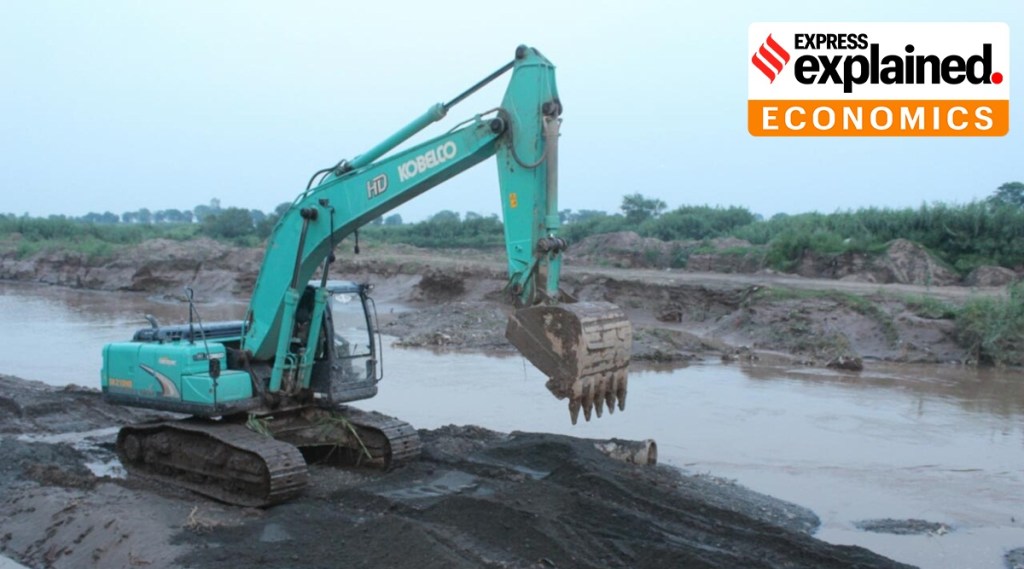 Minerals such as antimony, cobalt, gallium, graphite, lithium, nickel, niobium, and strontium are among the 22 assessed to be critical for India. (Express photo, file)

 Share


