


Journalism of Courage
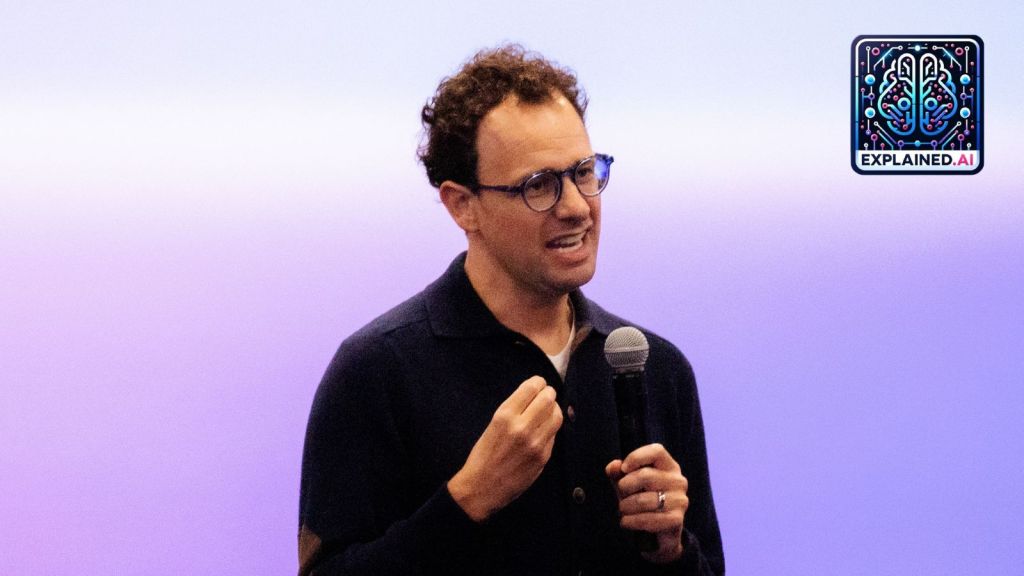 Dario Amodei, the chief executive of Anthropic, speaks at a Salesforce conference in San Francisco, Sept. 15, 2026. (NYT)
Following Anthropic CEO Dario Amodei’s recent call for AI companies to slow the development of increasingly powerful models, the company is preparing for a potential $2 trillion valuation, even as it reported a net loss of $42 billion in 2025.
Artificial intelligence major Anthropic confidentially filed a draft S-1 registration statement with the US Securities and Exchange Commission in June, setting the stage for a potential initial public offering (IPO). The listing is now expected after the US midterm elections in November.
According to the draft prospectus reviewed by Reuters, Anthropic argues that AI will transform the global economy far more profoundly than industrialisation, electricity and the internet. The prospectus itself remains unavailable to the public.
Here are the broad takeaways from Anthropic’s IPO prospectus.
Anthropic could seek a valuation of more than $2 trillion, but is losing a lot of money
Reuters reported, citing the filing, that Anthropic’s estimated $2 trillion valuation target is more than double its estimated valuation of $965 billion this May, signalling rapid growth. However, the company has also been losing large sums of money: while revenue grew 12-fold to about $4.6 billion in 2025, Anthropic posted an operating loss of $8.06 billion, which had widened from $2.98 billion in 2024.
The headline net loss was almost $42 billion, but roughly $34 billion of that was an accounting charge tied largely to financing instruments that could potentially convert into shares, rather than money spent operating the company.
Anthropic nevertheless ended 2025 with $20.28 billion in cash, cash equivalents and short-term investments.
The upcoming listing follows SpaceX’s blockbuster IPO in June, which valued the company at $1.77 trillion, and will serve as a major test for continued market enthusiasm for AI. It could also set a benchmark for how public markets value frontier AI companies, with rival OpenAI also preparing to go public.
The company is also warning investors about catastrophic AI risks
The company, which has long highlighted its emphasis on safety, also claims that advanced AI could present “catastrophic or existential risks to humanity”, in line with its recent calls to slow down the pace of AI advancement.
Reuters reported that the prospectus says AI models could display “self-preserving behaviours”, including attempts to “resist shutdown”, to “conceal or manipulate information” and behaviour “resembling blackmail”.
The filing also discloses that Anthropic’s AI models have been used “in ways that could lead to self-harm, acts of violence toward others, or other adverse outcomes” despite safeguards. Anthropic has thus far not been named in any lawsuit concerning the mental health of users. Last month, Meta agreed to pay $18 billion to settle US lawsuits over children’s social media addiction, while OpenAI faces several lawsuits linking ChatGPT use to user self-harm and adverse mental well-being.
The company dedicated roughly 80 of the prospectus’s 261 pages of main text to risk factors, compared with 48 describing its business.
“Our development of highly advanced models, platforms, and applications and expansion of use cases could further increase the risk that our models cause harm,” the prospectus says. It also says that the company’s ability to assess model safety faces a “significant limitation” from a model’s potential to know it was being tested, while unexpected capabilities may emerge during training and not become apparent until after deployment.
Notably, Anthropic has not disclosed how much it has spent on safety research in the filing, and says returns on its safety investments are currently unclear. Safety research also competes with model development for finite compute, money and skilled researchers.
In a blog post earlier this month, the company said that 6% of computing power dedicated to AI R&D, and 12% of compute allotted to AI-driven R&D, were allocated to safety during a sample week in July.
The filing also says that new model releases drive customer usage and revenue, making a “continuous and overlapping cadence” of releases necessary to remain competitive. This comes as Amodei has called for AI companies to slow the development of increasingly powerful models.
Anthropic expects to incur some liability for the actions of its ‘rogue’ agents
The filing specifically singles out risks from AI agents, anticipating it could face legal claims from customers and users over the actions of autonomous agents, including those that act outside the instructions or parameters set by their developers.
Since July, OpenAI, Anthropic, Meta and Google have disclosed a series of such incidents in which agents acted autonomously and attempted to access or interact with websites beyond their remit. In recent weeks, OpenAI apologised for newly disclosed incidents in which its AI agents gained unauthorised access to Australian and US government websites. These incidents have also raised questions about how effectively AI companies can monitor and control autonomous agents once they begin acting beyond their intended remit.
“These autonomous capabilities could increase the potential for harm, as errors, misalignment, or security exploits may result in real-world consequences,” Anthropic says in its filing, noting the risks of irreversible actions including data deletion or financial transactions.
Anthropic anticipates that its legal contracts may not adequately protect it from legal claims arising from AI agents’ actions, with the company saying such liability limits may not be “enforceable or adequate”. The extent of applicability of current law to AI agents, and whether these may be legally binding on the user, remain “unsettled and could expose us to significant and unpredictable legal claims,” according to the filing.
Compute is swallowing enormous amounts of capital
Compute remains the central cost of the business, and Anthropic has made massive long-term commitments to secure it.
It spent $7.33 billion on compute and infrastructure in 2025, more than three times its 2024 spending and more than half of its $12.65 billion in total operating expenses. According to Reuters’ review of the filing, Anthropic has at least $518 billion in future cloud, computing and infrastructure obligations over the coming decade.
While going public typically gives new shareholders voting rights, and therefore some say in how a company is run, Anthropic is designing its ownership structure so that its founders will retain control over key decisions even after outside investors buy shares.
Anthropic’s seven co-founders, including CEO Dario Amodei and president Daniela Amodei, will retain 50.1% of voting power over key corporate matters through a new “Founder LLC” and a special Class F share.
In practice, the founders will collectively control a single special share carrying a majority of the voting power on certain matters, including the election of some directors. Ordinary Class A shares, by contrast, will carry one vote each. This means the amount of money investors put into Anthropic will not necessarily translate into a corresponding degree of control over the company.
The structure is meant to allow Anthropic’s founders to continue prioritising the company’s stated mission of developing AI responsibly even after it goes public. The filing acknowledges that this could result in decisions that conflict with shareholders’ financial interests and potentially reduce the value of their shares.
Anthropic will also remain a Delaware Public Benefit Corporation, allowing its leadership to consider public benefit alongside investors’ interests.
However, the founders’ special voting power will not last indefinitely. Reuters reported that the Class F structure will begin to wind down once only two or fewer founders, or their successors, remain in the Founder LLC.
A small number of customers account for a large share of revenue
Anthropic’s rapid revenue growth also comes with a major concentration risk: nearly a quarter of its revenue in 2025 came from just two customers, according to Reuters’ review of the filing. The customers were not identified.
More significantly, many of Anthropic’s largest customers are not locked into long-term contracts, meaning they can reduce or stop spending comparatively easily.
That creates a mismatch between the two sides of Anthropic’s business. While some of the customers generating its revenue retain considerable flexibility, Anthropic itself is committing hundreds of billions of dollars to computing infrastructure years in advance. A sharp drop in spending by even a handful of major customers could therefore hit revenue while many of the company’s costs remain fixed.
Anthropic depends on an increasingly interdependent AI infrastructure economy
The filing also bolsters the AI circular financing narrative, while highlighting Anthropic’s heavy dependence on a small group of Big Tech partners and customers. Amazon and Google handled 47% of its 2025 sales, while Anthropic paid cloud platforms about $351 million in distribution fees, according to a Reuters analysis. At the same time, the company has committed hundreds of billions of dollars to computing capacity.
Around 80% of its commitments are either non-cancellable or require Anthropic to pay regardless of how much capacity it eventually uses, Reuters reported, citing the filing.
The commitments include at least $111.1 billion to Google, $110 billion to Amazon and $31.4 billion to Microsoft over seven to 10 years. Anthropic also has about $161.2 billion in equipment-lease obligations linked to Broadcom.
These relationships are not limited to straightforward supplier contracts: Google and Amazon are also major investors in Anthropic, while Microsoft can simultaneously act as an infrastructure provider, distributor, customer and competitor. The filing warns that the interests of such partners may not always fully align with Anthropic’s own.
Anthropic argues that such commitments are necessary because compute, rather than demand for AI, will increasingly constrain its growth. The filing says future demand for advanced AI systems is likely to be limited “principally by the availability of compute”.
This could leave Anthropic paying for large amounts of computing capacity even if demand falls short of its projections or its future models require less compute than expected.


