


Click here to follow Screen Digital on YouTube and stay updated with the latest from the world of cinema.
© IE Online Media Services Pvt Ltd
Tags:


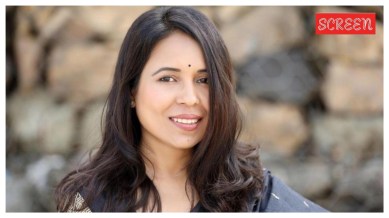

Rima Das thrives as a filmmaker when she’s left to write, shoot, and edit her stories, out in the open, and mostly in her home state of Assam. But she attributes these USPs to her limitations, more than her skills. “I do most of my shoots outside because I work in natural light as I’m not a trained cinematographer,” she tells SCREEN in an exclusive interview. Which is why when she was approached to direct a segment in the upcoming anthology, My Melbourne, she took the challenge head on. It’s a commissioned project, in which she had to share the various hats that she dons in her independent films. It’s also set in Melbourne, Australia, a land far removed from her home turf of Assam.
Her segment, Emma, also stars not a local actor, but an Australian. Like most of her critically acclaimed films, like Village Rockstars and Bulbul Can Sing, Emma is also a story of self-discovery. But the lens through which it’s told is that of disability. Emma is an aspiring dancer, who is deaf and is also going blind. In this interview, Rima talks about being defined by her own creative ‘disabilities,’ surrendering to them like her protagonist, and discovering facets about herself that she was hitherto not in touch with.

Your filmography so far is populated by homegrown, independent films. How different was it to make a movie within the existing framework of an anthology?
A commissioned project is like a game you’re participating in. Unlike the self-produced films, you don’t decide the rules of that game. But still, you need to play well. When you’re in the game, you have to hit the ball. Sometimes, I make a film for three years, sometimes for a year. But this film was shot across only five days. If I’m doing my own film, I can go back and reshoot. But here, you can’t really go back. So you realise to let go and prioritise. When the film comes out, the story is important. Maybe some shots are not beautiful. And some shots are not performed well. But finally, as a whole, the film should be there, the story should be there.
You not only worked with an Australian cast and crew, but also collaborated with an Australian cinematographer. For someone who’s used to filming her own stories, how liberating or challenging was it to let someone else crank the camera?
I had a very good DoP, who is like-minded which is very important. I’m very intuitive and improvise a lot. So if my cinematographer doesn’t align with me, it becomes very difficult. Sometimes, when I shoot my own films, I have some limitations. Because I’m not trained, I don’t know certain things. I also feel tired sometimes. But when you have good equipment and a proper team, then you can just imagine and they can execute it for you. In My Melbourne, I explained what I wanted to my cinematographer and he got that. So it was enjoyable, in a different way.
You’re a director, writer, producer, editor and cinematographer. Now that you have the goodwill and the resources, what are the roles you like to keep for yourself and what are the ones you’d like to outsource?
Mostly, I love to direct and write. I don’t mind co-writing. If there are interesting ideas, we can develop them together. Editing, I don’t know, because I feel filmmaking is all about editing later on. Time will tell that. Sometimes, when I’m doing everything alone, it does get lonely. There are advantages too. It’s a lot of freedom because it’s your vision at the end of the day. Seeing something through that you imagined, that’s more magical and beautiful.
The four segments in My Melbourne touch upon sensitive issues like sexuality (Onir’s Nandini), gender (Imtiaz Ali’s Jules), and race (Kabir Khan’s Sitara). You chose disability, and that too double disability. That’s not something you’ve dabbled with in the past. Why did you zero in on it?
It’s a sensitive issue, and also quite personal to Mitu Bhowmick (producer and director of Indian Film Festival of Melbourne). Her daughter is battling a similar issue. The double disability is exactly why I wanted to tell this story. When you watch the film, you already know she’s deaf. But that she’s going blind is the unseen part. As a filmmaker, that unseen part is more intriguing and exciting for me. How I can bring that unseen part to screen, that was my challenge. That’s what I like to do actually.
There are other films on disability and music, like Sound of Metal (2019) and CODA (2021). What is this inextricable link between deafness and a passion for music?
Normal people also have some kind of ‘disabilities.’ We also have dreams, we look for something, we search something. Music or any art form helps us get freedom, helps us survive, and helps us escape. To me, Emma felt like any person chasing her dream. She’s curious, just like you are as a journalist, I am as a filmmaker. Just that our medium is different from hers. But we all do it primarily for ourselves, it’s more internalized. Everything else – success, money, fame are external.
In Emma, you use sound very ingeniously. The sound is drowned out not when she can’t hear someone, but when she’s not being listened to. Can you talk about that?
It was more intuition, honestly. I generally don’t think much. I just had an organic discussion with the sound designer back then. When I was making the film, I’d kept that bit open. I generally don’t plan much. It just felt right in the moment.
Why did you decide to end the film when you did and where you did, Emma dancing to the voice within in the lap of nature?
When I was looking for location, the production person took me there. I saw the trees and felt, ‘This is the one.’ There’s light, freedom, and nature, and that’s what we want in life. Everything comes from that space. It just came from within. She has a hearing problem and is now losing her vision. So there’s uncertainty. That space somehow told her there’s still something to look forward to. It made her surrender.
Which story or stories are you chasing next?
I started Tora’s Husband and Village Rockstars 2 just after the first lockdown, when a lot of people weren’t working. But I didn’t know I was going through an emotionally challenging phase because of whatever I lost during the time. It took me much longer to finish both the movies. Village Rockstars 2 took four years. I started feeling monotonous. At that time, I began developing different ideas. Because I’m really hungry to do different genres – folk horror, love stories, friendship stories, a couple of films in Mumbai. I want to make another children’s film, but it’s different from Village Rockstars. I’ll probably explore a two-women story in Mumbai in June-July.
Your breakthrough film, Village Rockstars (2017), received a wide theatrical distribution, especially after it was announced as India’s entry to the Oscars. Why do you feel your films after that haven’t been treated similarly?
For that, I’m also responsible. Sometimes, I don’t plan properly. There was no plan with Village Rockstars either, but it got visibility after the Oscars entry. Fortunately, it’s not like the audience aren’t enjoying my other films. But since I’m an independent producer, I realized that the buzz that was organically created for Village Rockstars, it wasn’t the same for Tora’s Husband (2022) and Village Rockstars 2 (2024). Village Rockstars 2 was a little better. But perhaps things have changed after the pandemic. So making is not enough, how you’re promoting and marketing the film also matters. Probably, I could’ve reached out to more people for collaborations. You need a plan, especially when it’s a theatrical release. So it’s not the films. I didn’t expect that all my films will go for the Oscars. I just want to tell stories. Distribution isn’t in my hands, but I know that a plan helps.
My Melbourne releases in cinemas this Friday on March 14.


Click here to follow Screen Digital on YouTube and stay updated with the latest from the world of cinema.


