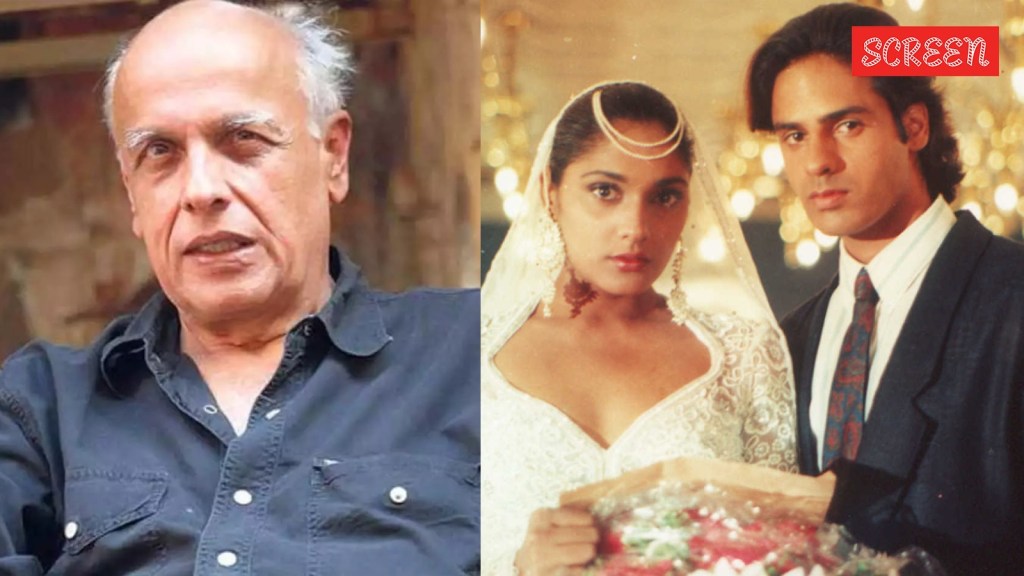
Mahesh Bhatt’s 1990 musical romance Aashiqui was a cultural phenomenon that turned debutants Rahul Roy and Anu Aggarwal into overnight stars. But watching the blockbuster for the first time 36 years later, on Mahesh’s birthday, I struggled to understand the hype as a Gen Z viewer. Barely 10 minutes into the film, I found myself wondering: Why did people go wild over this movie?
The Aashiqui 2 comparison
I was already familiar with the Aashiqui template, having watched Aditya Roy Kapur and Shraddha Kapoor’s Aashiqui 2 (2013), directed by Mohit Suri. The romantic musical was a commercial success, and for good reason. But watching Aashiqui for the first time, I was surprised by how different the two films felt, largely because of the eras they were made in.
As a Gen Z viewer, there is something almost alien about watching a love story in which nobody is constantly reachable. The 1990 film felt slow to me, and I often grew restless watching it. The difference became even more apparent in Rahul Roy and Anu Aggarwal’s performances, which can feel a little stiff by today’s standards. But perhaps that’s also what makes the comparison interesting: Aditya and Shraddha could run in Aashiqui 2 because Rahul and Anu had already walked in Aashiqui.
You know you’re watching a 90s film when an electricity bill becomes a means of communication between two lovers. And after writing his message on the bill, Rahul needs to get it back — otherwise, his house could literally be plunged into darkness because of non-payment. Today, texting has made communication almost instant. Back then, you simply had to wait. Through my Gen Z lens, that waiting often made the romance feel slow and, at times, boring.
There were several such supposedly classic romantic moments that I struggled to relate to as a viewer. This simply isn’t how my generation experiences or defines romance. What did work for me, however, was the way the songs were woven into the love story. T
The problematic opening sequence
The most alarming part of Mahesh Bhatt‘s Aashiqui, for me, was its opening sequence, when Rahul first sees Anu at a police station.
Story continues below this ad
After Anu runs away from her hostel, how does a police officer simply allow the hostel warden to take her back despite her resistance? What about her consent? As a Gen Z viewer, these are questions that are difficult to ignore in 2026. If Aashiqui were released today, the scene would likely spark reels, Reddit threads and endless social media debates about what the film was showing and normalising.
Would Aashiqui work today?
Special mention: The late Reema Lagoo looked beautiful in Aashiqui. My strongest memory of her is from Sooraj Barjatya’s Hum Saath-Saath Hain, so watching her here felt like discovering an actor I had only known from a later phase of her career.
Having said that, as a Gen Z viewer, I don’t think Mahesh Bhatt’s Aashiqui would work in 2026 the way it did in 1990. The emotions that the romantic musical wanted me to feel simply didn’t land the way they perhaps did for audiences back then. Thirty-six years later, the Rahul Roy and Anu Aggarwal-starrer felt more dated than entertaining to me.
Navya Kharbanda is an Entertainment Journalist and Cinematic Commentator at The Indian Express, where she specializes in bridging the gap between classic Bollywood heritage and contemporary Gen-Z perspectives. Her work is characterized by a blend of nostalgia-driven analysis and on-the-ground reporting from major film festivals and industry events.
Experience & Professional Background
Navya is a prominent voice on The Indian Express entertainment desk, known for her ability to secure candid interviews with both legendary veterans and rising stars. Her career highlights include:
The Indian Express: Covers a wide range of topics from high-stakes box office analysis to in-depth celebrity profiles. She is a regular at major events like the International Film Festival of India (IFFI).
SCREEN Interviews: Navya has conducted a series of "exclusive conversations" for SCREEN, featuring industry stalwarts like Anupam Kher, Vishal Bhardwaj, Vidhu Vinod Chopra, and Suhasini Maniratnam.
Archival Reporting: She is noted for her sensitive handling of archival interviews and retrospectives, recently covering the legacy of late superstar Dharmendra and the career reflections of the late Satish Shah.
Expertise & Focus Areas
Navya’s beat is uniquely defined by her "Gen-Z Revisit" series, where she re-evaluates cult classics through a modern lens. Her core areas of expertise include:
Cinematic Retrospectives: Analyzing 80s and 90s landmarks like Satyam Shivam Sundaram, Qayamat Se Qayamat Tak, and Mohabbatein to explore how themes of romance and rebellion resonate with today’s youth.
Industry Insights: Tracking the career resurgences of actors (e.g., Akshaye Khanna) and the evolving dynamics of film production and distribution in the OTT era.
On-Set Dynamics: Reporting on behind-the-scenes stories from major productions, ranging from the technical challenges of Mirzapur: The Film to the work ethics of superstars like Shah Rukh Khan.
South Indian Cinema: Expanding her coverage to include the impact of regional icons and the rise of pan-Indian fantasy epics like Magadheera.
Authoritativeness & Trust
Navya Kharbanda has established her authority by consistently providing "Journalism of Courage" in the entertainment sphere. Whether she is interrogating the sexism in patriarchal classics or reporting on the fair-pay debates at international film festivals, her work prioritizes factual accuracy and critical objectivity. Her ability to synthesize deep industry history with modern audience trends makes her a trusted source for readers seeking both entertainment news and thoughtful cultural commentary. ... Read More