


Click here to follow Screen Digital on YouTube and stay updated with the latest from the world of cinema.
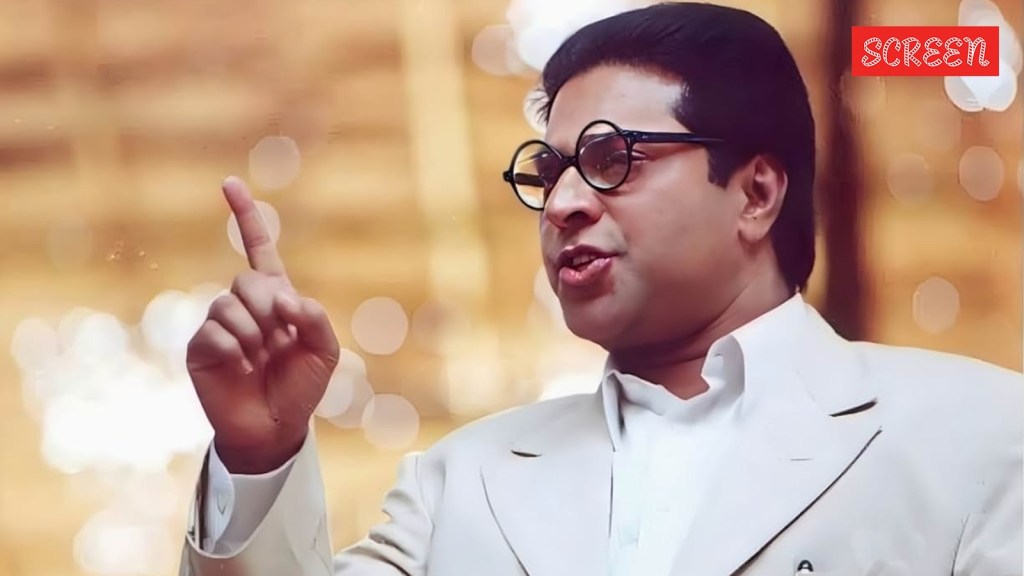 Malayalam star Mammootty as Dr Babasaheb Ambedkar in Jabbar Patel's 2000 movie, the performance in which earned him his third National Film Award for Best Actor. (Credit: IMDb)


It is doubtful whether there are many other actors in India at the moment who can boast a repertoire as diverse as Mammootty’s. Not just fictional roles — he has also portrayed historical figures, bringing each to life with remarkable brilliance, thus cementing his place as one of Indian cinema’s finest actors of all time. Among the many impressive roles he has portrayed over the years, the one that stands out as the tallest is Dr Bhimrao Ramji Ambedkar in director Jabbar Patel’s Dr Babasaheb Ambedkar (2000), a performance that earned the Malayalam thespian his third National Film Award for Best Actor. As India commemorates its 76th Republic Day, marking the day the country’s Constitution came into effect, this is an ideal occasion to revisit Dr Babasaheb Ambedkar, an English-Hindi bilingual feature, which not only shed light on the social reformer’s life but also exposed the atrocities committed against the Bahujans by caste Hindus, along with the persistent realities of everyday casteism.
In the opening paragraph of his legendary undelivered speech, Annihilation of Caste, later published as a book, Babasaheb observes, “I have criticised the Hindus. I have questioned the authority of the Mahatma whom they revere. They hate me. To them, I am a snake in their garden.” Notice how sharply and specifically he portrays himself through these words. Here, Dr Ambedkar not only affirms his ideological stances and unwavering principles but also acknowledges the hostility they invited from the opposite side. One of the most remarkable aspects of Mammootty’s performance in the Jabbar Patel directorial is the emotional layering he has ensured without adhering to a singular perfected template that could have rendered the character monotonous.
Happy Republic Day 2025 | Wishes, images, quotes, Whatsapp messages, status, photos, and greetings
As the film begins with Babasaheb’s time at Columbia University in New York City and traverses various pivotal junctures in his life, culminating in the months leading to his demise, it was crucial for Mammootty to capture the essence of Ambedkar at each stage, while also ensuring a seamless and organic evolution of the character, doing justice to the essence of a biopic without making the portrayal seem disjointed or jarring. And needless to say, he did a brilliant job.
When it comes to biopics, the relentless pursuit of accuracy and perfection often leads actors to compromise the emotional authenticity of their characters. Filmmakers, too, rarely intervene to address this shortfall, as their attention is typically scattered across numerous aspects of production. However, in Dr Babasaheb Ambedkar, Mammootty skilfully captures Babasaheb’s emotions too and seamlessly integrates them into his portrayal, lending his performance a remarkable sense of authenticity and credibility.
In one particularly moving scene, after informing the Maharaj about the persistent caste discrimination he endures — even within his own office, where he is denied access to drinking water from the shared pot — Ambedkar is seen walking into the courtyard, breaking down in despair, poignantly reflecting the emotional toll of his battle. Meanwhile, upon hearing Shahu Maharaj’s passing, Mammootty doesn’t break down loudly but chooses a more restrained approach, conveying Ambedkar’s grief through his eyes and subtle facial expressions, underscoring the helplessness he feels. In scenes depicting the deaths of his infant son Raja Ratna and his wife Ramabai, Ambedkar is portrayed not as a scholar or social reformer in tears, but as a common man consumed by profound sorrow.
While most tend to emphasise their unwavering courage and resolute nature when performing historical figures, Mammootty ensures that Babasaheb’s emotional depth is equally explored. From his romantic and lovely interactions with his wives, Ramabai (Sonali Kulkarni) and Savita (Mrinal Kulkarni), and his candid conversations with friends and acquaintances, to his unfiltered outbursts against those who take offence at his unapologetic way of calling spade a spade, as well as the wounds inflicted by countless humiliations, and the joy in small victories — Mammootty’s portrayal brings out the common man side of Babasaheb in a remarkable manner.
Republic Day 2025 | Know the history, significance of Republic Day celebration in India, chief guest, and more
The thespian’s profound understanding of the character is particularly evident in his rendition of Babasaheb’s historic 1935 Yeola conference speech, where he declared, “I was born in Hinduism but I will not die as a Hindu.” His precise diction and body language encapsulates the essence of Ambedkar with striking authenticity. Speaking about the challenges of the role in a 1997 interview with India Today, Mammootty remarked, “Physically, I had to work very hard. There were no clippings of Ambedkar. The only thing I had was a two-and-a-half minute film which I saw countless times. Nobody knows how he walked, how he spoke or how he behaved. I had to conceive all those things in my mind. I had to work a lot on the make-up too.” At the same time, Mammootty’s control over the character in scenes portraying his opposition to Mohandas Karamchand Gandhi highlights his skill and finesse as an actor.
Interestingly, Hollywood legend Robert De Niro was initially considered for the role. Director Jabbar Patel revealed in a 2000 interview with Rediff, “The casting director who showed me hundreds of actors including Robert de Niro, who was very keen on the role but backed off when he was told that he had to drop his American accent and speak the way Ambedkar did — in his typically clipped Indo-British accent.” Initially, Mammootty was hesitant to accept the role due to the requirement of shaving off his moustache and the extensive time commitment. However, once he committed, he dedicated himself fully to the project, promising Patel, “Ten days every month for as long as it took to make the film.”
Patel further reflected on Mammootty’s transformation into Ambedkar, saying, “He (Mammootty) has this uncanny resemblance to Dr Ambedkar and we had to use only minimum makeup. You are right. In the second half of the film he looked so much like Dr Ambedkar that, when I showed it to Dr Ambedkar’s wife, she gasped in disbelief. Even the thousands of people who participated in the crowd scenes were so carried away when Mammootty came onstage that I instantly realised how close we were to the real thing. You should ask Ashok (Mehta) who wielded the camera. The empathy was total. For the crowds, he was Dr Ambedkar all over again.”
Click here to follow Screen Digital on YouTube and stay updated with the latest from the world of cinema.