


Click for more updates and latest Hollywood News along with Bollywood and Entertainment updates. Also get latest news and top headlines from India and around the World at The Indian Express.
This is an archive article published on May 2, 2023
On Iron Man’s 15th anniversary, here’s how the MCU impacted filmmaking not just in Hollywood, but also in India
As the first Iron Man movie and the Marvel Cinematic Universe jointly celebrate their 15th anniversary, here's how the film, and the franchise, impacted moviemaking across the world.
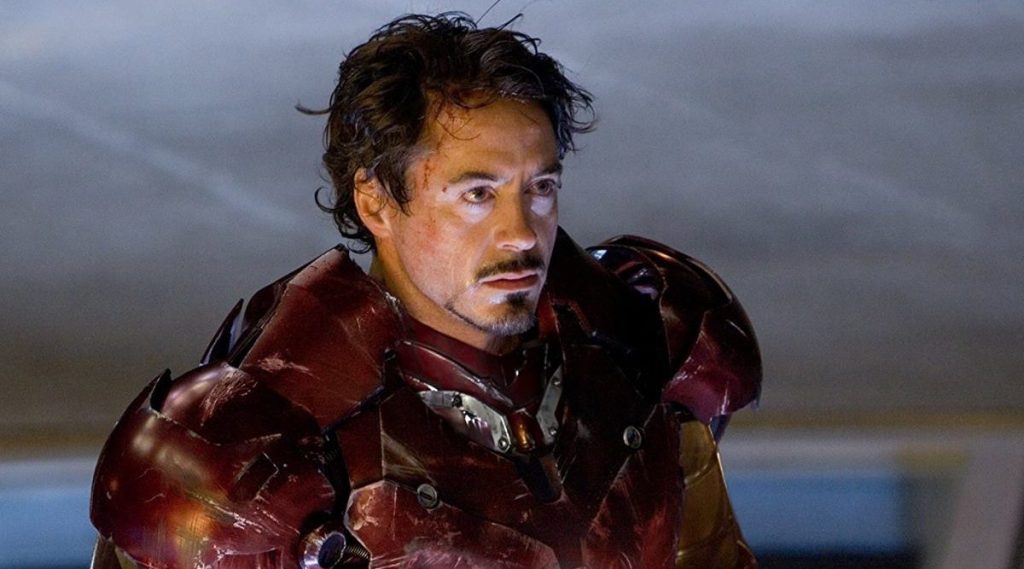 Robert Downey Jr as Iron Man. (Photo: Marvel Studios)
Listen to this article
On Iron Man’s 15th anniversary, here’s how the MCU impacted filmmaking not just in Hollywood, but also in India
x
00:00
On May 2, 2008, exactly 15 years ago, Iron Man was released in theatres across the world. Little did anybody know at the time that it would change the film industry forever. While plans to create an interconnected universe of second-tier Marvel superheroes had already been put into motion, fans had no idea what to expect when they purchased a ticket to watch the first Iron Man, directed by someone who was best known for their comedies, and starring a troubled actor who’d never been tested at this scale.
Directed by Jon Favreau and starring Robert Downey Jr, the first Iron Man became a runaway hit. It earned ecstatic reviews, and went on to gross nearly $600 million at the global box office. It was selected by the American Film Institute as one of the year’s 10 best films; it earned two Academy Award nominations, and last year, was selected for preservation in the United States National Film Registry by the Library of Congress. Iron Man’s impact hasn’t even been lost on the government.
But the film was hardly a sure bet. In fact, it wasn’t even the most-anticipated superhero movie of that summer; just two months later, a certain film titled The Dark Knight was slated to release, giving fans their first Batman-Joker face-off on the big screen since 1989. On the film’s 15th anniversary, and by extension, the 15th anniversary of the Marvel Cinematic Universe, here’s a look at how Iron Man has impacted not just Hollywood, but also here, in India.
The MCU
The first Iron Man movie ended a post-credits scene in which Nick Fury dropped by to inform Tony Stark about the Avengers Initiative, thereby setting up the first phase of the franchise, which included the debut appearances of Thor, The Incredible Hulk, Captain America, Black Widow, and Hawkeye. These characters would go on to form the core team in 2012’s The Avengers, which went on to gross $1.5 billion at the global box office. Since then the rights to Marvel were purchased by Disney, and the franchise has expanded beyond theatrical and into television and streaming.
The MCU is now the highest-grossing film franchise of all time, having made $28.7 billion worldwide, across 31 feature films. As many as 10 films in the MCU have grossed more than $1 billion at the box office, and two — Infinity War and Endgame — have grossed more than $2 billion worldwide. Iron Man 3, which was released just five years after the first film, ended up grossing $1.2 billion worldwide.
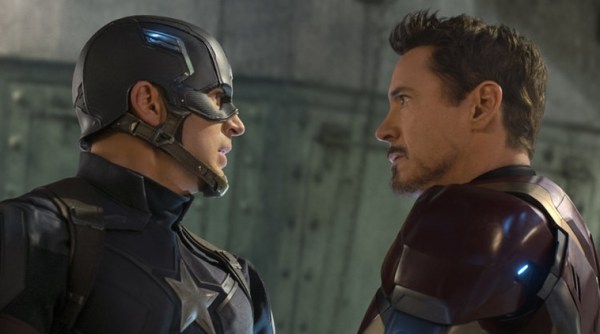 Chris Evans and Robert Downey Jr last appeared together in Avengers: Endgame.
On Hollywood
Of course, rivals in the business noticed the Marvel formula immediately, and began putting together their own shared universes. One of the first to follow in Marvel’s footsteps was Warner Bros, which set into motion their own interconnected universe of DC films, beginning with 2013’s Man of Steel. The franchise has had a notorious run, marred by a lack of vision and continually evolving plan. After a decade, the DC Extended Universe is undergoing a major overhaul with new bosses at the helm.
Story continues below this ad
WB also produced perhaps the only other successful shared theatrical universes outside of the MCU — director James Wan’s Conjuring franchise, which also includes the Annabel and Nun movies, and the MonsterVerse, which includes the Godzilla and King Kong movies. The most infamous failed attempt to follow in Marvel’s footsteps was easily Universal’s Dark Universe, which would’ve united stars such as Tom Cruise, Johnny Depp, Russell Crowe and Javier Bardem as classic Universal monsters. But the series tanked after just one release, the ill-fated 2017 The Mummy.
On streaming, Zack Snyder’s launched a shared universe with Army of the Dead, and Joe and Anthony Russo are working on two separate interconnected franchise’s — The Gray Man on Netflix and Citadel on Prime Video.
On the Indian film industry
Funnily enough, India has delivered more shared franchises in the last few years than any other industry. Even though Indian filmmakers caught on to the idea when the model was arguably already losing its stability overseas, we’ve so far had Dinesh Vijan’s horror-comedy universe, Lokesh Kanagaraj’s Kaithi-Vikram universe, directors Raj & DK’s The Family Man universe, Rohit Shetty’s cop universe, and YRF’s spy universe.
Not all these franchises have been successful, and most of them have actually been turned into interconnected universes retroactively, but it’s clear that audiences are hungry for crossovers. And the proof is in the pudding; the rise of the MCU in India happened in tandem with the fall of the star system. While MCU movies began consistently outperforming Bollywood blockbusters, the biggest stars in the country discovered that they no longer have the pull that they used to.
Story continues below this ad
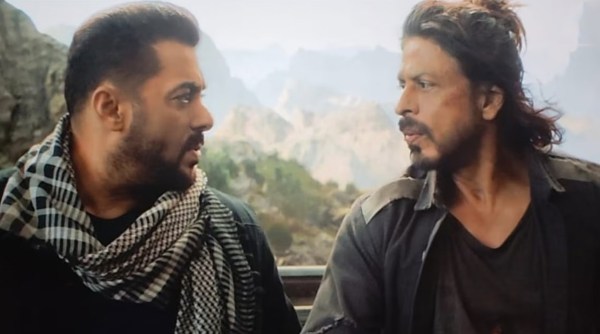 Salman Khan had an extended cameo in Shah Rukh Khan’s Pathaan.
On Robert Downey Jr and Favreau
Famously, Downey wasn’t the first choice to play Iron Man when Favreau fought for him back in the day. He was coming off of a well-publicised career downfall, and was difficult to insure. To make matters more complicated, he wasn’t a box office draw. But Downey’s charisma in the lead role was one of the primary reasons why the first Iron Man became such an audience favourite. Over his decade-long run in the MCU, he went on to become one of the highest-paid actors in the world, earning upwards of $75 million for the later Avengers films. For a while, Downey was juggling two major franchises — in addition to playing Iron Man, he starred as Sherlock Holmes in two massively successful movies, that grossed a combined total of $1 billion worldwide between 2009 and 2011.
But Downey has consistently struggled with projects outside these two franchises. After beginning his MCU journey, he has starred in only five non-franchise movies. One of them, Dolittle, was designed to start a post-Iron Man series for him, but the film was marred by a troubled production, and it tanked both critically and commercially. He is now semi-retired, working mostly as a producer, but he’ll make a splashy return in the upcoming HBO series The Sympathizer.
Favreau, on the other hand, has gone on to become a proper Disney Legend. After playing an instrumental role in the founding of the MCU, he established another shared universe of sorts on streaming. Favreau is the overlord, alongside Dave Filoni, of the Star Wars shows on Disney+.
Story continues below this ad
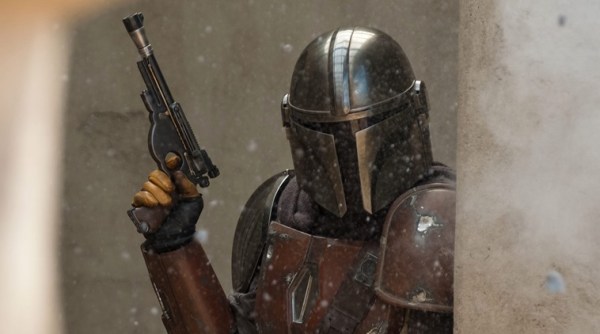 The Mandalorian streams on Walt Disney Co’s Disney+ streaming service.
While Downey stopped doing solo Iron Man movies after 2013’s Iron Man 3, he continued playing the character in MCU films such as Captain America: Civil War, Spider-Man: Homecoming, Avengers: Infinity War and Avengers: Endgame. There were rumours that he might even show up in the Black Widow solo movie, but that didn’t come to pass. It really does look like Downey is done playing the character, but the MCU is showing no signs of slowing down, even if it may be experiencing turbulence for the past few years.
© IE Online Media Services Pvt Ltd
Advertisement
Loading Recommendations...
Advertisement
Live Blog
Advertisement