


Click here to follow Screen Digital on YouTube and stay updated with the latest from the world of cinema.
© IE Online Media Services Pvt Ltd
Tags:


Sharmila Tagore started her career in the movies when she was just a teenager and for decades, she continued to perform beautifully in front of the camera. But in the early 2000s, Tagore was assigned a new responsibility – to head the Central Board of Film Certification (CBFC). Sharmila took office after Anupam Kher had just served for one year as the head, and as soon as she took office in 2004, Sharmila made it clear that she wasn’t here to be the morality police, which was often expected from the CBFC head. In the years that followed, films like Rang De Basanti, My Brother Nikhil, No One Killed Jessica, Omkara, among others, experienced a fairly smooth release, and while Sharmila tried to make the CBFC into a ‘certification body’ during her time, it still ended up being the ‘censor board’ in later years. In 2025, The Indian Express has extensively reported on ‘censorship raj’, where no meeting has been held in six months.
Soon after Sharmila Tagore became the head, Onir’s My Brother Nikhil released in theatres. This was the time when films with LGBTQ themes experienced a lot of resistance, more so because Section 377 was still in place. The release of the movie set a precedent for many films with similar themes, as just a few years before this, national protests had broken out over the release of Deepa Mehta’s Fire. As films like My Brother Nikhil got showcased, even something like Kyaa Kool Hai Hum, which was an adult comedy, also got a chance to release in theatres. While the audience for these two kinds of films were completely opposite, Tagore was clear that CBFC was not here to dictate what people should watch, or like; they were here just to certify content and make it known if it was age-appropriate for people who were walking in.

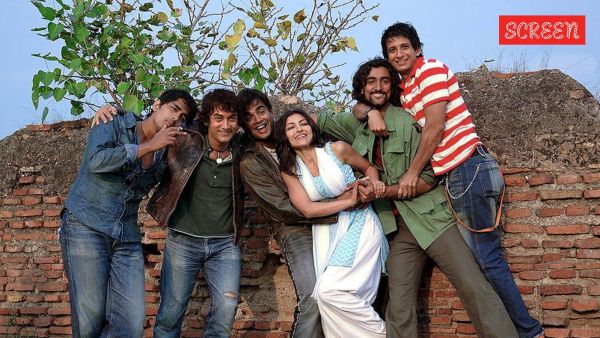
Rang De Basanti, which was strongly against the establishment and would find it quite difficult to get clearance in the current political climate, was released during Sharmila Tagore’s tenure, but here, she wasn’t the one leading the charge to get it cleared, even though it starred her daughter, Soha Ali Khan. In fact, she screened the film for Pranab Mukherjee, who was the Defence Minister at the time, and said that she wanted to seek “expert opinion” before she gave it a go-ahead. The film was centered around the MiG-21 crashes, which led to a revolution in the real world.
But it was her support for Omkara that drew a lot of criticism. Starring Saif Ali Khan, who is also her son, the Vishal Bhardwaj directorial was criticised for using abusive language, and while the film was given an ‘Adults Only’ certificate, naysayers accused Sharmila of favouring the film as it starred her son. Years later, Pahlaj Nihalani, who was the CBFC head from 2015-2017, told Times Now, “Omkara was her son Saif Ali Khan’s film. The board cleared it after being pressurised by her, which set the trend and release of films like Gangs of Wasseypur happened.” Sharmila stayed mum on the subject, but Saif defended her by saying, “She is a liberal, extremely intelligent and experienced chairperson. We should always have a censor chief like her, but too often, we will have someone less passionate about cinema and more political-minded.” He added, “I cannot imagine my mother bending rules for her children; she is too fair.”
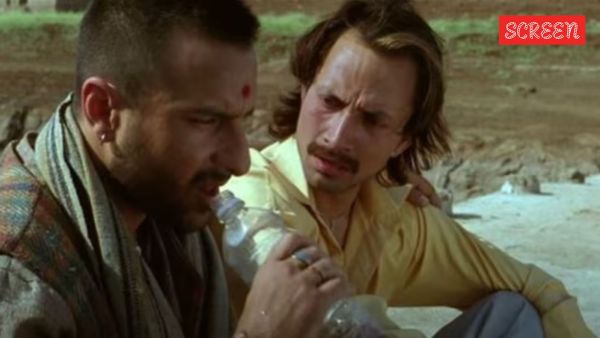
But during Omkara’s release, Sharmila Tagore stated very clearly, in a chat with Karan Thapar, that the film was meant for ‘adults’ and not children, hence, the certificate. In fact, around the same time, she presented, and wanted to introduce age brackets while certification, which meant that films would be certified as per age groups of the audience. She told The Hindu, “I do not agree with a blanket U certificate for every film. This will also provide relief to filmmakers who are the most affected by the certification. In a country where voting age is 18 and drinking age 21, why have a blanket ‘U’ rating?” As we know now, this never happened!
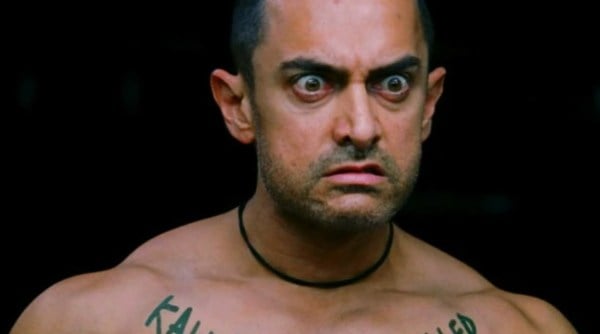
Aamir Khan’s Ghajini was one of the most hyped films of its time and was released with a U/A certificate. However, the audience objected on the same grounds as the film had excessively violent scenes which were not seen as appropriate for children. After the objection was raised, Sharmila agreed that this was a misstep on CBFC’s part. She stated that she had not seen the film, and admitted that her board should have been more careful for a film like this. She told Subhash K Jha at the time, “It should’ve never been given a U/A certificate. How it got that certificate, I have no idea. I truly think we slipped up on that one. And if I’m asked to resign for it, I will do so even now. Strangely, hardly anyone complained about it. Now, when people behind violent films use Ghajini as a reference point, I cringe. Just because we made one mistake doesn’t mean we can keep repeating it”
It was during Sharmila Tagore’s tenure that the government issued a directive that every film with a smoking scene must be given an ‘A’ certificate, and Sharmila was quick to point out that this was “absurd.” She told Jha, “While we agree cigarette smoking is bad and seeing stars smoking on screen creates the wrong impression, we can’t take ad-hoc decisions. Such matters have to be debated. We must hear out the producers before any decision is taken on this.” As we know, in later years, the written directive on screen, and the compulsory PSA before a film would become a part of all films.
Sharmila Tagore believed that deleting scenes from a film destroys its aesthetics, so the only way to present it in its best form was by giving it the appropriate certification. In a chat with PTI, Sharmila said that in a film like No One Killed Jessica would have asked for a U/A certificate, the board would be forced to ask them to cut abusive language. “We are trying to get away from cutting films and do with just certification. But sometimes the producers come to us saying that they do not want an ‘A’ certificate. Say, for example, if the producers of No One Killed Jessica would have asked for a U/A certificate, we would have to cut out all the abusive language and Rani Mukerji’s character would have been destroyed. If you want a U/A certificate, then you will have to accept the cuts, but often the cuts kill the film,” she said.
But, as liberal as she was, Sharmila did not enjoy titles with objectionable words. She admitted that the trend had started with Kaminey, and continued with other films, like Yeh Saali Zindagi. “I really had a problem with the title of Sudhir Mishra’s film Ye Saali Zindagi. The trend started with Kaminey and once it triggers, you can’t stop it. But we try our best to come to a democratic decision and whatever objectionable matter is allowed is only five or two percent,” she told PTI.

But, she was also quick to say that some filmmakers often stir up a controversy for publicity, even though they ae fully aware how their film must be certified. “I am not worried about what disgruntled filmmakers have to say. I have very capable people on my staff. Do filmmakers like Vishal Bhardwaj and Dibakar Banerjee think that Kaminey and Love Sex Aur Dhoka (LSD) would get a ‘U’ certificate? A lot of people want to know why such films are passed at all,” she told Jha and added, “When these filmmakers object, I know they’re doing it for publicity. When you knock the doors of the censor board, a talking point is created.”
Since Sharmila Tagore’s time at CBFC, the board has seen a few heads. She was followed by Leela Samson, and Pahlaj Nihalani. Since 2017, Prasoon Joshi has been heading the CBFC, which is the longest run for any CBFC head.


Click here to follow Screen Digital on YouTube and stay updated with the latest from the world of cinema.


