


Click here to follow Screen Digital on YouTube and stay updated with the latest from the world of cinema.
© IE Online Media Services Pvt Ltd
Tags:


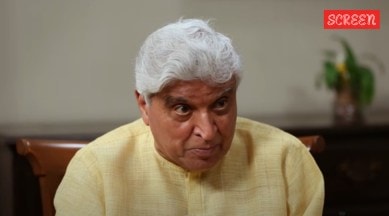

Veteran writer-lyricist Javed Akhtar opened up about the creative crisis that Hindi cinema seems to be in, and said that he is disheartened by the lack of depth that he’s been observing lately. On the other hand, he said, South Indian films are succeeding because the filmmakers behind them are telling stories about a specific audience. He cited anthropological reasons behind this, and said that Hindi cinema is made by people whose parents migrated to Mumbai, while South Indian filmmakers continue to work in the regions they were born. In an interview with The Lallantop, Javed Akhtar said, “I have a complaint with Hindi cinema; our movies lack a certain depth these days. They’re mainly focused on action, and they’ve lost their touch when it comes to creating three-dimensional characters.”
Asked if he’s ever surprised by the kind of movies that click with the audience, he said, “I’m rarely surprised by the kind of business that a film does. There have been times when I’ve walked out of movies that have gone on to become superhits. But that’s what people like. The interesting thing is that movies from the South, starring actors nobody knows about in the north, are doing great business. This isn’t a fluke, life is very complicated. You see, Hindi movies are made by migrants from the north. But South Indian movies, regardless of whether they’re Tamil, Telugu, or Malayalam, are made by people from those regions. Hindi movies are made for everybody. South Indian films are made for a South Indian audience.”

Javed explained, “Hindi filmmakers migrated from their regions, whether it’s Uttar Pradesh or Rajasthan. In a way, they’ve been ripped away from their roots. Their parents belonged to the first generation; they were in touch with their roots. But these people have grown up in Mumbai’s cosmopolitan culture. They dream in English. They aren’t rooted, not like their parents were. They’re the second generation. On the other hand, filmmakers from Tamil Nadu are still working in Tamil Nadu; they haven’t migrated.”
Javed said that there are exceptions to this rule, and cited Udaan as a fantastic example of a rooted film. It was, however, directed by Mumbai born and bred Vikramaditya Motwane. In an earlier interview with Galatta Plus, filmmaker Anurag Kashyap voiced similar sentiments about the state of Hindi movies. “Here, cinema is largely controlled by those people, and that too the second generation, that has grown up in trial rooms. They have not lived life. So, they’re referencing is based on cinema. What is not on screen can’t be cinema to them. The biggest problem with YRF is the trial room effect. You take a story and you want to make a Pirates of the Caribbean out of it and it becomes Thugs of Hindostan. You take a story, and you want to make a Mad Max: Fury Road out of it, and it becomes Shamshera. The moment you head in that direction, you’re cheating yourself, especially in today’s time.”
Javed Akhtar is best known for the streak of hits that he co-wrote with Salim Khan in the 1970s. The influence of those films is still felt in the industry today. Even the biggest South Indian hits of recent times, such as the KGF movies and the Pushpa films, owe a creative debt to the Angry Young Man subgenre of social impact cinema that Salim-Javed popularised decades ago.


Click here to follow Screen Digital on YouTube and stay updated with the latest from the world of cinema.


