


Journalism of Courage
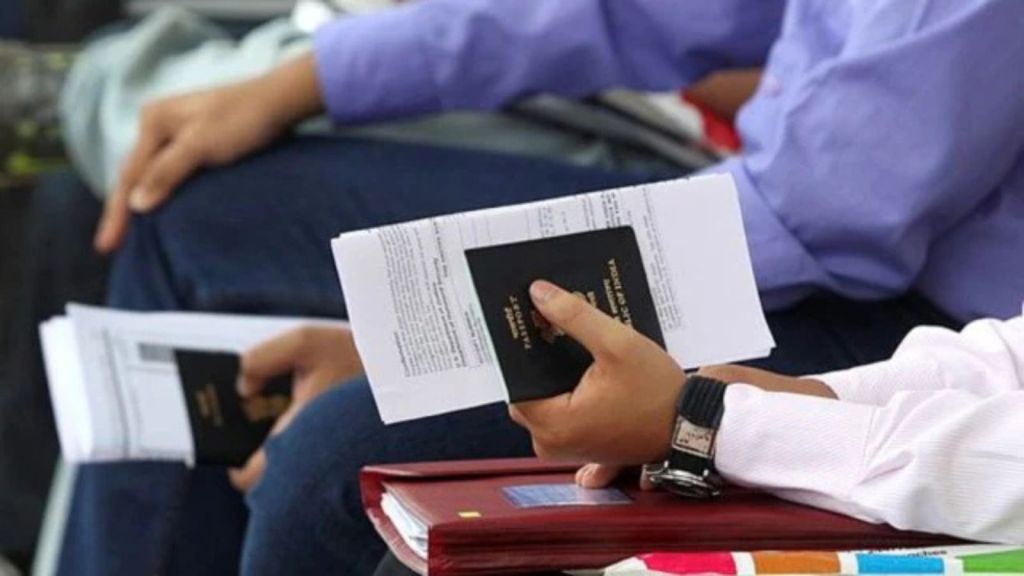 At least 4,736 international students' visa records were terminated in a government database that maintains their legal status. (File Photo)
A US federal judge has temporarily blocked a Trump administration rule that would have limited how long international students, exchange visitors and foreign journalists can remain in the country, just a day before the policy was due to take effect. The decision means the existing system for international students will continue for now, giving some relief to thousands of students, including those from India.
The rule, finalised by the Department of Homeland Security (DHS) in July, was intended to replace the nearly 50-year-old “duration of status” system. According to a PTI report, under the existing system, students on F-1 visas can generally remain in the US for the duration of their academic programme as long as they continue to maintain their student status.
The new rule instead sought to put a fixed limit on their stay, with F-1 and J-1 students generally capped at four years. Students who needed more time would have had to apply for an extension.
Read | New Zealand announces new work visa route for international students, check details here
The proposed change was significant for students enrolled in programmes that routinely take longer than four years. A doctoral programme, for example, can extend well beyond that period. Harvard President Alan Garber had earlier questioned the four-year cut-off, noting that a typical PhD can take at least six years.
Under the proposed system, an extension would also have been subject to DHS approval, rather than students simply continuing under their existing duration-of-status arrangement.
The rule also introduced fixed limits for other categories. Foreign journalists generally would have been limited to 240 days, while journalists from China would have faced a 90-day limit. The administration said the changes were needed to address visa fraud and make it easier to identify and prevent overstays.
Judge F Dennis Saylor IV of the US District Court for the District of Massachusetts, however, found that the government had not adequately established that the rule would achieve those objectives. In his 48-page order, Saylor said DHS had not properly responded to public comments or considered less disruptive alternatives, raising issues under the Administrative Procedure Act. He also questioned the connection between the rule and the administration’s national security justification.
The judge went further in discussing the potential effect on critics and dissidents. He pointed to the “obvious likelihood” that visas of foreign journalists critical of the government, particularly DHS officials, could fail to be renewed. Saylor said the weakness of the link between the rule and its stated objectives raised questions about whether its real purpose could include greater government control over academic institutions and the press. He also described the government’s national-security argument as bordering on “absurd”, saying it relied largely on a small number of examples that the new rule would not have prevented.
Saylor also rejected the government’s argument that any relief should apply only to the universities and organisations that brought the lawsuit. The plaintiffs represent nearly 600 public and private institutions, but there are more than 5,000 higher-education institutions in the US. Restricting the order to the plaintiffs, he said, could create parallel systems and force authorities to repeatedly determine which students and institutions were covered. The preliminary injunction therefore pauses implementation more broadly while the case continues.
For international students, the immediate effect is that the existing duration-of-status framework remains in place. Universities including Harvard and Berkeley have told students that the new rule will not affect current F-1 or J-1 processes, including programme extensions and OPT/STEM OPT, while the injunction remains in force.
The ruling is not a final cancellation of the policy. Saylor postponed its effective date under the Administrative Procedure Act while the broader legal challenge proceeds, and the government can appeal the decision. The next hearing is scheduled for October 2, when the court is expected to consider the case further. Until then, the proposed four-year limit remains on hold, leaving the existing system in place for international students in the US.


