


- Tags:
- NEET
- NEET UG 2026
- Paper leak
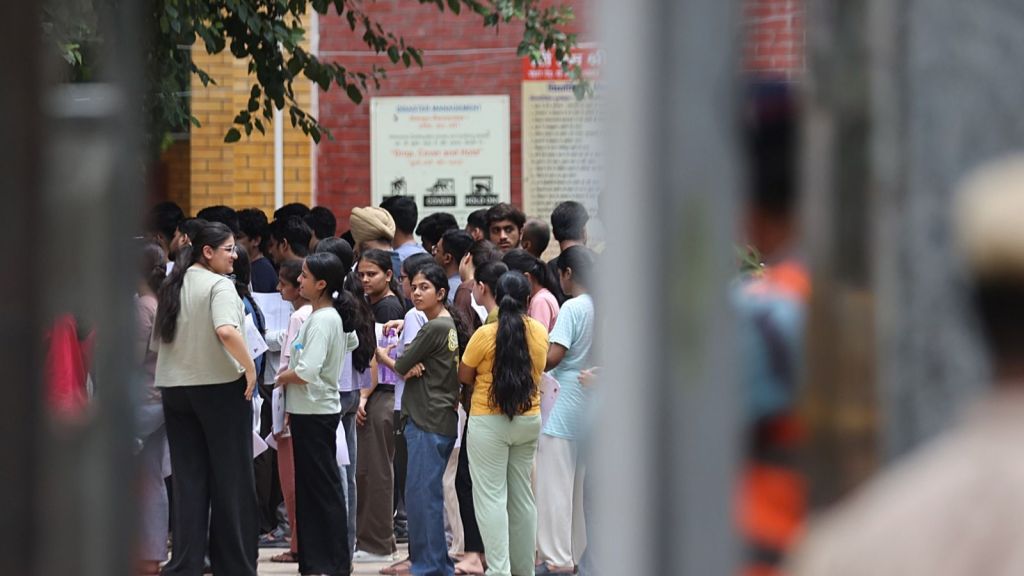 Strict security, emotional moments and last-minute setbacks marked the NEET UG 2026 re-exam as lakhs of aspirants appeared across India. (Express Photo)
The Nandan Nilekani-led high-powered task force on exam reforms has consulted former ISRO chairman K Radhakrishnan, who headed the committee set up by the Centre after the 2024 NEET-UG paper leak, officials said on Sunday.
The task force, constituted in July to recommend reforms in examinations conducted by the National Testing Agency (NTA), is consulting various stakeholders as it prepares its first interim report. The government told the Supreme Court earlier this month that the panel is likely to submit the report by the end of September.
The task force has also invited suggestions from students, parents, teachers, academic institutions, subject experts, industry organisations and examination-conducting bodies. It has held discussions with NTA Director General Abhishek Singh and officials from the Department of Higher Education.
“The HPTF is reviewing the exam processes and will recommend reforms to make the examination system robust, secure, transparent, trustworthy and future-ready,” a senior government official told PTI.
The official said the recommendations will focus on the use of technology. The panel has held “comprehensive discussions” with stakeholders and has also consulted Radhakrishnan, who currently heads the High Powered Steering Committee (HPSC) overseeing the implementation of recommendations made by his earlier panel.
The seven-member Radhakrishnan Committee was constituted in June 2024 following the NEET-UG controversy and submitted its recommendations in October that year. It proposed changes to the examination process, data security and the structure and functioning of the NTA.
Also Read | CISF, AI monitoring, security experts: How NTA is changing after NEET leak
The panel made 101 recommendations covering security controls for examination-critical systems, including question-paper management, candidate registration, fee payment, admit cards, computer-based testing, OMR processing, normalisation and result systems.
It also recommended restructuring the NTA and restricting its role primarily to higher education entrance examinations, along with changes to its governance, security systems and digital infrastructure.
The Centre subsequently constituted the HPSC, also headed by Radhakrishnan, to monitor the implementation of these recommendations. The latest Nilekani task force is now reviewing the earlier recommendations as part of its broader examination reform exercise.
The reforms have gained urgency following the cancellation of the May 3 NEET-UG examination and its subsequent re-examination. The Supreme Court has also sought details from the Centre on the implementation of the recommendations made by the earlier Radhakrishnan panel.
The court has stressed the need to institutionalise the NEET process, including a permanent structure and permanent staff at the NTA. It has also indicated that it would like to visit the agency’s newly upgraded facility to examine the systems put in place.
Meanwhile, NTA has been working on strengthening its workforce and examination security. Its measures include recruitment for specialist roles and technology-related steps involving computer-based testing infrastructure, CCTV, face authentication, frisking and external examination monitoring.
The agency has also indicated that NEET-UG could move to computer-based testing “very soon”. The Nilekani panel is examining this transition, which would require an expansion of secure examination centres and computing infrastructure. NTA is also exploring the use of artificial intelligence and analytics to examine examination logs, identify irregular patterns and detect possible fraud.
Besides Nilekani, the seven-member task force includes former ISRO chairman S Somanath, former Intelligence Bureau director Tapan Deka, IIT Madras director V Kamakoti, former education secretary Anita Karwal and logistics expert Amrit Lal Meena.