Journalism of Courage



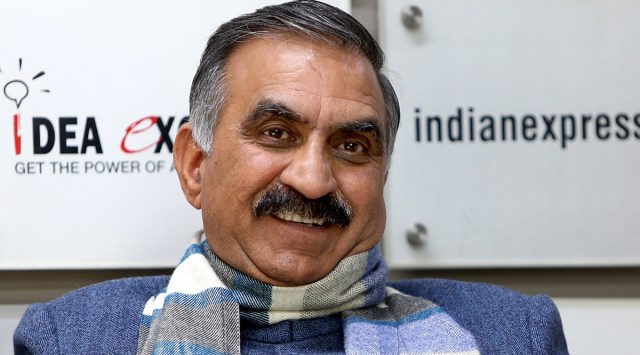 Chief Minister Sukhvinder Singh Sukhu
 Cash-strapped Himachal Pradesh government’s decision to impose a cess on hydel projects and raise an estimated Rs 4,000 crore is seen as regressive, particularly hurting small projects and players, and dampening the government’s efforts towards a hydro push.
Earlier in the day, Himachal Pradesh Chief Minister Sukhvinder Singh Sukhu had breakfast with Punjab Chief Minister Bhagwant Mann at the latter’s residence Wednesday, exactly a week after the Punjab Vidhan Sabha passed a resolution condemning the Himachal Pradesh Water Cess on Hydropower Generation Bill, 2023, passed in their Assembly. The Haryana Vidhan Sabha too had unanimously passed a resolution condemning the Himachal Pradesh legislation on March 22.
Himachal Pradesh’s water cess Bill provides for levying a 10 paisa per cubic metre cess on projects with heads up to 30 metres, 25 paise on 30-60 metres, 35 paise on 60-90 metres, and 50 paise per cubic metre over 90 metres.
A power expert, who works closely with power regulators, said the imposition of a cess on the hydro sector is bad news. “To do it using the head as the yardstick is even more troubling, given that the smaller developer has no option but to sell to the State Electricity Board. He’s a captive guy, in that sense. The impact could have been better managed if the levy were to be on the volume of water discharged,” the expert said.
This comes at a time when the Centre has been trying to evolve a consensus on treating electricity as a commodity and ensuring uniformity of pricing. There may be flaws with this approach, but from a practical perspective, larger projects have the option of selling inter-state, another policy expert said.
The cess is an act of desperation, but what is unfortunate is Himachal seems to have succumbed to the lobbying power of the bigger hydro players, said the second expert, who did not wish to be named. Further, home states typically get 12 per cent free power. So, this comes as a double whammy, and would be a dampener for the government’s hydro push.
The Himachal government has estimated that the cess on all 172 hydel projects in the state would generate Rs 4,000 crore a year. The state has a power potential of more than 27,000 MW out of which 11,000 MW has been harnessed.
Power producers in the state have argued that the cess will result in several losses to plants with less than 25 MW capacity. There are over 50 hydropower projects that are operational while nearly 117 hydro power projects with less than 25 MW capacity have been commissioned in the state, producers said.
“The bigger plants have the ability to sell their produced power to different states. Small hydro projects operate on a purchase agreement with the Himachal State Electricity Board. When the cess is levied, they will not have other mechanisms to gain revenue and they will suffer losses. For instance, if there is a 5 MW project with 100 metre head, there will be a Rs 3 cess for 6 cubic metre discharge. This will be unfeasible,” said Rajesh Sharma, President Bonafide Himachali’s Hydro POwer Developers Association.
The power plant associations further argued that Himachal should adopt the Uttarakhand model of cess which varies from 7-10 paise on the plant’s meter head. The producers claim that cess will be a double taxation since there is a 12 per cent royalty paid to the state for using water resources. “There will be a dis-incentivisation for companies to set up projects in the state. The cess value is nearly five times in comparison to cess imposed in Uttarakhand,” said Sharma.
The producer organisations allege that due to the clause of 12 per cent free power to the state government, power purchase agreements, the newly announced cess and other components, some projects will have to pay more than 100 per cent of their revenue in taxation. Several projects will be unable to recover operational and maintenance costs, a producer said.

 4 min read