“We are > 1,00,00,000 voters, nothing without us”, reads the cover page of the manifesto ‘for and by citizens with disabilities’. The manifesto was created by the National Centre for Promotion of Employment for Disabled people and National Disability Network ahead of the 2024 Lok Sabha elections.
Among other things, the body has demanded a 5 percent budgetary allocation for disability, affordable and accessible health insurance policies for all persons with disabilities and a monthly pension of Rs 5,000 like the One Nation One Pension all persons with disabilities.

In Pune district, of the total 82,24,423 voters, 85,000 are people with disabilities. This election, they want to highlight problems related to lack of accessibility in public spaces, denial of insurance policies, lack of representation in politics, dropout rates in higher education and barriers that hinder them from using their right to vote.
Patience at polling booths while they read in Braille and better implementation of loan disbursal to the disabled are other areas of concern the body cited in the manifesto.
Rahul Deshmukh, Founder President, National association for the welfare of physically challenged, said, “Eighty five thousand is not a number big enough for MPs or MLAs to consider this as a strong vote bank. That’s why not much has changed for them.”
Sugamya Bharat Abhiyan and free travel
In December of 2015, the Centre had launched an ‘Accessible India Campaign’ (Sugamya Bharat Abhiyan). Its aim was to make at least 50 percent of all government buildings in the national capital and all state capitals fully accessible for the disabled by July 2018.
“I was a part of that committee. We had asked for at least 50 buildings in Pune to be made accessible. But even now, banks, railway stations, ST stands and corporation buildings in the city are not fully accessible. It’s the same case with places of historical importance and temples”, said Deshmukh.
He also highlighted that visually impaired persons are denied insurance in case of accidents, whereas, it is a group which needs it on priority basis. Deshmukh also demanded free travel for persons with disabilities and an increase in the handicap monthly allowance.
“In Rs 2000, you can’t even afford a two-time tiffin service, so how will this meagre amount help? They are in the lower financial strata. So, we need to do something that helps them save a little money. Travelling should be made free for them,” he said.
Representation in politics and barriers in higher education
Jhanvi Bhadke, a 21-year-old woman and a second year Political Science student from Nanded, studies at Fergusson College. Bhadke is a visually impaired voter. “There’s very little representation of persons with disabilities among the voters as well as candidates. The dropout rate of disabled people in higher education is huge because of the lack of support and basic facilities. This needs to be addressed,” said Bhadke.
Help from PMC
Atharva Bapat, 20, is a visually impaired first-time voter and said he is elated that he will be casting his vote this year. A third-year student at Fergusson College specialising in Sanskrit, Bapat has been playing the synthesiser since he was two-years-old. His father, Narendra Bapat, 53, works with the West Maharashtra division at the NGO Saksham.
“We got a call from the Pune Municipal Corporation (PMC) to check if a volunteer should be sent to provide pick-and-drop services for Atharva. They also suggested voting at the polling booth nearest to the house. Atharva will be voting at a booth just five minutes away,” said Narendra.
Ideal candidate
Deshmukh summed up what kind of candidate persons with disabilities would look forward to. “A candidate who doesn’t look at the group as a weak vote bank and rather someone who feels he has been given an opportunity to serve. The one who takes his term as an opportunity to uplift the social status of the ones who have been denied basic rights. As persons with disabilities are neglected, they don’t feel like they are a part of society. We are looking for someone who is sensitive to their hopes, issues and demands.”

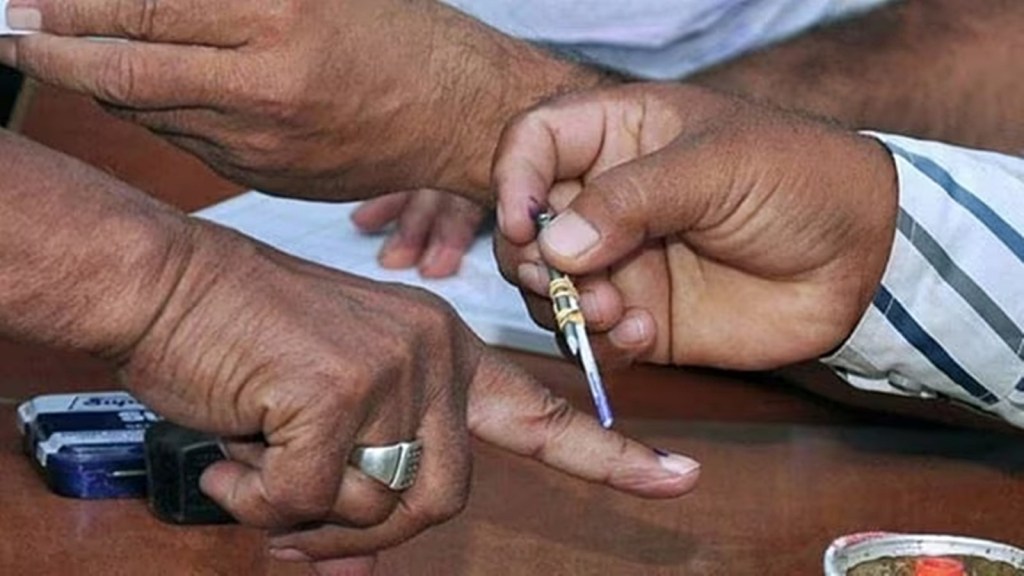 In Pune district, of the total 82,24,423 voters, 85,000 are people with disabilities. (File)


 Share


