3 min readPuneApr 16, 2025 02:05 PM IST
First published on: Apr 16, 2025 at 02:04 PM IST
Written by Shubham Kurale
Born into a Dalit family in Maharashtra’s Nanded, where his parents worked as daily wage labourers, filmmaker Ramesh Holbole is set to direct This Side of Paradise, marking the first-ever Indo-German collaboration in Marathi film history.

Currently in the pre-production stage and scheduled to begin shooting in June, the project represents not only Holbole’s feature-length directorial debut but also a milestone in bridging international filmmaking cultures.
“If the fees of over Rs 1 lakh were not paid by my friend after securing a seat at the Film and Television Institute of India (FTII), I would be doing some labour job in Maharashtra Industrial Development Corporation (MIDC),” he shares, reflecting on the pivotal moments that shaped his trajectory. “The success achieved so far is because of constant support from my family and friends,” Holbole asserts.
After completing his master’s in Direction and Screenplay Writing from the FTII in 2020, Holbole studied at Germany’s prestigious Filmakademie Baden-Württemberg in the International Class program (ICLA), which helped him build international connections that laid the foundation for his work.
“The upcoming film This Side of Paradise aims to portray the struggles of rural youth migrating to metropolitan cities, shedding light on issues like living conditions in slums, labourer exploitation, wage equality, and others. It is more about the daily struggle of working-class people,” explains Holbole, whose vision is to abide by socially conscious storytelling.
The project emphasises a cross-cultural foundation. “This film is truly Indo-German, from financial terms to actual working team will have equal stakes from India and Germany,” he said, crediting co-producer Pralhad Kale and German production house Lightning and Thunder GmbH for their partnership in bringing this vision to life.
Holbole’s cinematic journey began during his college theatre days. But watching the Finnish film The Man With No Past at the Pune International Film Festival (PIFF) was a transformative experience. “PIFF introduced me to global art, and after studying in Germany, it became my resolve to create films that matter and connect with common people,” he added.
Holbole, who founded Volksfilms India Private Limited, has won over 20 national and international awards for his associations in short films. Aagaswadi directed by Holbole, was adjudged the best film in the 22nd International Students Film Festival held in Romania in 2023.
His upcoming feature film This Side of Paradise will be primarily in Marathi, with German and English-dubbed versions planned for international audiences.
Reflecting on the state of Indian cinema on the global stage, Holbole refers to Payal Kapadia’s recent historic Grand Prix win at Cannes with All We Imagine as Light — the first time in three decades that an Indian film competed in the main competition. “Over 1,000 films are produced every year in India. But still, we fall behind in getting global recognition,” he observes.
As This Side of Paradise heads for production, Holbole hopes his fresh perspective as a young director will attract wider audiences and meaningfully portray working-class life, potentially mending the trend of re-releases that he believes may impact box office earnings for new films.
The writer is an intern with The Indian Express

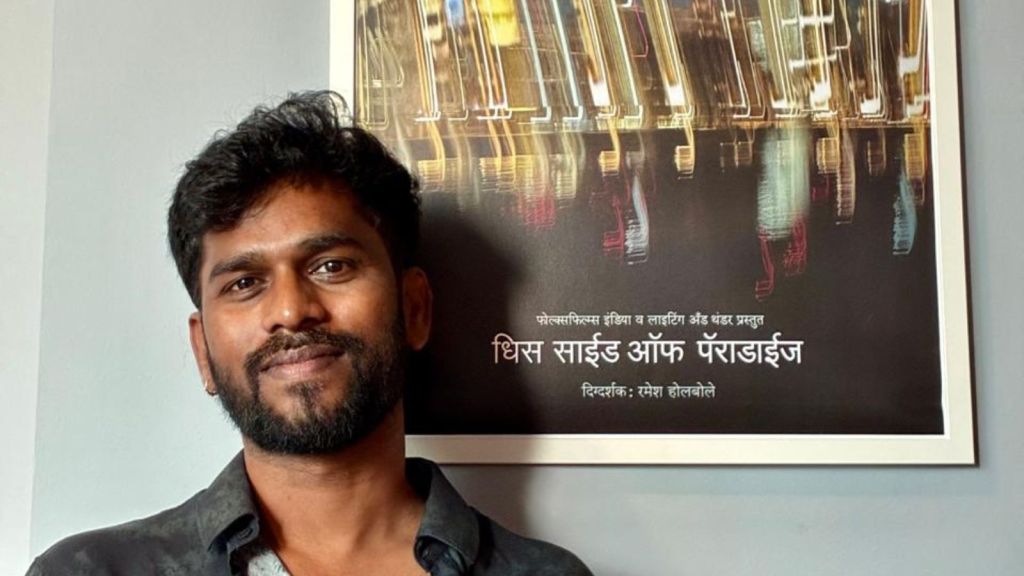 His upcoming feature film This Side of Paradise will be primarily in Marathi, with German and English-dubbed versions planned for international audiences. (Express Photo)


 Share


