Click here to join Express Pune WhatsApp channel and get a curated list of our stories
© The Indian Express Pvt Ltd
 5 min read


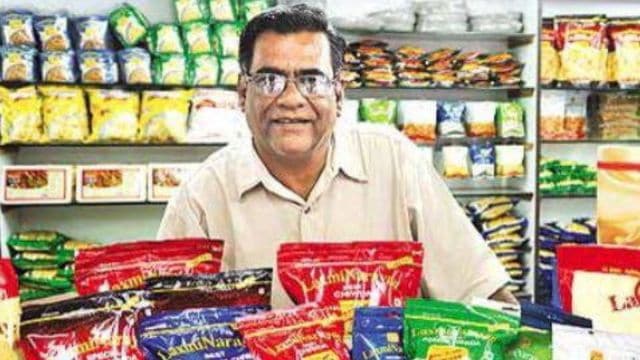 A flavour that has evolved through generations, Laxminarayan has made itself a true household name in the city. (File Photo)
Written by Sanika Deshpande
Very few snacks in Pune have earned the kind of legendary status that Laxminarayan Chiwda has. For most Punekars, it is more than a packet of namkeen; it’s a taste of childhood. A flavour that has evolved through generations, Laxminarayan has made itself a true household name in the city. Started more than 70 years ago, the brand’s journey began on a humble handcart and with a recipe that quickly won over the local people.
Started by Laxminarayan Ganeshmal Data, the brand has an origin story like no other. Before Independence, Data sold snacks at the Rewari railway station in Haryana. After an argument in which he ended up assaulting a British officer, he fled the scene and boarded the first train leaving the city. Little did he know that this desperate escape would take him on an adventure of a lifetime. During his years on the move, he travelled to cities of Kabul, Kolkata, Delhi and ultimately settled in Pune, gathering recipes and flavours from all over.
It was during these travels that Data’s understanding of taste truly evolved. Each city exposed him to new spices, techniques, and regional variations of the snacks he had grown up with. He observed street vendors, tasted local mixtures, and experimented with ingredients wherever he went.
Dhiman Data, a fourth-generation working for the brand, revealed, “Initially, he started as an ice cream cart and used to sell and experiment with namkeens and sweets until his famous Poha chiwda became a hit amongst the local people. I am told by many that the small pink Kanju kand made was also started by him”.
By the early 1940s, what began as a snack store on a hand-pulled cart had grown into a signature product with a loyal and ever-increasing customer base. Being the visionary that he was, he got himself and his cart a registered trademark in 1945.
“My great-grandfather was truly a visionary in that aspect. He sold the chiwda on the cart for the longest time, but kept trademarking and licensing every step of the way. We still have the licence way back from the the time he sold on the cart in the cantonment area,” said Dhiman.
The trademark not only protected his name, Laxminarayan Chiwda, but also marked one of the earliest instances of a local, home-grown snack brand formalising and making itself known in Pune.
Years later, his son Babulal Ji Data took it upon himself to expand what his father had started. What once operated from a modest hand-pulled cart slowly grew into a full-fledged business under his guidance. His main focus was to synonymise Laxminarayan Chiwda with Pune and vice versa. As demand surged, he shifted the brand from a street-side operation and began scaling up. Even as the inventory grew, he remained uncompromising about quality. Every batch was prepared with the same precision and attention to detail that defined his father’s original recipe.
What began as a small family-run operation in 1935 has grown into one of Pune’s most recognisable culinary brands.
Laxminarayan legacy in 2 brands
Today, the business is divided among two brothers who continue to carry forward the Laxminarayan legacy in their own capacities. Now known as two separate brands of Sitashree Laxminarayan Best Chiwda and Babu’s Laxminarayan Best Chiwda, the family’s signature recipe lives on through both, each maintaining its own taste and loyal following while preserving the legacy started by their grandfather.
“We have named the brand Babu’s Laxminarayan after my grandfather. My father wanted to pay a tribute to him like he paid one to his father, the founder, which is why you will also see a welcoming caricature of him on all our packaging”, added Dhiman.
While Sitashree Laxminarayan sells a larger variety of products, ranging from chiwdas to bhakarwadis, sweets, and savoury items such as their signature kachoris and vada pavs, Babu’s believes in having a more focused menu. They primarily concentrate on farsan and their signature chiwdas, keeping the range tight and true to the brand’s roots, while offering only a small, carefully curated selection of sweets. With quality as the primary focus for both, each maintains its own process and standards of preparation and sourcing, ensuring that the essence of the original recipe remains intact.
Today, whether sold under Sitashree Laxminarayan Best Chiwda or Babu’s Laxminarayan Best Chiwda, the product remains deeply embedded in Pune’s food culture, gaining nation-wide popularity too. From a hand-pulled cart to a city staple, Laxminarayan chiwda stands testament to how a simple snack rooted in tradition can be synonymous with a city’s ever-evolving food culture.
(Sanika Deshpande is an intern with The Indian Express)