At a time when music was not greatly valued and performers were not recognised, classical singer Pt Bhaskarbua Bakhale and a few of his contemporaries felt the need to take music to the masses and make it accessible. So Bakhale established the Pune Bharat Gayan Samaj, one of the oldest music schools in Pune, in 1911.
The Samaj is now looked after by the fourth generation of his family. “We inherited the legacy from our grandmother,” says Savani Datar, whose paternal grandmother was one of Bakhale’s four daughters. “The youngest, Pramila Datar, is my grandmother. Bhaskarbua’s wife Savitri used to live here so Pramila also spent her life here. That is how my father and uncle became musicians. Shaila Datar, a renowned singer, has been handling the institution,” adds Savani, who is a vocalist.

Supriya Mahabaleshwarkar, the co-convenor and coordinator of the INTACH Pune chapter, says the Samaj was initially established under the patronage of the Kirloskar Natak Mandali. “During the times when musicians were losing patronage of royal families, times when music was not easily accessible to one and all, it was the vision of Bhaskarbua Bakhale and other stalwarts like Master Krishnarao, Govindrao Tembe and Balagandharva who started this institution,” says Mahabaleshwarkar.
The place is also the birthplace of Anandibai Joshi, the first woman doctor of India. (Express Photo by Pavan Khengre)
Elaborating, Savani said, “At that time, people did not value Abhijat Shastriya sangeet or any music in general much and there was not much recognition for performers. So thinking that classical music should reach people and should be accessible for people to learn, he started this institute. The place has survived for a long time so no one person can be praised for this; time and again, everyone in-charge contributed to its flourishing.”
The institution today houses a collection of rare and important music-related books for researchers. Also available are old gramophone records and spool recordings of various maestros that have been digitized, ready to be accessed by music students and researchers.
“We have instruments used by eminent musicians, like Bhaskarbua’s tanpura itself. We have a collection in our library of around 3,000 to 4,000 very rare books related to singing, dance, instruments etc for those who are curious about music,” says Savani.
“The syllabus is prepared by Natsamrat Balgandharva and Master Krishnarao Phulambrikar. It consists of a 10-year syllabus for singing, Bharatnatyam, tabla, harmonium, kathak and natya sangeet. We now conduct exams based on this syllabus, and in Maharashtra, 3,000 to 4,000 students take the exams. Master Krishnarao himself wrote these books, we are trying to take it forward,” she adds.
“People have donated cassettes they don’t listen to anymore. We also have recordings of all the programmes that have happened here. We are converting all of it into digital form,” says Savani.
The Samaj is now looked after by the fourth generation of classical singer Pt Bhaskarbua Bakhale’s family. (Express Photo by Pavan Khengre)
“It not only made an important contribution in making music learning accessible to every household but also created good listeners, a love and taste for good music among the masses,” says Mahabaleshwarkar.
Talking about Bakhale, Savani says, “He sang the music of three gharanas and is considered a crucial page in the history of music. Because it is Bhaskarbua’s ‘sanstha’ (institution), everyone sees it as a temple of music. The hall has seen performances by eminent musicians, whose pictures are in the hall, and they have never demanded heavy fees for their performances here as it is a sacred place. It is a rare and one-off institute, which without charging any tickets, hosts musical events, so music reaches people, and it works on love from people.”
The place is also the birthplace of Anandibai Joshi, the first woman doctor of India. “This was her father’s vada earlier, before Bharat Gayan Samaj, so there is a board outside the building stating it is the place of her birth and death,” says Savani.
Recently, Helena Rüegg, 64, a German bandoneon player, actress and writer visited the Pune Bharat Gayan Samaj, when Mahabaleshwarkar gave her a tour of Pune’s musical legacy. “What struck me the most was the beautiful Pune Bharat Gayan Samaj, with all the photographs on the wall, the wisdom, the musicality of the place, I felt a connection with the atmosphere,” says Rüegg.

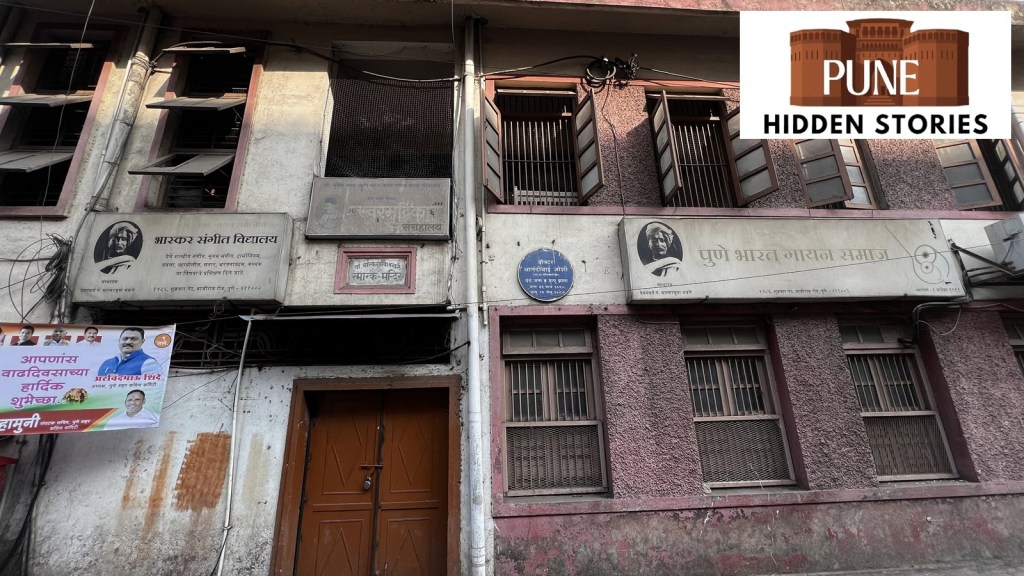

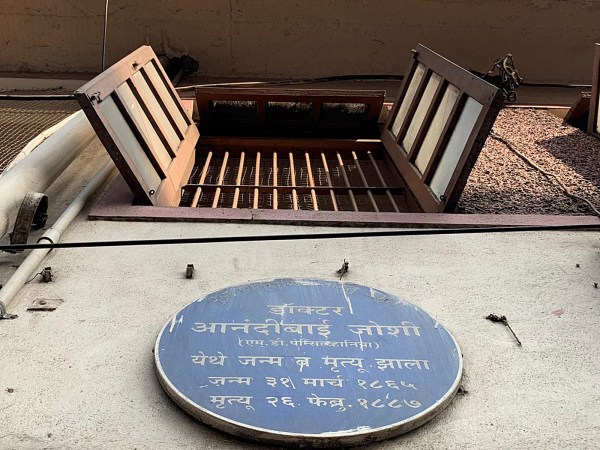 The place is also the birthplace of Anandibai Joshi, the first woman doctor of India. (Express Photo by Pavan Khengre)
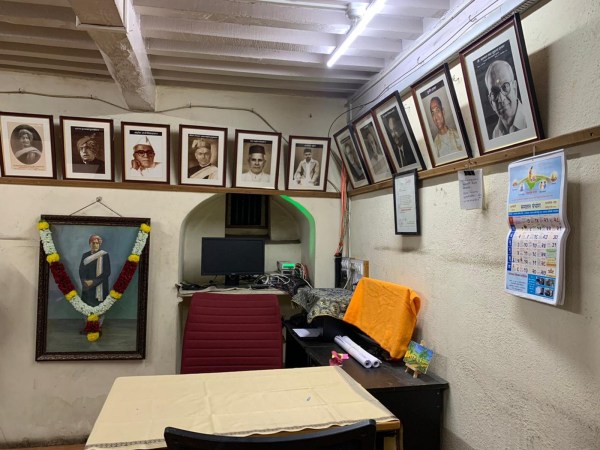 The Samaj is now looked after by the fourth generation of classical singer Pt Bhaskarbua Bakhale’s family. (Express Photo by Pavan Khengre)

 Share


