Written by: Partha Sarathi Biswas
3 min readPuneMar 3, 2022 12:13 PM IST
First published on: Mar 3, 2022 at 12:13 PM IST
Rohan Kale’s passion for stepwells stems from his desire to preserve these tangible footsteps of history. And that passion has seen this human resource professional travelling over 14,000 km of Maharashtra on his bike over the last year or so and mapping and documenting around 1,650 stepwells. The oldest of these dates back to the eighth or ninth century.
🗞️ Subscribe Now: Get Express Premium to access the best Election reporting and analysis 🗞️

Stepwells are wells or ponds in which the water is reached by descending a set of steps to the water level. Stepwells in Rajasthan and Gujarat, especially the Rani Ka Vav (Queen’s stepwell) at Patan, is an Archaeological Survey of India-protected monument which is famous for the intricate carvings around it.
Constructed by queens and kings, step wells in these states are more regal than the ones found in Maharashtra. Kale explained that while the stepwells in Gujarat and Rajasthan had royal patronage, the ones in Maharashtra were more utilitarian in nature serving as water spots for travellers.
“Stepwells in Maharashtra can be found every few kilometres on major roads like Pune to Tuljapur, Nashik to Trimbakeshwar and others. Many were constructed during the time of Chhatrapati Shivaji Maharaj (17th century) to allow the armies to rest and hydrate as well as give water to animals. Given the nature of their use, these stepwells are mostly devoid of intricate and delicate carvings,” Kale said.
Over time, stepwells have been relegated to the background with most being used to dump garbage by residents. Very few of these have been marked on the maps or documented. Realising the importance and depth of his project on mapping stepwells, Kale approached 14 architectural colleges who agreed to be part of the campaign. “However the Covid pandemic has delayed the project. Now, this work is expected to be resumed in April,” he said.
Other than architectural colleges, Kale also got the state archaeology department, the groundwater survey authority and the Maharashtra tourism development corporation interested in this project. The tourism corporation, in fact, has since then added stepwells in its website with a brief description on some of them.
On the occasion of Shivratri on March 1, Kale led a huge project of lighting stepwells to draw attention towards them. With people participating in it from every corner of the state, this forgotten part of Maharashtra’s history got a little light. Kale said his campaign aims to provide the necessary information to include stepwells in the annals of Maharashtra’s rich history.

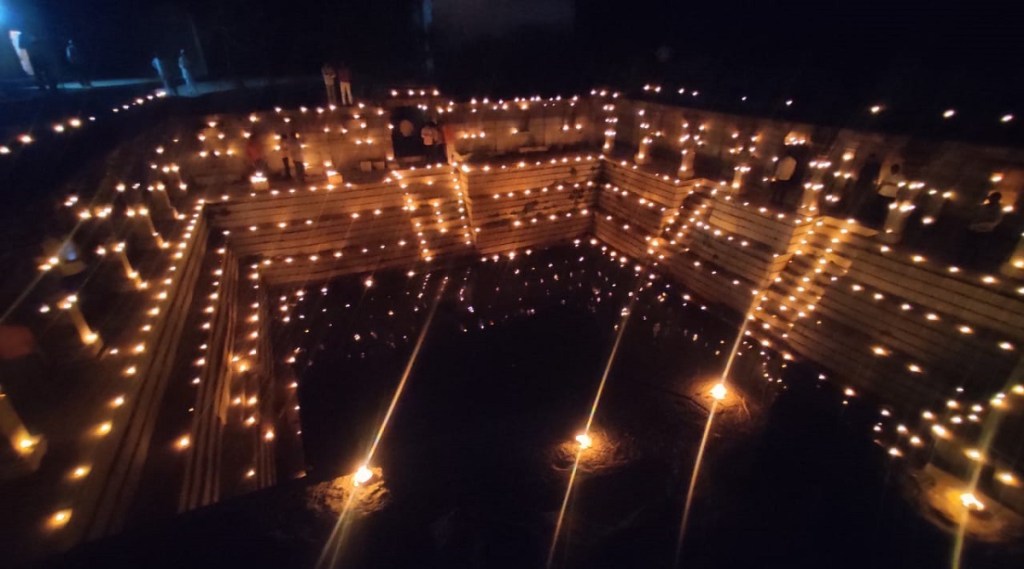 On the occasion of Shivratri on March 1, Kale led a huge project of lighting stepwells to draw attention towards them.

 Share


